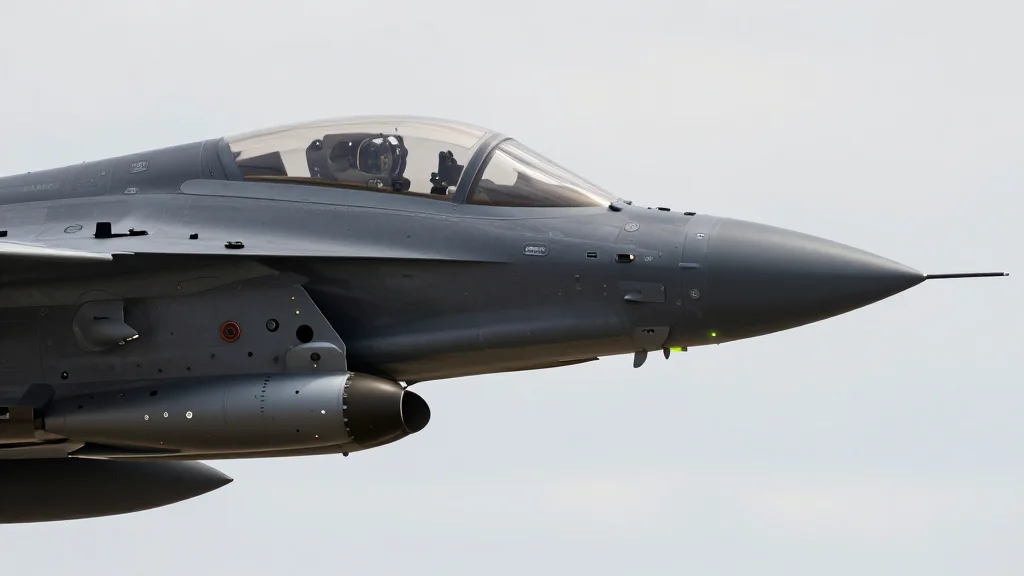
Royal Air Force Introduces Low-Cost Precision Weapon to Counter Drones
Companies Mentioned

Why It Matters
APKWS gives the RAF a cost‑effective, precision strike capability that expands the Typhoon’s mission set and reduces collateral damage, addressing the growing drone threat in contested environments.
Key Takeaways
- •Laser‑guided kit transforms cheap Hydra‑70 rockets into precision weapons
- •Enables Typhoon to engage drones without expensive missile inventory
- •Uses existing Litening pod; no aircraft redesign needed
- •Lower‑yield warhead minimizes collateral damage in urban areas
- •Already deployed by multiple NATO air forces, proving interoperability
Pulse Analysis
The rapid proliferation of uncrewed aerial systems (UAS) has forced modern air forces to rethink how they deliver precision fire at low cost. Traditional air‑to‑air missiles offer the required accuracy but their price tags run into hundreds of thousands of dollars per round, making them unsustainable for high‑volume drone engagements. The Royal Air Force’s adoption of the Advanced Precision Kill Weapon System (APKWS) directly addresses this gap. Developed jointly with BAE Systems and QinetiQ, APKWS attaches a laser‑guidance kit to the ubiquitous Hydra‑70 rocket, turning a cheap unguided munition into a pinpoint‑accurate weapon while preserving existing logistics chains.
From a technical standpoint, APKWS leverages the Typhoon’s already‑installed Litening targeting pod, allowing pilots to lock on a laser‑designated target and fire from standard LAU‑131A/A pods. Trials conducted by 41 Test and Evaluation Squadron demonstrated reliable hits on both stationary ground targets and fast‑moving aerial drones, confirming the system’s versatility. Cost analysis shows an APKWS round can be produced for under $10,000, a stark contrast to the $150,000‑plus price of a typical air‑to‑air missile. The lower‑yield warhead also reduces collateral risk, making it suitable for densely populated operational theatres.
The strategic impact of fielding APKWS extends beyond the RAF. Several NATO allies, including the United States, Australia and Saudi Arabia, have already integrated the kit onto helicopters and fixed‑wing platforms, creating a common precision‑strike language across coalition forces. Ongoing development work aims to add multi‑mode seekers and data‑link capabilities, further enhancing engagement of swarming drones and moving ground targets. For the RAF, the system expands the Eurofighter Typhoon’s mission envelope, enabling rapid, affordable responses to emerging threats without sacrificing payload capacity. In an era where budget constraints and asymmetric threats dominate defence planning, affordable precision munitions like APKWS are poised to become a cornerstone of air combat doctrine.
Royal Air Force introduces low-cost precision weapon to counter drones
Comments
Want to join the conversation?
Loading comments...