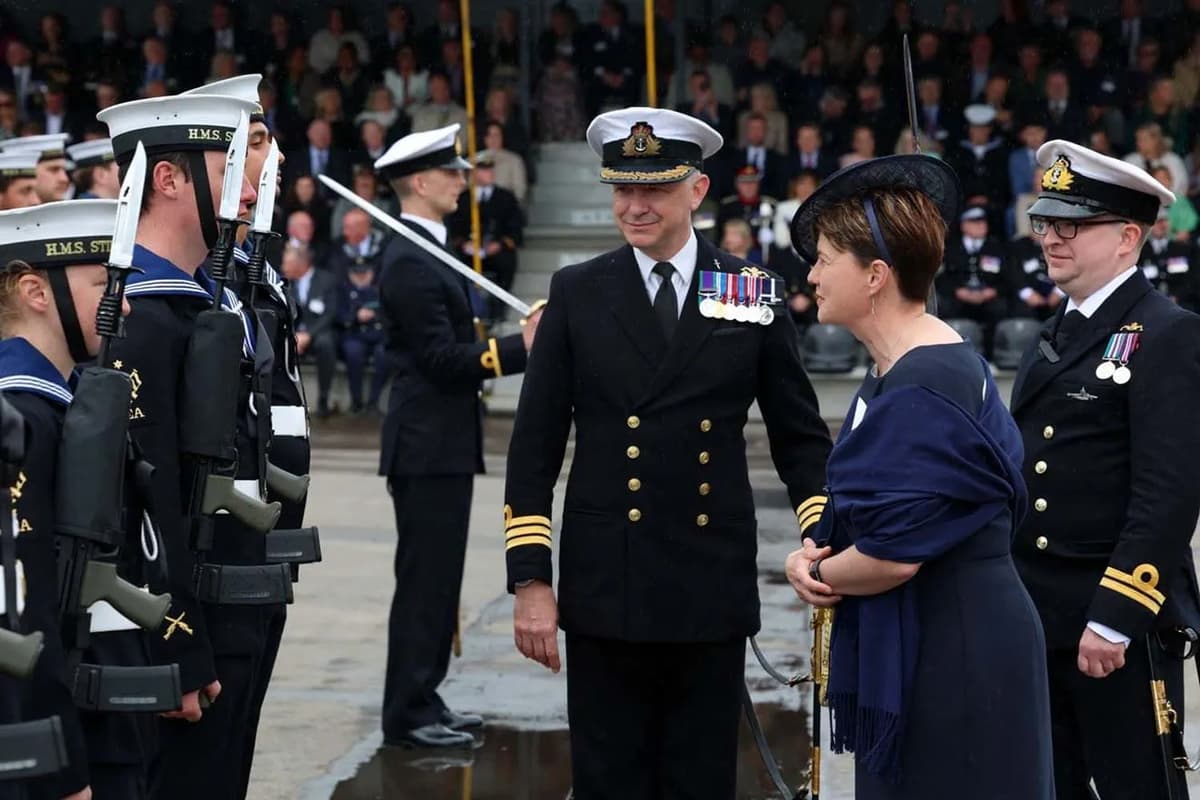
Royal Navy Commissions Minehunting Mothership
Key Takeaways
- •HMS Stirling Castle commissioned as Royal Navy’s first minehunting mothership
- •Vessel supports autonomous and uncrewed mine countermeasure systems
- •Replaces aging Hunt and Sandown-class minehunters under UK‑France program
- •Home‑ported in Portsmouth, crewed by 45 sailors and officers
Pulse Analysis
Mine warfare has long been a hidden but critical component of naval strategy, with legacy vessels often exposing crews to dangerous explosive threats. As commercial shipping routes become increasingly contested, modern navies are investing in technologies that can detect and neutralise mines from a distance. The Royal Navy’s decision to field a dedicated mothership reflects a global trend toward leveraging autonomy to protect both military and civilian maritime traffic.
HMS Stirling Castle represents a tangible shift from traditional, crewed minehunters to a modular platform that launches a suite of remotely operated vehicles (ROVs) and autonomous surface vessels. Operating out of Portsmouth, the 45‑member crew manages the ship’s command‑and‑control hub, coordinating sensor data and deploying unmanned systems into hostile waters. Integrated with the UK‑France Mine Hunting Capability programme, the vessel serves as a testbed for next‑generation sonar, AI‑driven threat analysis, and rapid payload swaps, ensuring the Royal Navy can adapt to evolving mine designs.
The commissioning has ripple effects across the defence supply chain, prompting increased demand for unmanned maritime platforms, advanced sonar arrays, and cyber‑secure communications. Industry players that can deliver interoperable, modular solutions stand to benefit from contracts tied to the UK’s broader push for autonomous naval capabilities. Strategically, the mothership enhances NATO’s collective deterrence by providing a scalable, low‑risk method to keep critical sea lanes open, reinforcing the importance of innovation in maintaining maritime superiority.
Royal Navy commissions minehunting mothership
Comments
Want to join the conversation?