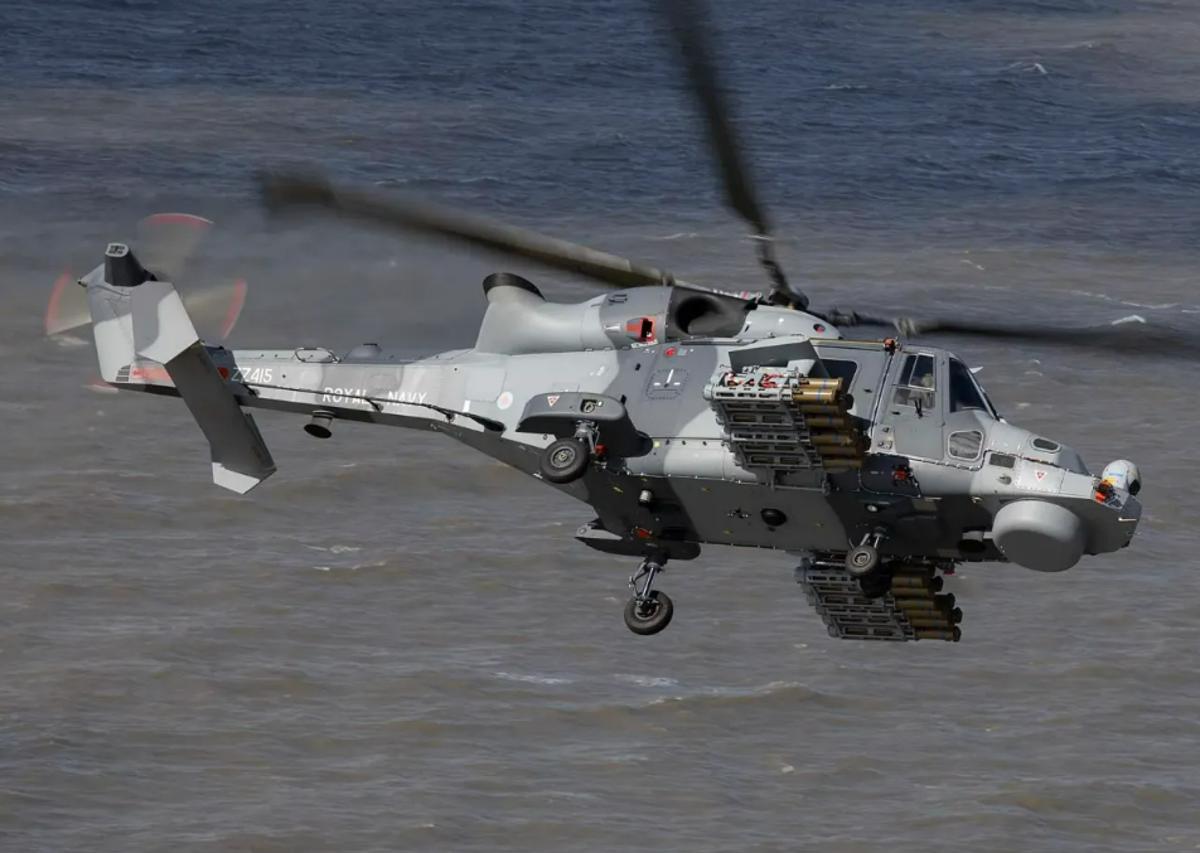
Royal Navy Declares FOC for Martlet Missile System
Companies Mentioned
Why It Matters
Achieving FOC gives the Royal Navy a versatile, lightweight precision weapon that enhances both surface‑strike and counter‑UAS capabilities, strengthening force protection in contested littoral zones. The upgrade positions the Wildcat fleet as a more flexible tool for NATO and allied operations.
Key Takeaways
- •Martlet now fires from as low as 50 ft, expanding engagement envelope
- •Capability enhances Wildcat helicopters against fast attack craft and drones
- •System serves as Royal Navy’s primary air‑launched counter‑UAS weapon
- •Tested in Middle East operations, proving combat readiness
- •Thales‑developed missile entered service 2020, now at full operational capability
Pulse Analysis
The Martlet missile, a lightweight precision‑guided projectile developed by Thales, entered Royal Navy service in 2020 as a niche air‑launched weapon for the AW159 Wildcat. Over the past four years, the Ministry of Defence funded an extensive integration and testing campaign that culminated in full operational capability (FOC) this month. By validating launch envelopes from 500 feet down to just 50 feet, the Navy has unlocked a new tactical dimension for maritime strike missions, allowing Wildcat crews to engage targets from lower, more concealed flight paths.
Low‑altitude firing dramatically improves operational flexibility, especially in adverse weather or cluttered littoral environments where higher approaches expose aircraft to radar and small‑arms fire. The enhanced envelope also broadens the missile’s target set, enabling effective engagement of fast inshore attack craft, small surface vessels, and increasingly prevalent unmanned aerial systems. As the Royal Navy designates Martlet its primary air‑launched counter‑UAS effector, the system fills a critical gap in the fleet’s layered defence architecture, complementing larger anti‑ship missiles and ship‑borne point‑defence solutions.
Strategically, the FOC milestone signals the UK’s commitment to modernising its maritime strike capability without incurring the cost of larger, heavier missiles. The successful deployment in Middle East operations demonstrates real‑world combat validation, boosting confidence among NATO partners and potential export customers. Looking ahead, the flexibility of the Martlet platform may inspire further upgrades—such as network‑centric targeting or dual‑mode seekers—ensuring the Wildcat remains a relevant, cost‑effective asset in future high‑intensity and low‑intensity naval engagements.
Royal Navy declares FOC for Martlet missile system
Comments
Want to join the conversation?
Loading comments...