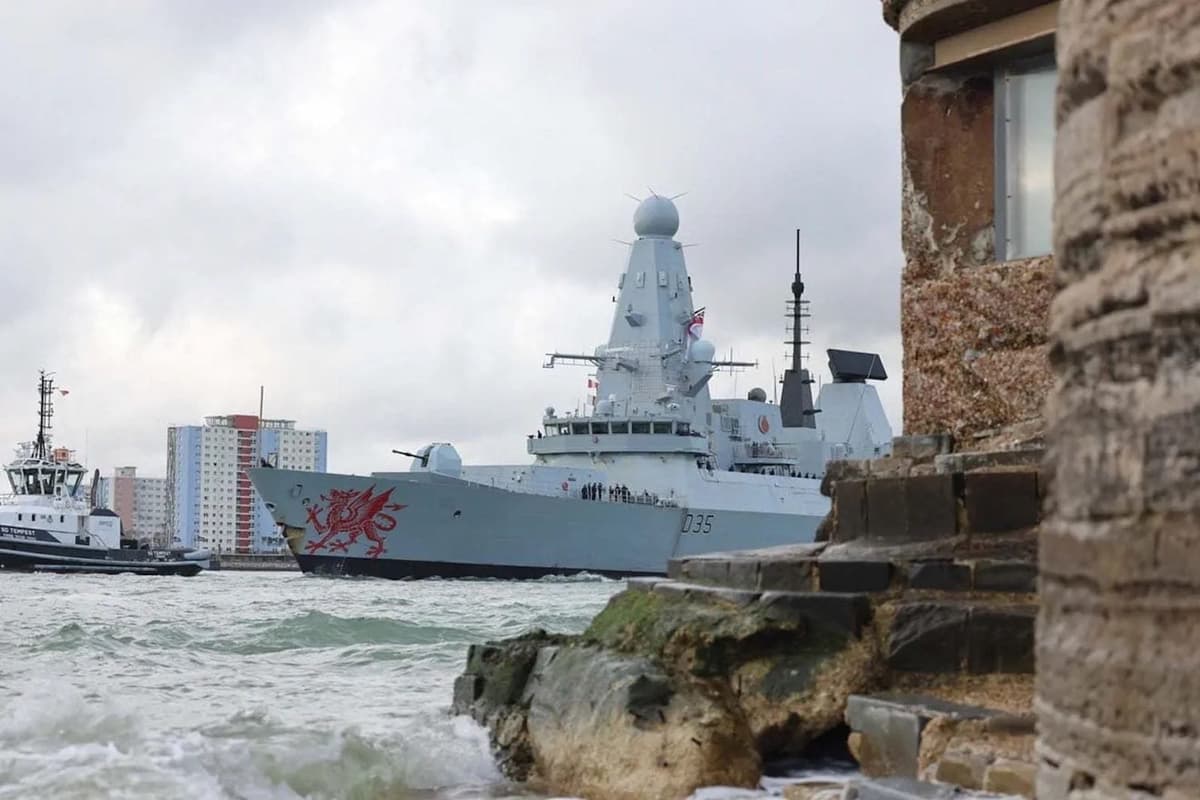
Royal Navy Sends Missile Destroyer HMS Dragon to Eastern Mediterranean
•March 10, 2026
0
Why It Matters
The swift deployment showcases Britain’s ability to project high‑end naval power and protect critical maritime trade routes, reinforcing deterrence for NATO allies in a volatile Middle East environment.
Key Takeaways
- •HMS Dragon deployed to Eastern Mediterranean
- •Sea Viper tracks hundreds of targets simultaneously
- •Wildcat helicopters equipped with Martlet missiles forward‑deployed
- •Deployment prepared in six days, not six weeks
- •UK adds F‑35s, radars, air‑defence units regionally
Pulse Analysis
The Eastern Mediterranean has become a flashpoint as Iranian‑backed groups intensify attacks on Western commercial and assets. In response, the United Kingdom has dispatched the Type‑45 destroyer HMS Dragon from Portsmouth, signaling a decisive shift from routine patrols to a forward‑deployed defensive posture. The move protects British‑flagged vessels, critical energy infrastructure, and allied forces operating in the area, while also deterring further escalation. By positioning a high‑end air‑defence platform near Cyprus and the Red Sea, London demonstrates its commitment to safeguarding trade routes that underpin the European economy.
HMS Dragon brings the Sea Viper missile system, capable of tracking hundreds of aerial contacts and engaging multiple threats at Mach 4 speeds. Recent operations by sister ship HMS Diamond, which intercepted drones and a Houthi ballistic missile, proved the system’s combat readiness. Complementing the destroyer are 815 Naval Air Squadron’s Wildcat helicopters armed with Martlet missiles and a Merlin Mk2 surveillance aircraft, creating a layered shield of early‑warning and kinetic response. The integrated package offers the UK a rare combination of sea‑borne radar, point‑defence missiles, and organic air support.
The rapid six‑day preparation—far shorter than the typical six‑week cycle—highlights the Royal Navy’s surge capacity and the Ministry of Defence’s emphasis on agility. This deployment dovetails with newly arrived F‑35 Lightning II fighters, mobile radar units, and ground‑based air‑defence batteries, forming a multi‑domain deterrent that reassures NATO partners. Analysts view the presence of HMS Dragon as a benchmark for future expeditionary operations, suggesting that Britain will maintain a permanent, high‑tech naval footprint in contested waters to counter state and non‑state threats alike.
Royal Navy Sends Missile Destroyer HMS Dragon to Eastern Mediterranean
0
Comments
Want to join the conversation?
Loading comments...