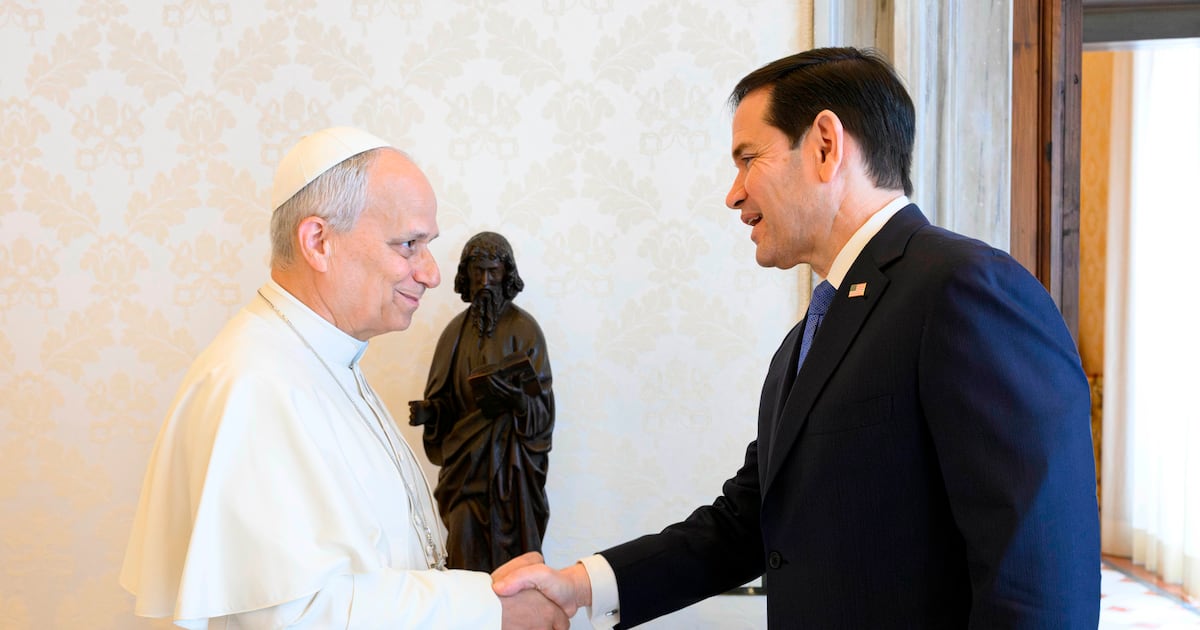
Rubio and Pope Leo Discuss Middle East in ‘Friendly and Constructive’ Meeting
Companies Mentioned
Why It Matters
A potential US‑Iran de‑escalation could stabilize oil markets and reduce shipping disruptions, directly affecting energy prices, logistics costs, and corporate earnings across the sector.
Key Takeaways
- •Rubio and Pope Leo discuss durable Middle East peace at Vatican
- •US and Iran explore short‑term cease‑fire, nuclear issue remains
- •Brent crude fell to $96, its lowest in two weeks
- •20,000 crew members trapped as 1,500 ships stuck in Gulf
- •Shell reports $6.9 bn Q1 earnings, launches $3 bn buyback
Pulse Analysis
The Vatican meeting between Secretary of State Marco Rubio and Pope Leo XIV signals a rare convergence of diplomatic and religious influence on the Middle East peace process. While the United States and Iran are inching toward a temporary cease‑fire, the core dispute over Tehran’s nuclear ambitions remains untouched. Analysts view this limited agreement as a confidence‑building step that could pave the way for broader negotiations, but they caution that any durable settlement will require sustained multilateral pressure and regional buy‑in.
Oil markets reacted swiftly to the diplomatic chatter, with Brent crude sliding to roughly $96 a barrel – the lowest level in two weeks – as investors priced in reduced risk of a prolonged supply shock. The price dip eases cost pressures for airlines and shippers, yet the lingering blockade of the Strait of Hormuz keeps freight rates elevated and leaves an estimated 20,000 crew members stranded on 1,500 vessels. Companies with exposure to energy price volatility, such as European airlines, are already adjusting fare policies under new EU rules that demand compensation for fuel‑linked cancellations.
Corporate earnings reflect the mixed impact of the conflict. Shell’s first‑quarter earnings more than doubled to $6.9 billion, driven by higher oil prices before the recent dip, and the firm announced a $3 billion share‑buyback to reward shareholders. Conversely, Maersk reported modest profit growth, noting limited operational disruption but warning that prolonged Hormuz closures could erode margins. The juxtaposition of soaring energy profits and logistical bottlenecks underscores how geopolitical developments continue to shape the strategic outlook for energy producers, transport firms, and investors alike.
Rubio and Pope Leo discuss Middle East in ‘friendly and constructive’ meeting
Comments
Want to join the conversation?
Loading comments...