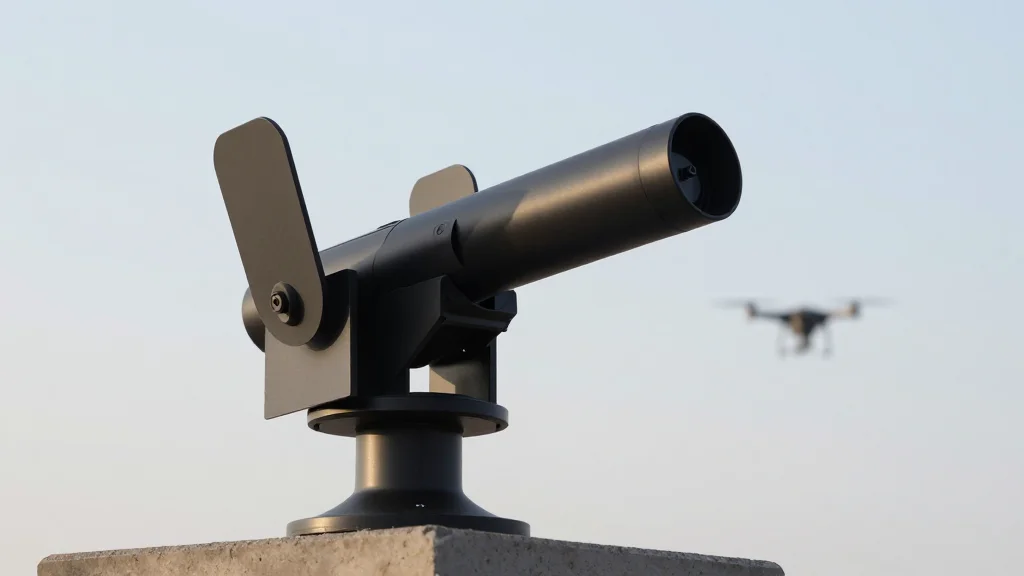
Russia Debuts ZAK‑30 Citadel Turret with Programmable 30mm Airburst Rounds

Companies Mentioned
Why It Matters
The ZAK‑30 Citadel introduces programmable airburst technology into Russia's domestic defence arsenal, reducing reliance on imported Western systems and potentially reshaping the global counter‑UAS market. By offering a system that claims higher lethality with fewer rounds, Russia may attract buyers in regions where budget constraints limit the acquisition of expensive Western air‑defence solutions. The move also underscores the growing strategic importance of drone mitigation, as state and non‑state actors increasingly employ UAVs for surveillance, logistics, and strike operations. If the Citadel proves effective in operational trials, it could accelerate the diffusion of smart‑ammo concepts beyond traditional NATO allies, prompting a broader re‑evaluation of anti‑drone tactics and procurement strategies worldwide. The technology may also influence future doctrinal developments, as armed forces integrate programmable munitions into layered air‑defence architectures that combine kinetic, electronic, and directed‑energy methods.
Key Takeaways
- •Rostec unveiled the ZAK‑30 Citadel turret, firing programmable 30mm airburst rounds.
- •System uses optical and radar sensors to calculate optimal detonation points.
- •Rostec claims the turret needs fewer projectiles per target than conventional ammo.
- •Citadel can operate "24/7" and features a swiveling, pitch‑adjustable cannon.
- •Will be showcased at a Moscow security forum; comparable to Rheinmetall AHEAD and Northrop Grumman Mk310.
Pulse Analysis
Russia’s introduction of the ZAK‑30 Citadel reflects a strategic pivot toward indigenous high‑tech solutions in a domain where it has traditionally lagged. By leveraging programmable fuzes—a technology that has been a hallmark of Western airburst munitions—Moscow signals its intent to close the capability gap and reduce dependence on foreign suppliers. Historically, Russian anti‑aircraft systems have emphasized volume fire over precision; the Citadel’s emphasis on fewer, smarter rounds could mark a doctrinal shift toward precision‑kill approaches.
The timing is noteworthy. With NATO members investing heavily in swarm‑countering technologies and the 2026 summit likely to spotlight drone threats, Russia’s move may be both a defensive countermeasure and a market play. If the Citadel can be produced at a lower unit cost than its Western counterparts, it could find a niche among countries that cannot afford the $1‑2 million price tag of systems like Rheinmetall’s AHEAD. This could reshape export dynamics, especially in regions such as the Middle East, Africa, and parts of Asia where Russian arms have a strong foothold.
However, the Citadel’s success will depend on rigorous field testing against modern drone swarms, electronic warfare environments, and low‑observable platforms. Western systems have benefited from extensive operational data and iterative upgrades; Russia will need to demonstrate comparable reliability and integration with existing air‑defence networks. Should the ZAK‑30 meet these expectations, it could catalyze a broader adoption of programmable ammunition across the global defence market, prompting both incumbents and newcomers to accelerate R&D in smart munitions and sensor fusion technologies.
Russia Debuts ZAK‑30 Citadel Turret with Programmable 30mm Airburst Rounds
Comments
Want to join the conversation?
Loading comments...