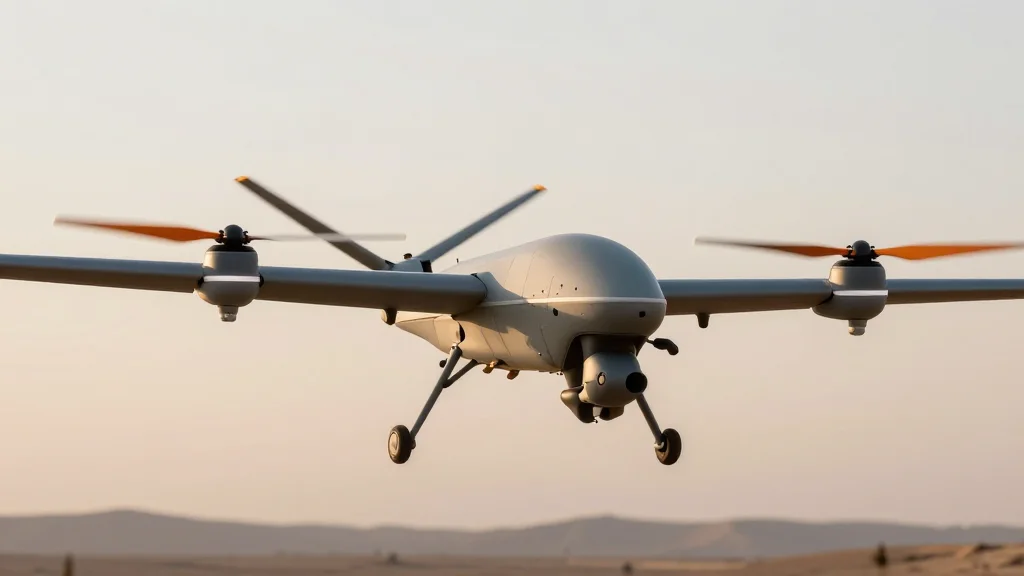
Russia Deploys Orlan Recon Drone as Mothership for FPV Quadcopters, Extending Strike Range

Why It Matters
The Orlan‑FPV carrier blurs the line between loitering munitions and traditional UAVs, forcing militaries to redesign air‑defence architectures that have historically focused on either high‑value missiles or low‑altitude hobby‑grade drones. Extending the strike envelope to 370 miles means that front‑line units can be targeted from well beyond the range of most portable air‑defence systems, raising the stakes for early‑warning radar and electronic‑countermeasure investments. For defense industries, the development opens a market for modular payload bays, lightweight release mechanisms, and resilient communication links that can survive jamming. Conversely, it pressures suppliers of counter‑UAV technologies to deliver longer‑range detection and interception solutions, potentially accelerating procurement cycles for NATO allies and their partners. The tactic also illustrates how existing platforms can be repurposed with minimal cost, a lesson that may spread to other conflicts where resource‑constrained forces seek to amplify the impact of cheap drones. Monitoring the operational effectiveness of the Orlan carrier will be crucial for policymakers assessing the future of unmanned warfare and the need for new regulatory frameworks around autonomous weapon systems.
Key Takeaways
- •Russian forces spotted mounting FPV quadcopters under the wings of Orlan‑10 recon drones.
- •Orlan‑10’s standard range is ~74 miles; it can be pre‑programmed for up to 370 miles.
- •FPV quadcopters traditionally hit targets within ~40 miles, now potentially much farther.
- •The carrier is reusable, unlike expendable Shahed or Gerbera loitering munitions.
- •Ukrainian drone adviser Serhii "Flash" Beskrestnov confirmed the tactic via Telegram.
Pulse Analysis
The Orlan‑based carrier represents a pragmatic evolution in Russia’s drone doctrine, leveraging an existing, proven platform to multiply the lethality of low‑cost FPV weapons. Historically, the Russian military has relied on massed swarms of expendable loitering munitions to overwhelm Ukrainian air defences. By converting a reconnaissance drone into a reusable launch pad, Moscow reduces attrition rates and operational costs while complicating the enemy’s detection calculus. This mirrors a broader shift seen in modern conflicts: the convergence of high‑tech surveillance assets with low‑tech strike tools to create hybrid systems that are both affordable and adaptable.
From a strategic perspective, the move could force a recalibration of NATO’s counter‑UAV posture. Current layered defenses—ranging from short‑range electronic jammers to kinetic interceptors—are optimized for either low‑altitude hobby drones or high‑value loitering munitions, not for a high‑altitude carrier that can seed multiple threats across a wide area. The challenge will be to develop integrated solutions that can track the carrier’s flight path, jam its command link, and simultaneously engage the released FPV drones. Failure to do so may grant Russia a persistent, low‑cost strike capability that erodes the defensive advantage Ukraine has built around its own drone swarm tactics.
Looking ahead, the Orlan carrier could become a template for other air forces seeking to extend the reach of inexpensive payloads without investing in new airframes. If the concept proves operationally successful, we may see a proliferation of similar adaptations—potentially even in the hands of non‑state actors—accelerating the diffusion of swarm‑enabled warfare. The key question for Western defense planners will be whether they can outpace this innovation cycle with rapid‑fielded electronic‑warfare suites and AI‑driven detection algorithms before the carrier model becomes a standard component of Russia’s aerial arsenal.
Russia Deploys Orlan Recon Drone as Mothership for FPV Quadcopters, Extending Strike Range
Comments
Want to join the conversation?
Loading comments...