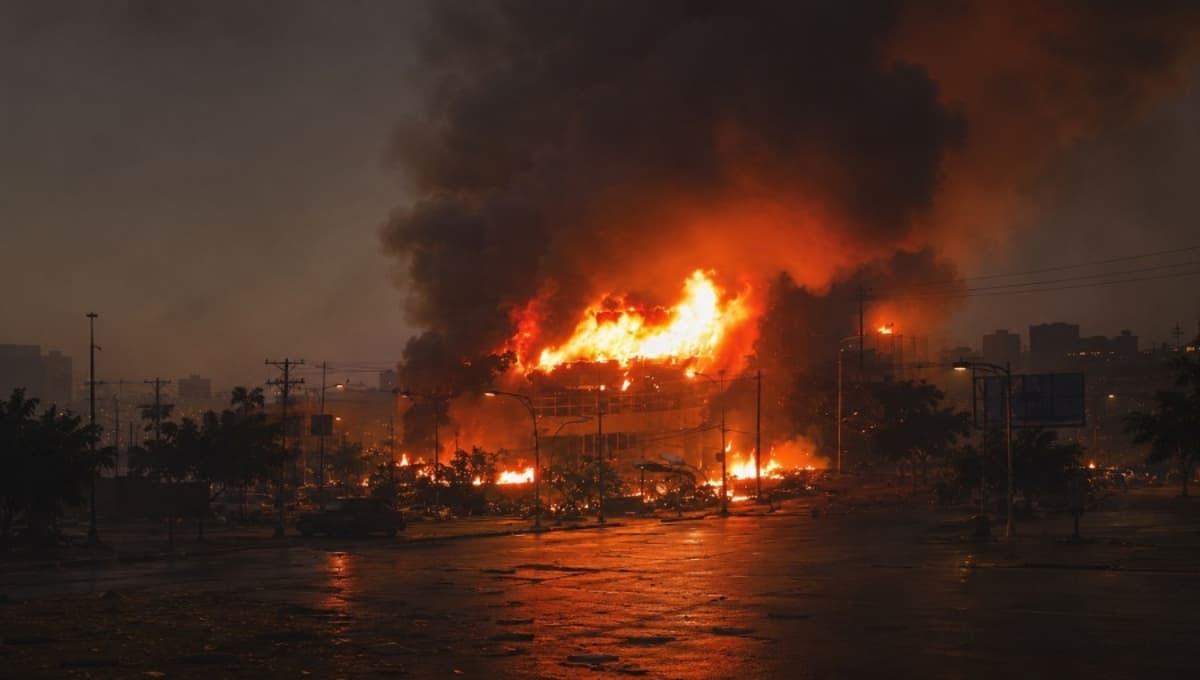
Russia Fires Oreshnik Cruise Missiles at Kyiv as Tit for Tat Cycle of Violence Continues
Why It Matters
The attack demonstrates Russia’s willingness to deploy advanced, nuclear‑capable missiles, raising escalation risks and pressuring NATO allies to reassess security commitments in Eastern Europe.
Key Takeaways
- •Russia launched ~900 drones and missiles, including two Oreshnik ballistic missiles.
- •Oreshnik missiles can carry up to six MIRV warheads, reaching Mach 11.
- •Attack hit Kyiv residential areas, schools, markets, and industrial sites.
- •Deployment signals Russia’s warning to Europe as US arms support wanes.
Pulse Analysis
The May 24 strike underscores a new phase in the Russia‑Ukraine conflict, where Moscow is willing to field the Oreshnik (RS‑26 Rubezh) system—an intermediate‑range ballistic missile once barred by the INF Treaty. By notifying Washington under the 1988 ballistic‑missile agreement, Russia adhered to a Cold‑War‑era protocol while simultaneously showcasing a capability that can reach deep into Europe. This move not only serves as retaliation for Kyiv’s recent Moscow raid but also signals a strategic pivot toward deterrence against increasing Western military aid.
The barrage’s impact on Kyiv was immediate and severe. Hundreds of drones and cruise missiles, combined with the two Oreshnik missiles, ignited fires at key infrastructure such as the Artem Defence Plant, while residential neighborhoods, schools and markets suffered extensive damage. Civilian casualties and infrastructure loss amplify humanitarian concerns and strain Ukraine’s emergency response. Moreover, the use of a missile capable of deploying multiple independently targetable re‑entry vehicles heightens the threat perception among NATO members bordering Russia, prompting urgent discussions on air‑defence readiness.
Beyond the battlefield, the strike reverberates through diplomatic channels. Russia’s explicit warning to European governments comes as Washington scales back direct arms transfers, nudging allies to consider their own support levels. The deployment may trigger renewed calls within NATO to fill the capability gap left by the dissolved INF Treaty, potentially accelerating the development or acquisition of comparable intermediate‑range systems. As both sides continue reciprocal strikes on energy and industrial targets, the risk of further escalation looms, making diplomatic engagement and clear signaling more critical than ever.
Russia fires Oreshnik cruise missiles at Kyiv as tit for tat cycle of violence continues
Comments
Want to join the conversation?
Loading comments...