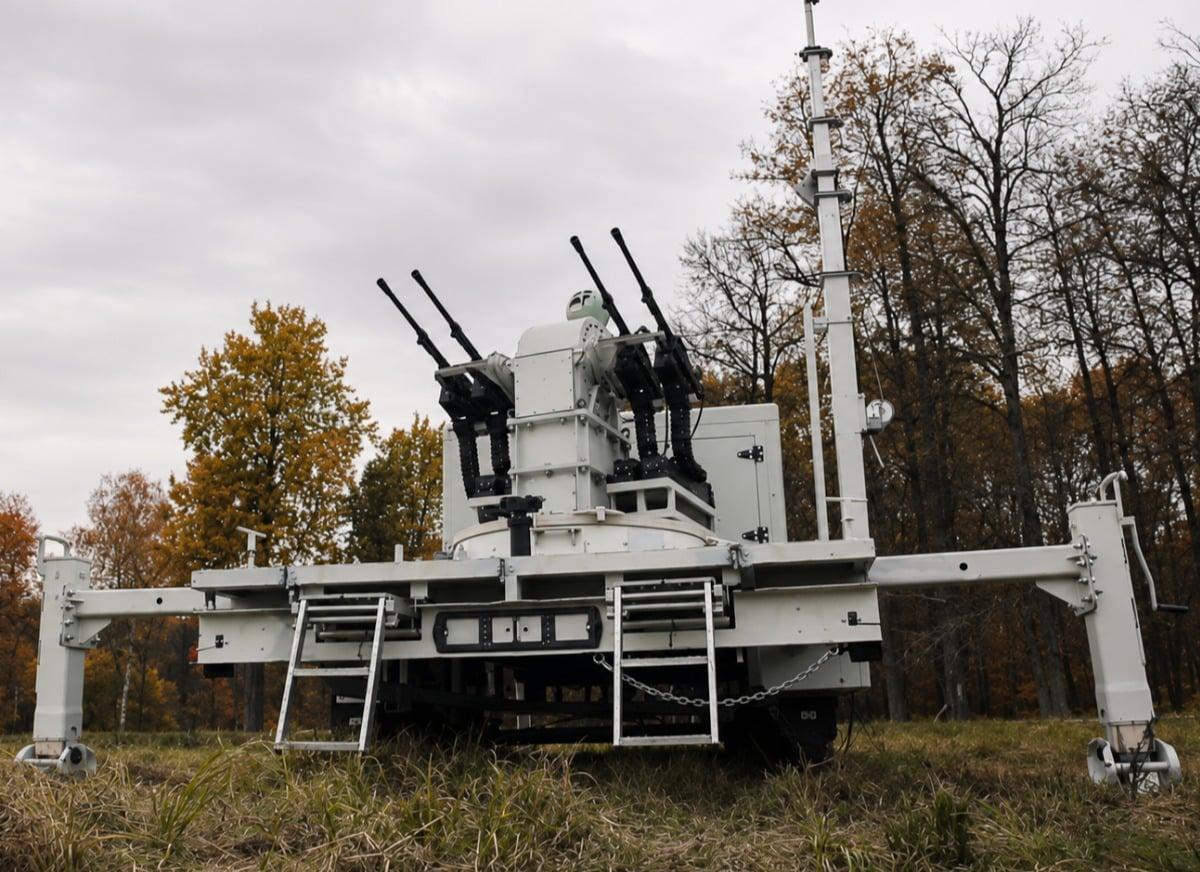
Russia Reveals How Its New Automated Drone Defense System Works
Why It Matters
Zubr provides a low‑cost, rapid‑reaction shield against cheap attack drones, bolstering Russia’s ability to protect vital infrastructure without expending expensive missiles. Its automation reduces reaction time and manpower, setting a new benchmark for close‑range air‑defence systems.
Key Takeaways
- •Zubr system includes four modules, each with four 7.62 mm machine guns
- •Radar detects drones up to 1.5 km, enabling night-time engagement
- •Operator only authorizes fire; detection and tracking are fully automated
- •Designed for terminal defense, effective range 370‑450 m against small FPV drones
- •First batch entered service Jan 2026, protecting critical Russian infrastructure
Pulse Analysis
The emergence of Russia’s Zubr automated counter‑drone platform reflects a broader shift toward cost‑effective, gun‑based solutions in modern air‑defence. As Ukraine’s drone attacks have grown in frequency and sophistication, Moscow faces a dilemma: traditional missile interceptors are expensive and limited in number, while cheap commercial drones can swarm defenses. Zubr’s architecture—four radar‑linked firing modules armed with legacy 7.62 mm PKT guns—offers a scalable answer, delivering a high volume of fire at a fraction of missile costs. By leveraging a radar with a 1.5 km detection envelope, the system can engage threats in darkness, a critical advantage given the night‑time surge in Ukrainian drone activity.
Automation lies at the heart of Zubr’s value proposition. The radar autonomously locks onto a target, the electro‑optical trackers compute a firing solution, and only a human operator must press the engage button. This division of labor trims reaction times to seconds, a decisive edge when confronting fast‑moving FPV drones that close the distance in under a minute. With an effective engagement window of roughly 370‑450 meters, the system operates as a terminal‑defence layer, filling the gap between long‑range interceptors and point‑defence measures. Its sixteen machine‑gun barrels can saturate a small airspace, increasing kill probability without the logistical burden of missile resupply.
Strategically, Zubr’s fielding signals Russia’s intent to harden critical infrastructure against asymmetric aerial threats while conserving its high‑value missile stockpiles. The system’s relatively low production cost and reliance on existing PKT ammunition could make it attractive for export to nations facing similar drone challenges but lacking deep missile inventories. For adversaries, Zubr raises the bar for drone‑based operations, demanding higher stealth, speed, or swarm tactics to overwhelm automated gun defenses. As automated C‑UAS platforms proliferate, the Zubr example underscores a growing convergence of radar, AI‑driven tracking, and conventional firepower in the next generation of air‑defence strategies.
Russia reveals how its new automated drone defense system works
Comments
Want to join the conversation?
Loading comments...