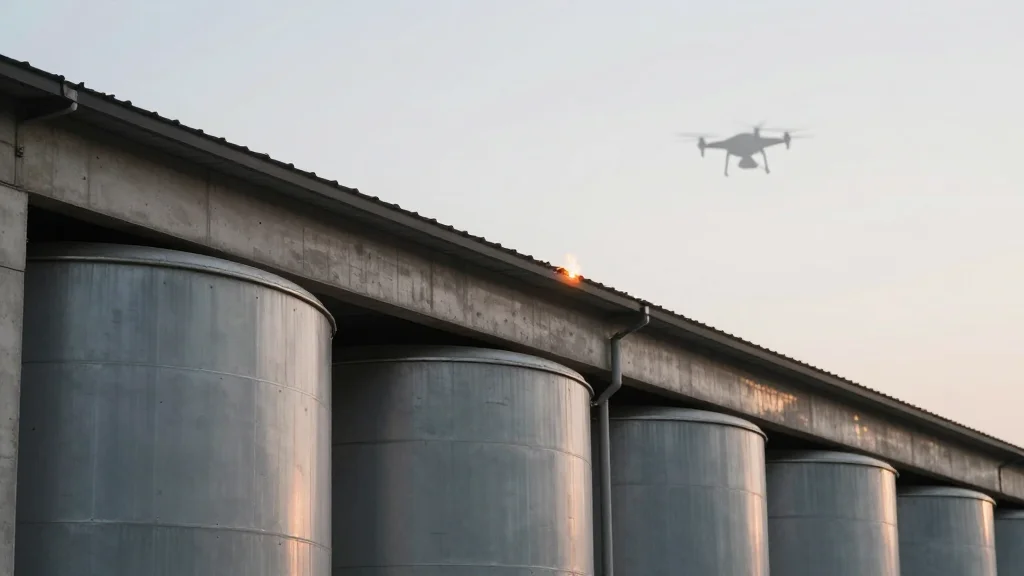
Russian Drone Strikes Spent Fuel Storage Near Chernobyl, Ukraine Says

Why It Matters
The strike highlights a new dimension of the Russia‑Ukraine war: the weaponisation of nuclear‑related infrastructure. Even without an immediate release of radioactive material, the damage to a spent‑fuel handling building erodes confidence in the safety of legacy sites that already require intensive oversight. A breach, however minor, could trigger cross‑border contamination, complicate evacuation plans and strain the already‑stretched emergency response capacities of neighboring states. Beyond the immediate safety concerns, the incident tests the effectiveness of international nuclear governance. The IAEA’s ability to inspect and verify the site will be a litmus test for the agency’s relevance in conflict zones. Moreover, the episode may influence future diplomatic negotiations, as any escalation that threatens nuclear safety could prompt stronger sanctions or collective security actions from NATO and the EU.
Key Takeaways
- •Russian UAV hit a container‑receiving building at a spent‑fuel storage site 15 km from Chernobyl.
- •Fire was extinguished quickly; no casualties reported and radiation levels stayed within normal limits.
- •Ukrainian FM Andrii Sybiha called the attack "systemic, deliberate, and unacceptable" and urged global condemnation.
- •President Zelensky described the strike as "extremely vile" and part of a pattern of attacks on nuclear facilities.
- •IAEA plans an on‑site inspection to assess damage and verify radiation safety.
Pulse Analysis
The incident signals a troubling shift in how conventional warfare intersects with nuclear safety. Historically, nuclear facilities have been treated as off‑limits under the laws of armed conflict, but the repeated targeting of ancillary structures—such as spent‑fuel handling buildings—suggests a strategic calculus that seeks to exploit the psychological impact of nuclear risk. This tactic can amplify fear without necessarily achieving a technical breakthrough, leveraging the specter of a radiological event to pressure adversaries and international audiences.
From a strategic standpoint, Russia may be attempting to force Ukraine and its allies into a dilemma: respond militarily to protect nuclear sites and risk broader escalation, or tolerate the attacks and risk domestic and international backlash over perceived negligence. The Ukrainian response—swift condemnation, calls for IAEA involvement, and framing the strike as a war crime—aims to rally diplomatic support and reinforce the narrative of Russian aggression extending into the nuclear realm.
Looking ahead, the episode could prompt NATO and EU members to reassess the security protocols surrounding legacy nuclear sites in Eastern Europe. Enhanced satellite monitoring, rapid‑response fire‑suppression units, and pre‑positioned radiological equipment may become standard. Moreover, the IAEA’s forthcoming inspection will be a critical test of its mandate in conflict zones; a transparent, timely assessment could restore some confidence, while any perceived delay or obstruction could erode the agency’s credibility and embolden further attacks.
Russian Drone Strikes Spent Fuel Storage Near Chernobyl, Ukraine Says
Comments
Want to join the conversation?
Loading comments...