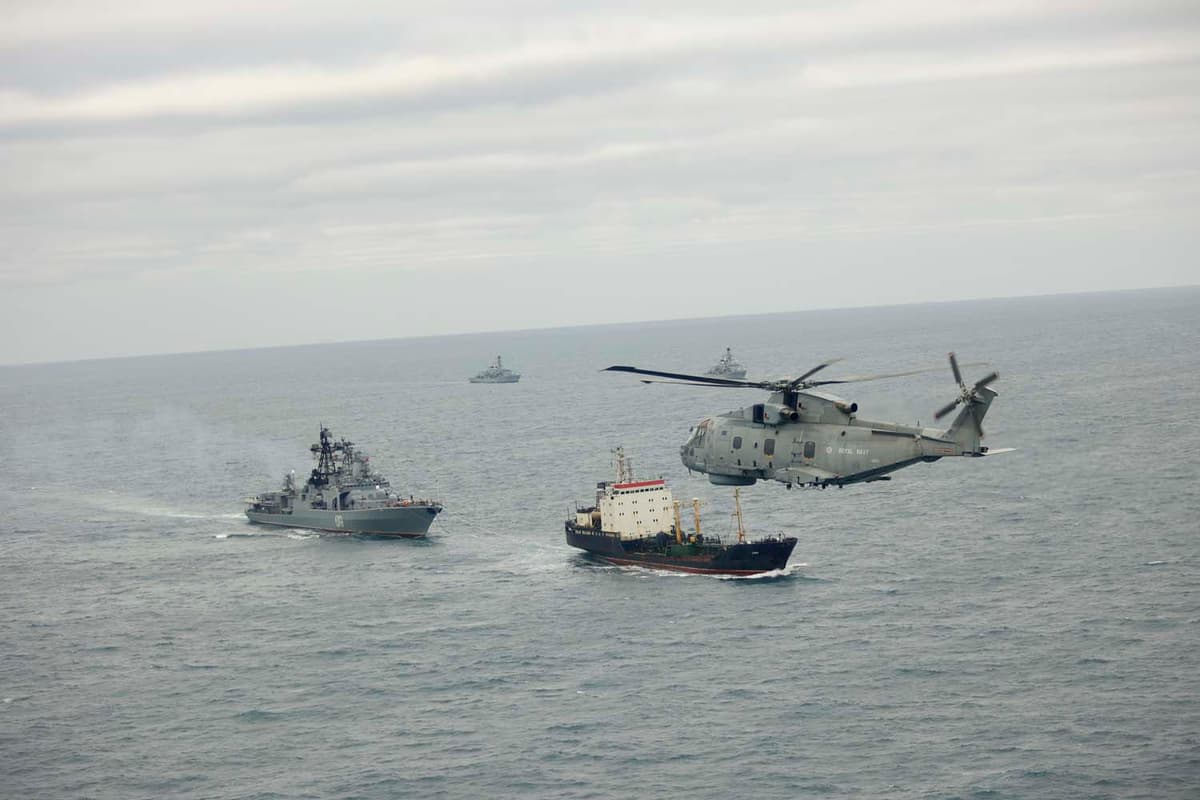
Russian Naval Vessel Spotted Hanging Around UK Offshore Wind Farms – Report
Why It Matters
The incident underscores heightened Russian maritime activity aimed at vulnerable offshore energy infrastructure, raising security concerns for the rapidly expanding UK wind sector and its supply chain. It also validates recent NATO alerts and prompts tighter protective measures across the North Sea.
Key Takeaways
- •Russian Amur‑class repair ship PM‑82 observed near UK wind farms
- •Sighting occurred 50 km off Colchester, English Channel, on April 14
- •Follows UK MOD claim of Russian submarine distraction operation
- •NATO warns Russia may target critical undersea infrastructure in North Sea
- •Six North Sea nations signed pacts to protect offshore energy assets
Pulse Analysis
The appearance of the Kremlin’s Amur‑class repair vessel near Britain’s offshore wind farms is more than a routine naval movement. Designed to service submarines and surface ships, PM‑82’s presence in the English Channel signals a potential intelligence‑gathering mission aimed at the region’s burgeoning renewable assets. Analysts note that the timing aligns with a broader Russian pattern of shadowing critical maritime infrastructure, a tactic that complicates the already delicate security environment surrounding the UK’s offshore wind expansion.
Russia’s maritime strategy in the North Sea has evolved from passive surveillance to active probing of undersea cables, pipelines, and wind turbine foundations. Earlier this month, the UK Ministry of Defence disclosed a covert Russian submarine operation that served as a diversion while other vessels, linked to the Main Directorate of Deep Sea Research, conducted “nefarious activity” against undersea infrastructure. NATO’s recent assessments echo these concerns, warning that Russian actors could exploit the relatively unprotected subsea environment to disrupt energy flows, a scenario that would have cascading effects on European power markets.
In response, six North Sea countries have signed joint declarations to bolster protection of offshore energy installations, and NATO is enhancing maritime domain awareness across the region. For investors and operators, the message is clear: security risk assessments must now incorporate geopolitical threats alongside technical challenges. Strengthening surveillance, hardening physical defenses, and fostering intelligence sharing will be essential to safeguard the multi‑billion‑dollar wind sector from emerging hostile actions.
Russian naval vessel spotted hanging around UK offshore wind farms – Report
Comments
Want to join the conversation?
Loading comments...