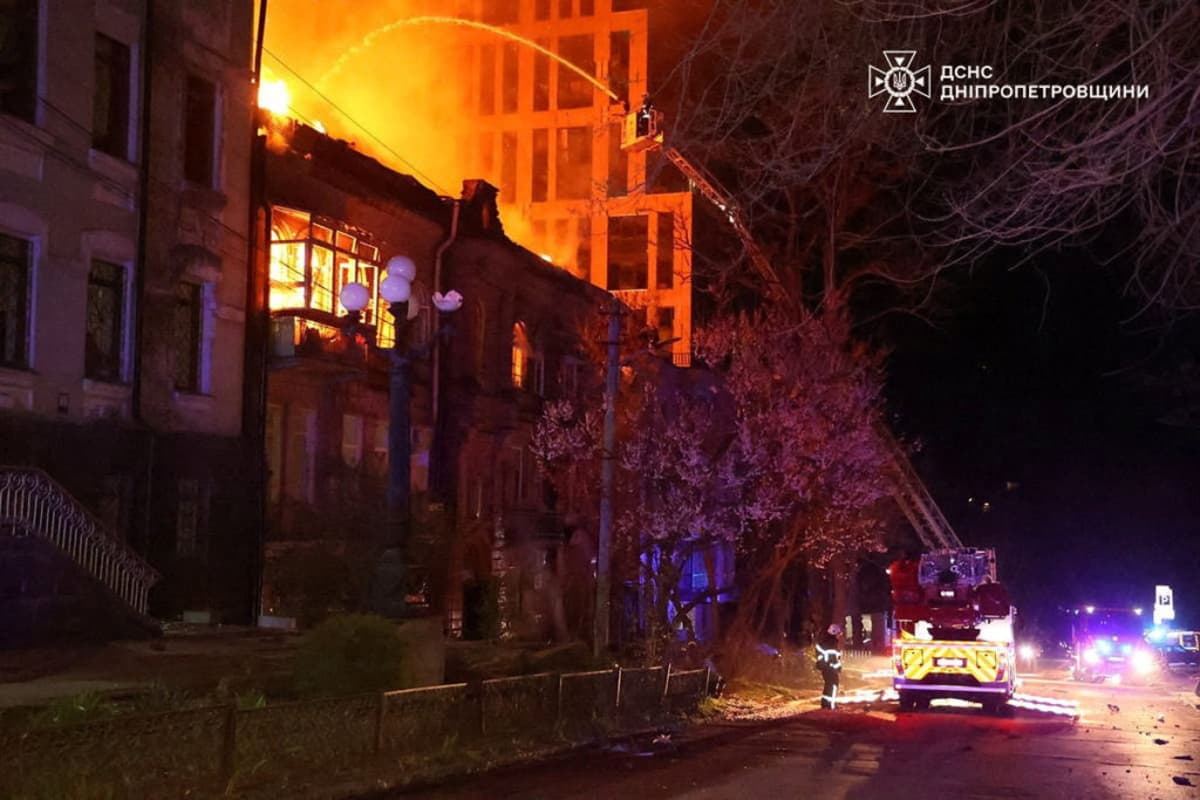
Russian Strikes Kill at Least 2 as Ukraine Targets Drone Factory Inside Russia
Why It Matters
Targeting Russia’s drone manufacturing directly threatens its aerial warfare capacity, raising the conflict’s intensity. The episode also highlights how sanctions policy can influence wartime financing and diplomatic pressure.
Key Takeaways
- •Ukraine hit Atlant Aero drone factory in Taganrog with Neptune missiles
- •Russian forces launched 236 drones overnight, shooting down 203
- •Two civilians killed in Chernihiv drone strike; four injured
- •Taganrog attack injured three, damaged warehouses, school, cars
- •Zelensky condemned U.S. oil sanctions waiver as funding Russian strikes
Pulse Analysis
The latest exchange of drone warfare marks a significant escalation in the Russia‑Ukraine conflict. Ukraine’s precise strike on the Atlant Aero facility in Taganrog—home to strike and reconnaissance UAVs capable of carrying 250‑kilogram guided bombs—demonstrates Kyiv’s growing ability to hit deep‑inside Russian industrial sites. Using domestically built Neptune cruise missiles, the operation not only disrupted a key node of Russia’s military‑industrial complex but also sent a clear signal that Ukraine can target the supply chain that fuels its adversary’s aerial capabilities.
Russia responded with a massive barrage of 236 unmanned aerial systems, overwhelming Ukrainian air defenses but still seeing 203 drones shot down. The remaining drones struck 18 locations, causing civilian casualties in Chernihiv and Kherson, including the death of a 16‑year‑old boy. These attacks underscore the dual pressure on Ukraine: defending against a high‑volume drone onslaught while managing the humanitarian fallout of strikes on populated areas. The concurrent domestic crisis—a mass shooting in Kyiv—adds a layer of internal security strain, prompting an official inquiry and highlighting the broader societal impacts of the war.
Beyond the battlefield, the incident reverberates in the diplomatic arena. President Zelensky’s criticism of the United States’ temporary waiver on Russian oil sanctions reflects concerns that oil revenues directly fund Moscow’s military operations, including drone production. As Western policymakers weigh energy security against war financing, the Taganrog strike illustrates how tactical military actions can amplify calls for stricter economic pressure on Russia. The convergence of kinetic strikes, civilian tolls, and sanctions debates suggests a complex, multi‑front escalation that will shape strategic calculations for both Kyiv and its allies.
Russian strikes kill at least 2 as Ukraine targets drone factory inside Russia
Comments
Want to join the conversation?
Loading comments...