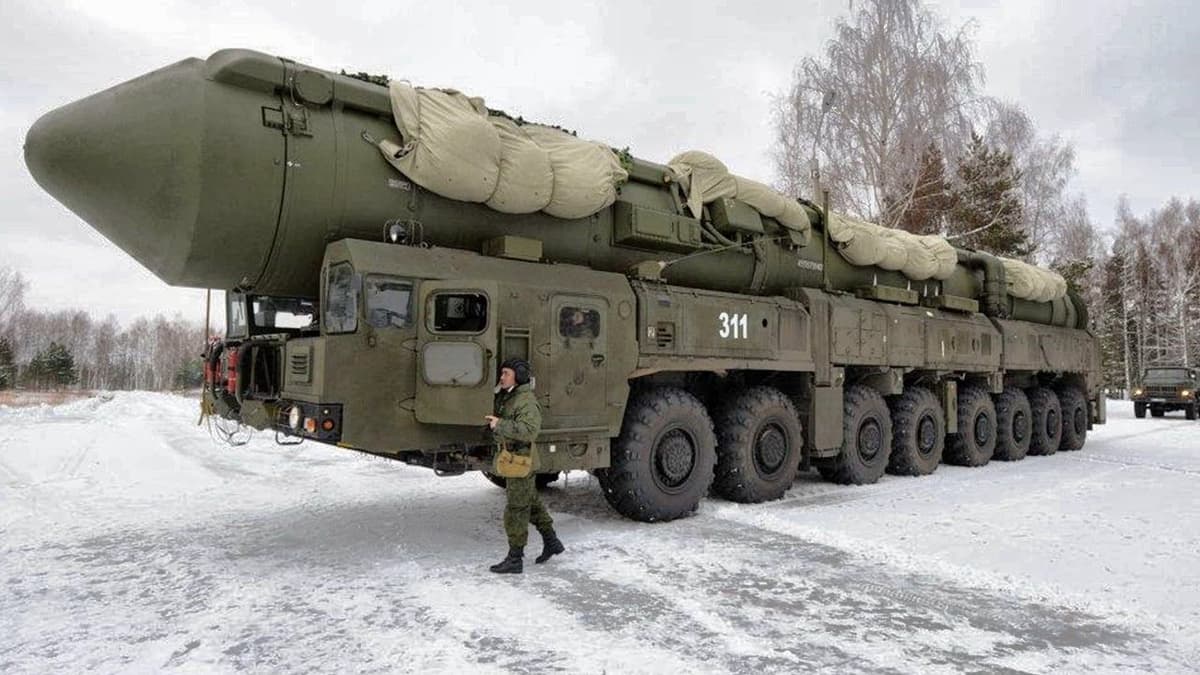
Russia’s Baltic Neighbor Seeks U.S. Nukes Amid Growing Threats From Moscow: Why Lithuania Is “On The Edge”
Why It Matters
The proposal signals a potential shift in NATO’s nuclear posture and raises the risk of heightened East‑European security tensions, highlighting the Baltic states’ desperation for stronger deterrence against Russia.
Key Takeaways
- •Lithuania seeks US B61-12 bombs under NATO nuclear sharing.
- •US troop drawdown prompts Warsaw Pact states to request nuclear guarantees.
- •Constitutional ban may require parliamentary amendment for nuclear hosting.
- •Hosting nukes would need underground vaults and F‑35 dual‑capable aircraft.
- •Russian response could heighten East‑European security tensions.
Pulse Analysis
Lithuania’s overture to host U.S. B61‑12 nuclear bombs reflects a broader reassessment of NATO’s deterrence strategy as American conventional forces scale back their European presence. The nuclear‑sharing framework, already active in the United Kingdom, Germany, Italy, the Netherlands, Belgium and Turkey, allows U.S.-owned weapons to be stored on allied soil and delivered by dual‑capable aircraft. By seeking inclusion, Vilnius hopes to secure a tangible American commitment that compensates for the uncertain future of troop rotations, while signaling to Moscow that NATO’s nuclear umbrella remains robust despite shifting force postures.
The Baltic nation’s security calculus is driven by its geography: a shared border with Russia’s heavily militarized Kaliningrad enclave and proximity to the Suwałki Gap, the narrow corridor linking Poland and the rest of NATO to the Baltic states. Recent Russian actions—drone incursions, sabotage of undersea cables, and the buildup of combat‑experienced units near the frontier—have intensified Vilnius’s perception of an existential threat. In response, Lithuania has boosted defense spending to over 5% of GDP, reinstated conscription, and welcomed a permanent German armored brigade, while acquiring advanced systems such as Leopard‑2 tanks, HIMARS rockets and F‑35 fighters, all aimed at deterring conventional aggression.
Hosting U.S. nuclear weapons would, however, entail significant legal and logistical hurdles. Lithuania’s constitution expressly forbids weapons of mass destruction, requiring a super‑majority parliamentary vote to amend. Moreover, the B61‑12 requires secure underground vaults, specialized maintenance crews, and F‑35s capable of dual‑role missions—investments that could take years to implement. Moscow has already warned that further NATO nuclear expansion eastward would be a provocation, raising the specter of a new arms‑race dynamic in Europe. The decision, therefore, sits at the intersection of deterrence, alliance cohesion, and escalation risk, and will likely influence broader debates on the future of NATO’s nuclear sharing policy.
Russia’s Baltic Neighbor Seeks U.S. Nukes Amid Growing Threats from Moscow: Why Lithuania is “On The Edge”
Comments
Want to join the conversation?
Loading comments...