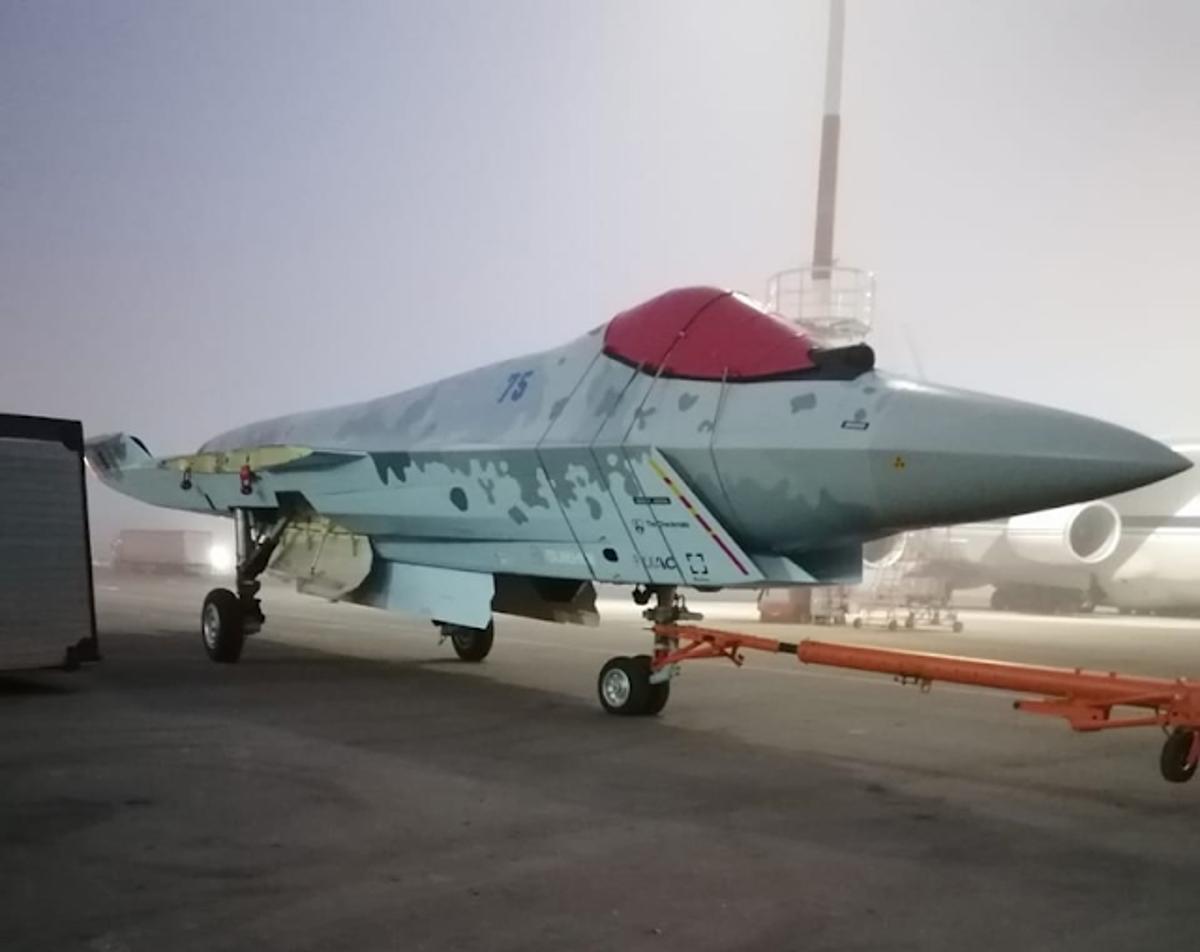
Russia’s Su-75 Checkmate Prototype Now Under Construction, First Flight Targeted for 2026: UAC Chief
Why It Matters
The Checkmate could reshape the global fighter market by offering a cost‑effective stealth option, expanding Russia’s export base amid sanctions and heightened competition from Western fifth‑generations.
Key Takeaways
- •Prototype construction began; first flight slated for 2026
- •Single‑engine design offers lower acquisition and operating costs versus twin‑engine fighters
- •Digital twin technology cuts development time by roughly five years
- •Russia seeks export customers, with India showing potential partnership interest
Pulse Analysis
The Su‑75 Checkmate represents Russia’s answer to a growing demand for affordable fifth‑generation fighters. By stripping the design down to a single engine and a lightweight airframe, Sukhoi promises acquisition costs around $30 million—significantly undercutting the $80 million price tag of the U.S. F‑35. This price advantage, coupled with claims of reduced operating expenses, positions the Checkmate as a viable option for nations that need stealth capability without the budgetary strain of larger platforms.
Beyond cost, the program leans heavily on advanced digital‑twin technology, allowing engineers to simulate the entire aircraft lifecycle virtually. This approach reportedly trims five years from the traditional development timeline and minimizes physical prototyping risks. The fighter also integrates AI‑assisted single‑pilot operation, low‑observable shaping, and modular variants—including manned, twin‑seat, and unmanned configurations—enhancing its appeal across diverse mission sets. Timeline slips, originally pushing the first flight to 2023, were attributed to redesigns that improve competitiveness and lower technical risk.
Export potential is a critical driver for the Checkmate’s commercial strategy. Russia has already signaled openness to joint‑venture production, eyeing markets in Asia, the Middle East, and Africa. India’s HAL expressed readiness to collaborate, aligning the project with the country’s Make‑in‑India and Atmanirbhar Bharat initiatives. If realized, a partnership could generate billions in revenue and provide a cheaper alternative to India’s indigenous AMCA program. For the Russian defense sector, securing foreign orders would offset sanctions‑related revenue losses and reinforce its foothold in the global stealth‑fighter niche.
Russia’s Su-75 Checkmate Prototype Now Under Construction, First Flight Targeted for 2026: UAC Chief
Comments
Want to join the conversation?
Loading comments...