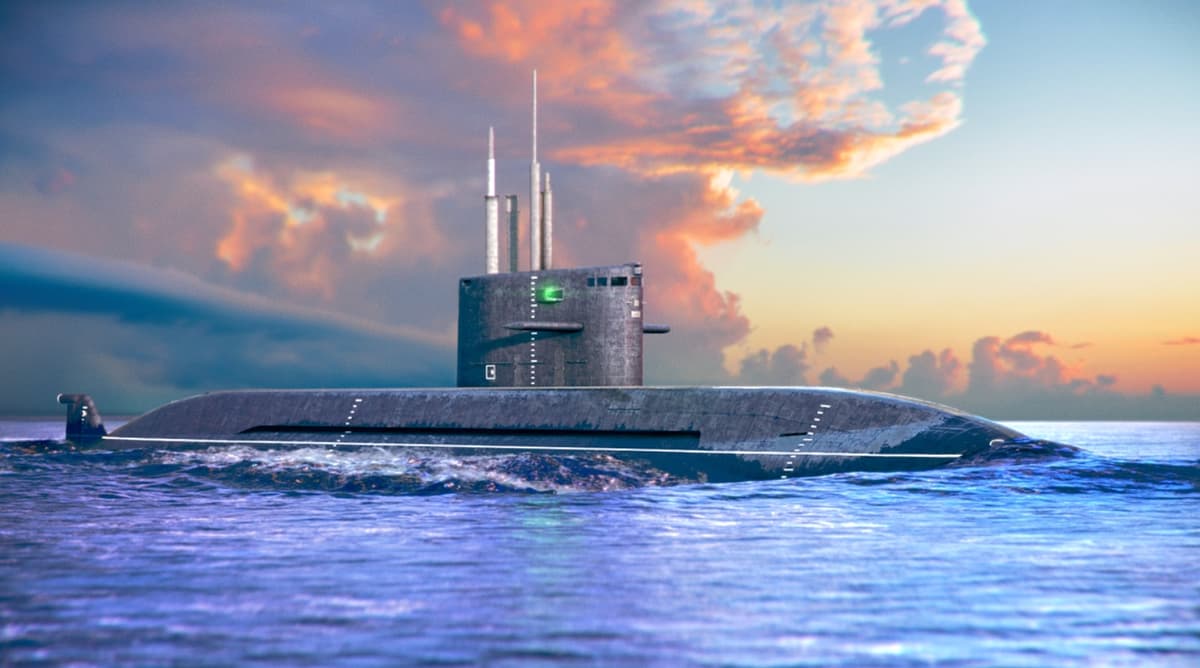
Russia’s Submarine Sales Pitch Meets Hard Realities in Asia
Why It Matters
Successful sales would give Russia a foothold in a market dominated by Western and Asian shipbuilders, while buyers like India and Vietnam could close critical under‑sea capability gaps. Conversely, failure underscores how sanctions and industrial decay are reshaping global naval procurement.
Key Takeaways
- •Russia unveiled Amur‑1650 with vertical launch for BrahMos/Club‑S missiles.
- •Sub can carry 28 weapons and optional AIP for 45‑day endurance.
- •India’s submarine gap and BrahMos compatibility make Amur‑1650 attractive.
- •Sanctions and shipyard financial woes threaten Russia’s ability to deliver.
- •Southeast Asian navies face stiff competition and diversify beyond Russian subs.
Pulse Analysis
The international submarine market has become a barometer of geopolitical ambition, with nations seeking stealthy platforms that can deliver land‑attack and anti‑ship strikes without the expense of nuclear vessels. Russia’s latest offering, the Amur‑1650, is positioned as a cost‑effective alternative that pairs conventional hull design with modern features such as vertical launch tubes for BrahMos and Club‑S cruise missiles, a permanent‑magnet synchronous motor for reduced acoustic signature, and an optional air‑independent propulsion system that promises up to 45 days of submerged operation. By bundling these capabilities, Moscow aims to recapture market share lost to European and South‑Korean competitors.
For India, the Amur‑1650 arrives at a moment of acute under‑sea shortfall. The retirement of the aging Sindhughosh‑class boats has left the Indian Navy with only 16 conventional submarines, while procurement of the indigenously built Project‑75I has slipped to 2035. Compatibility with the jointly‑developed BrahMos missile reduces integration risk, making the Russian design a tempting stop‑gap. In Southeast Asia, countries such as Vietnam and Indonesia view submarines as asymmetric tools in the U.S.–China rivalry, yet they are also diversifying suppliers to mitigate dependence on Russian hardware and to avoid sanction‑related delays.
However, the technical allure of the Amur‑1650 may be outweighed by Russia’s production bottlenecks. United Shipbuilding Corporation has been crippled by years of financial losses, labor shortages, and Western export controls that restrict critical components. These constraints have forced the use of domestically sourced substitutes, raising questions about reliability and delivery schedules. As a result, potential buyers must weigh the risk of postponed hand‑over against the strategic advantage of a high‑payload, low‑signature submarine, a calculus that could reshape the balance of future naval procurement.
Russia’s submarine sales pitch meets hard realities in Asia
Comments
Want to join the conversation?
Loading comments...