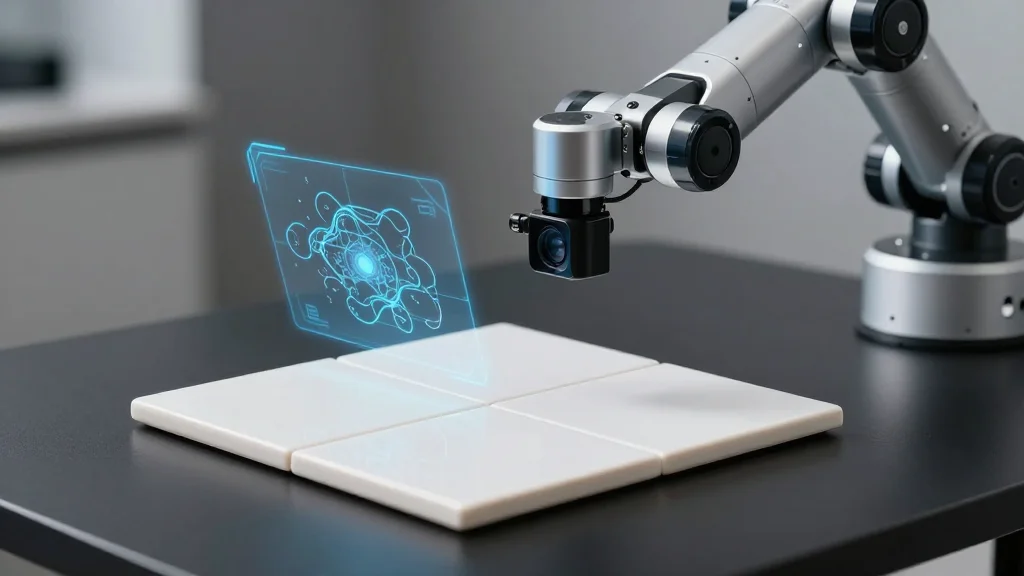
Sandia Deploys AI-Assisted Inspection Workflow for Nuclear Deterrence Ceramics
Companies Mentioned
Why It Matters
By catching defects earlier, Sandia improves the reliability and affordability of critical nuclear deterrence components while showcasing how AI can modernize defense manufacturing processes.
Key Takeaways
- •AI highlights defects on digital scans, reducing manual microscope time.
- •Early billet inspection prevents costly rework of final ceramic components.
- •Operators verify AI findings, maintaining human oversight and safety.
- •Project funded by DOE’s AI for Nuclear Security initiative.
- •Workflow slated for early‑fall deployment, then expansion across Sandia sites.
Pulse Analysis
Ceramic components are the backbone of the United States’ nuclear deterrent, providing the heat‑resistant structures that house high‑explosive lenses and other critical parts. Historically, quality assurance has relied on painstaking manual microscopy, a process that can take years to train operators and strains their eyesight. Sandia’s new workflow replaces that bottleneck with high‑throughput optical and acoustic imaging that creates detailed digital twins of each billet. An AI‑driven anomaly detection layer flags potential flaws, allowing technicians to review findings on a desktop rather than peering through a microscope. This shift not only accelerates inspection cycles but also captures defects before costly downstream manufacturing steps.
The AI augmentation is deliberately designed as a decision‑support system rather than a replacement for human expertise. Operators receive visual cues where the model suspects irregularities, but they retain final authority to confirm or reject each alert. This human‑in‑the‑loop approach mitigates the risk of false positives or missed defects, preserving the stringent safety standards required for nuclear‑grade parts. By moving inspection upstream to the billet stage, Sandia anticipates significant material savings, reduced rework, and a shorter path from raw material to flight‑ready component. Moreover, the reduced training horizon frees up skilled personnel for higher‑value tasks on the production floor.
Beyond the immediate gains for Sandia, the project exemplifies the Department of Energy’s broader AI for Nuclear Security mission, which seeks to embed advanced analytics across the nuclear enterprise. Successful deployment could serve as a template for other high‑precision defense sectors—such as aerospace composites or missile guidance hardware—where early defect detection is paramount. As AI models mature and imaging hardware becomes more affordable, the industry may see a cascade of similar digital inspection pipelines, driving down costs and enhancing reliability across the national security supply chain.
Sandia Deploys AI-Assisted Inspection Workflow for Nuclear Deterrence Ceramics
Comments
Want to join the conversation?
Loading comments...