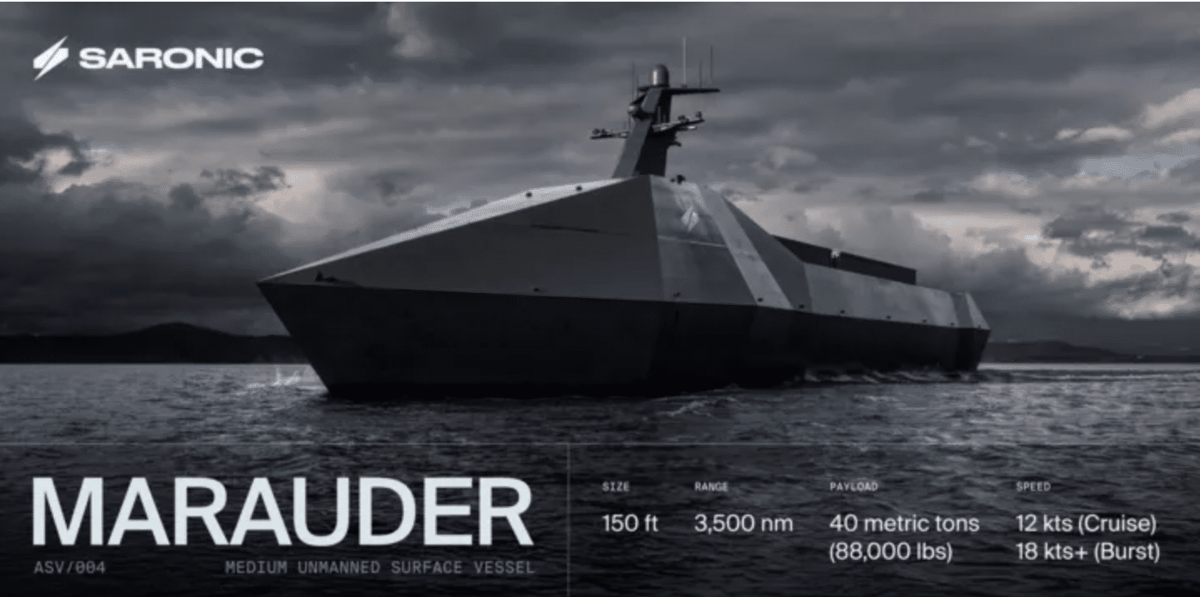
Saronic and Castelion to Demonstrate First-of-Its-Kind Maritime Hypersonic Launch Capability
Why It Matters
By marrying autonomous maritime platforms with hypersonic weapons, the U.S. gains a scalable, harder‑to‑target strike capability that enhances deterrence and reduces reliance on scarce crewed launch assets.
Key Takeaways
- •First autonomous surface vessel to launch a hypersonic missile.
- •Sea‑based demonstration planned for 2027 using Blackbeard on Marauder.
- •Castelion targeting several thousand Blackbeard missiles annual production.
- •Saronic’s shipyard expansion will output 20 Marauders each year.
- •Distributed launch architecture boosts U.S. deterrence and operational flexibility.
Pulse Analysis
The race to field hypersonic weapons has intensified as major powers seek speed, altitude and maneuverability that outpace traditional missiles. Yet the high cost and limited availability of crewed launch platforms have constrained deployment. Autonomous surface vessels offer a compelling solution: they are cheaper, can be produced in volume, and operate with minimal crew, expanding the geographic footprint from which hypersonic strikes can be launched.
Saronic’s 24‑foot Corsair ASV already served as a telemetry node for Castelion’s Blackbeard tests, proving the feasibility of at‑sea data links. The upcoming integration pairs the Blackbeard missile with the 30‑foot Marauder MUSV, a purpose‑built, autonomous launch deck. Both companies plan a full‑scale sea launch in 2027, after a series of risk‑reduction flights that will validate launch dynamics, communications latency, and safety protocols in a maritime environment.
Scaling the capability is central to its strategic value. Castelion’s Project Ranger campus in New Mexico, backed by over $250 million in private capital, is designed to churn out several thousand missiles annually. Meanwhile, Saronic’s $300 million shipyard expansion in Louisiana will enable the production of 20 Marauders each year, with additional facilities in Texas poised to deliver thousands of smaller ASVs. Together, these investments create a rapid‑fielding supply chain that can sustain a distributed hypersonic force, reinforcing U.S. deterrence and offering allies a replicable model for maritime strike modernization.
Saronic and Castelion to Demonstrate First-of-Its-Kind Maritime Hypersonic Launch Capability
Comments
Want to join the conversation?
Loading comments...