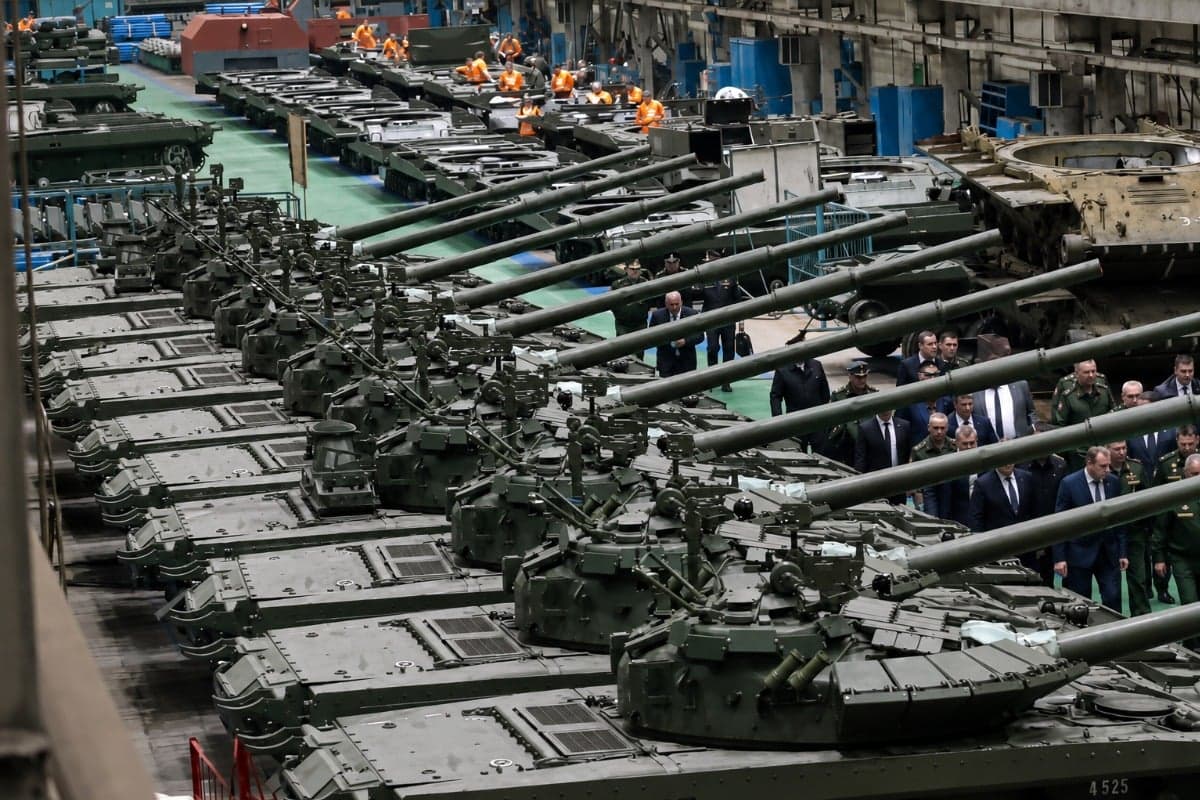
Satellite Imagery Suggests Russia’s Tank Reserve Is Nearly Gone
Why It Matters
A shrinking tank reserve limits Russia’s ability to replace battlefield losses, reshaping the balance of armored power in the Ukraine conflict and influencing Western aid calculations.
Key Takeaways
- •2,088 tanks counted; usable estimate drops to ~851 after filters.
- •T‑64s and transit tanks excluded, reducing reserve by ~440 units.
- •Severe degradation and cannibalization cut effective T‑80 hulls in half.
- •Omsktransmash's T‑80 upgrade stock likely exhausted within 12 months.
Pulse Analysis
Open‑source intelligence (OSINT) has become a decisive tool for assessing military readiness, and Jompy’s June 9 satellite‑imagery analysis exemplifies its impact. By systematically cataloguing storage sites, the analyst identified 2,088 tanks but applied rigorous filters—removing the largely unusable T‑64 fleet, discounting 50 transit vehicles, and accounting for visible corrosion, cannibalization, and neglect. The resulting figure of roughly 851 serviceable tanks underscores a stark contrast to the inflated reserves often cited by Russian officials, highlighting how visual evidence can overturn official narratives.
The attrition picture deepens when production capacity is considered. Omsktransmash, Russia’s primary T‑80 overhaul plant, is projected to run out of upgrade‑ready hulls within a year if current output holds steady. This timeline forces a strategic decision: either halt T‑80 production pending costly new‑build programs or accelerate refurbishment of older models that may already be compromised. Coupled with Oryx’s documentation of over 4,350 tank losses since 2022, the data suggests Russia’s armored replenishment model—relying on refurbished reserves—has reached a breaking point, potentially curbing offensive momentum on the front lines.
For policymakers and defense analysts, the implications are profound. A depleted tank pool reduces Russia’s capacity to sustain large‑scale armored assaults, shifting the operational calculus toward lighter, more mobile forces. Western allies, meanwhile, can recalibrate aid packages, emphasizing anti‑armor systems and training over sheer quantity of supplied tanks. As the conflict evolves, continuous OSINT monitoring will be essential to gauge whether Russia can revive its tank production pipeline or must adapt to a new, less tank‑centric warfare paradigm.
Satellite imagery suggests Russia’s tank reserve is nearly gone
Comments
Want to join the conversation?
Loading comments...