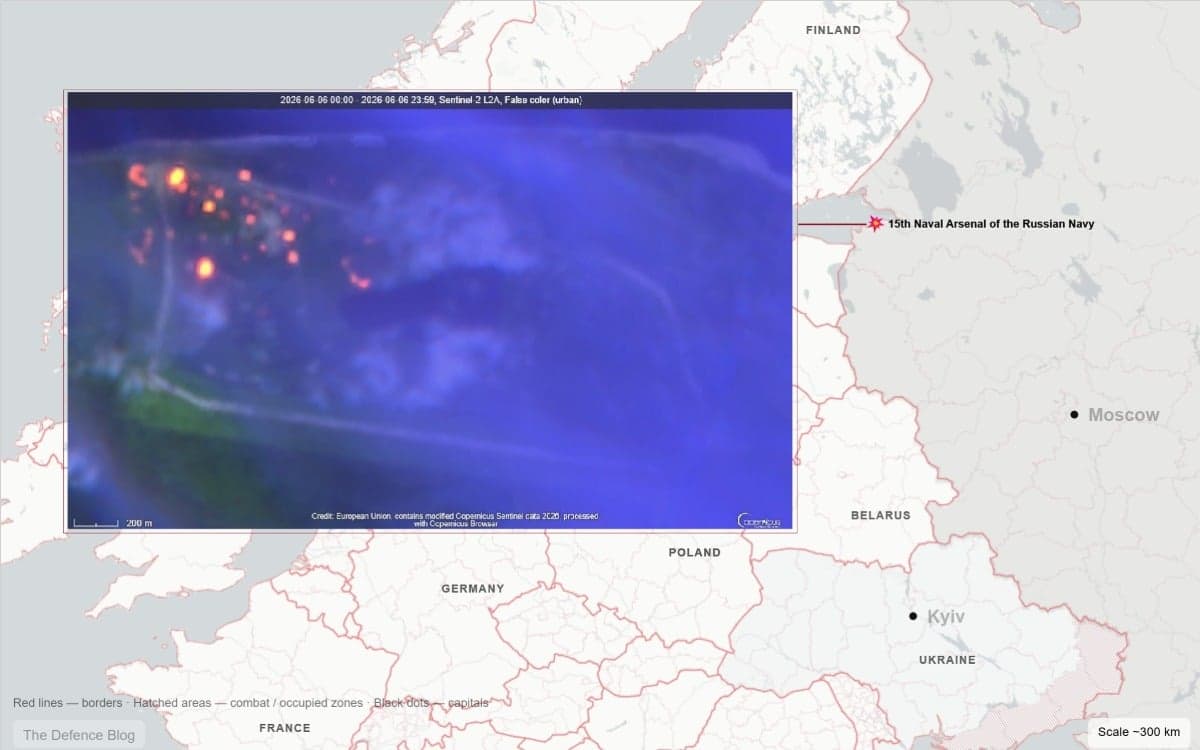
Satellite Images Confirm Ukraine Hit Russia’s Naval Arsenal
Why It Matters
The strike directly impairs the Russian Baltic Fleet’s munitions supply, weakening its operational reach in the Baltic Sea. It also demonstrates how open‑source satellite intelligence can force Russia to acknowledge damage to strategic assets.
Key Takeaways
- •Ukrainian drones struck 15th Naval Arsenal, causing massive fire
- •Satellite imagery confirmed interior damage and secondary detonations
- •Over 600 civilians evacuated from Bolshaya Izhora after attack
- •Strike disrupts Baltic Fleet munitions supply chain
- •Open‑source imagery limits Russia’s denial of strategic hits
Pulse Analysis
The emergence of commercial Sentinel‑2 imagery within days of the June 6 attack marks a turning point in the information war over Ukraine’s strikes on Russian soil. Open‑source analysts can now overlay thermal signatures on known facility layouts, providing incontrovertible proof that attacks have reached deep‑inside hardened sites. This capability erodes the Russian narrative that drone debris merely falls harmlessly, forcing officials to confront visual evidence that cannot be dismissed as propaganda. The rapid dissemination of such data also pressures emergency responders and civilian authorities to act transparently, as seen in the evacuation of over 600 residents.
Operationally, the damage to the 15th Naval Arsenal strikes at the heart of the Baltic Fleet’s logistics chain. The depot stores torpedoes, naval mines and missile components essential for surface combatants and submarines operating in the Gulf of Finland. With storage areas compromised and secondary detonations reported, the immediate availability of these weapons is curtailed, potentially delaying naval patrols and mine‑laying missions. Replacement of sophisticated munitions requires a strained industrial base already hampered by Western sanctions, meaning the long‑term impact could extend beyond the initial fire, affecting Russian naval posture in the region.
Strategically, the successful long‑range drone operation underscores Ukraine’s evolving capability to project power far beyond its borders. By bypassing regional air defenses and striking high‑value logistics nodes, Kyiv demonstrates a cost‑effective method to degrade Russian military capacity without committing large conventional forces. This approach may encourage further deep‑strike missions targeting other critical supply depots, oil infrastructure, or rail hubs, reshaping the calculus of deterrence. As satellite verification becomes routine, Russia will need to reconsider the design and protection of its legacy facilities, potentially accelerating investments in hardened shelters or dispersal tactics to mitigate future vulnerabilities.
Satellite images confirm Ukraine hit Russia’s naval arsenal
Comments
Want to join the conversation?
Loading comments...