Scientists Simulated a Nuclear Fireball and Found a Surprise in the Fallout
Why It Matters
Accurate fallout modeling is essential for nuclear safety assessments, emergency planning, and forensic analysis of nuclear events. Incorporating the discovered chemical interactions will improve risk predictions and decision‑making during crises.
Key Takeaways
- •Thermal history alters chemical speciation during fallout formation
- •Cesium mixes more with uranium when cooling is prolonged
- •Current fallout models treat elements as independent, missing reactions
- •LLNL plasma reactor mimics fireball, enabling precise particle measurements
Pulse Analysis
When a nuclear device detonates or a reactor suffers a severe accident, the instant release of energy creates a fireball that vaporizes surrounding material into a high‑temperature plasma. As this cloud expands and cools, the vapor condenses into microscopic particles that become fallout, a key source of radiological risk. Understanding the precise pathways of particle formation is critical for both immediate emergency response and long‑term environmental monitoring, yet traditional models have relied on simplified assumptions about how individual elements behave.
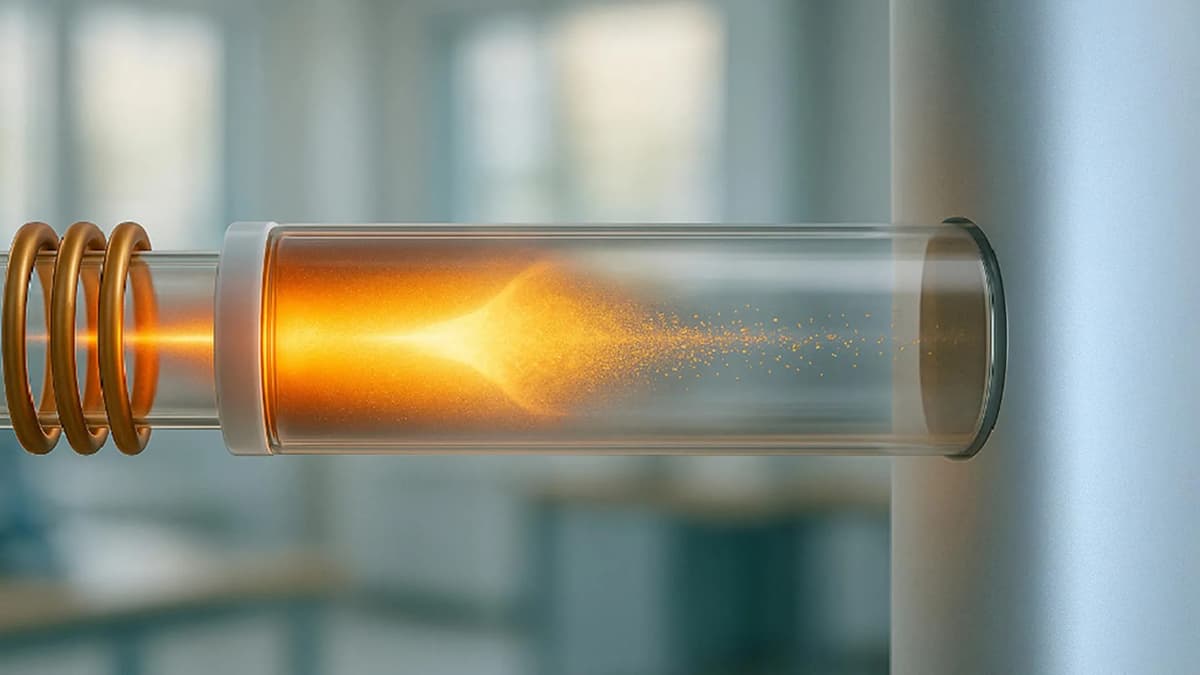
In a recent study published in Analytical Chemistry, researchers at Lawrence Livermore National Laboratory used a custom plasma flow reactor to simulate the fireball environment under controlled conditions. By introducing uranium, cerium (a plutonium surrogate) and cesium into the plasma and imposing two distinct cooling regimes, the team captured how each element vaporized, reacted, and condensed along the temperature gradient. The experiments showed that prolonged exposure to high temperatures enables cesium to chemically integrate with uranium and cerium, a behavior not captured in most existing fallout models that treat each element as chemically isolated.
The implications extend beyond academic insight. More accurate fallout models can sharpen predictions of radionuclide distribution, informing evacuation zones, decontamination strategies, and health risk assessments after a nuclear event. Policymakers and first‑responders rely on these models to allocate resources and protect populations. LLNL’s data provide a measurable foundation to upgrade simulation codes, reducing uncertainty in critical scenarios. Future work will broaden the material mix to better reflect real‑world detonations, further enhancing the fidelity of nuclear safety assessments.
Scientists simulated a nuclear fireball and found a surprise in the fallout
Comments
Want to join the conversation?
Loading comments...