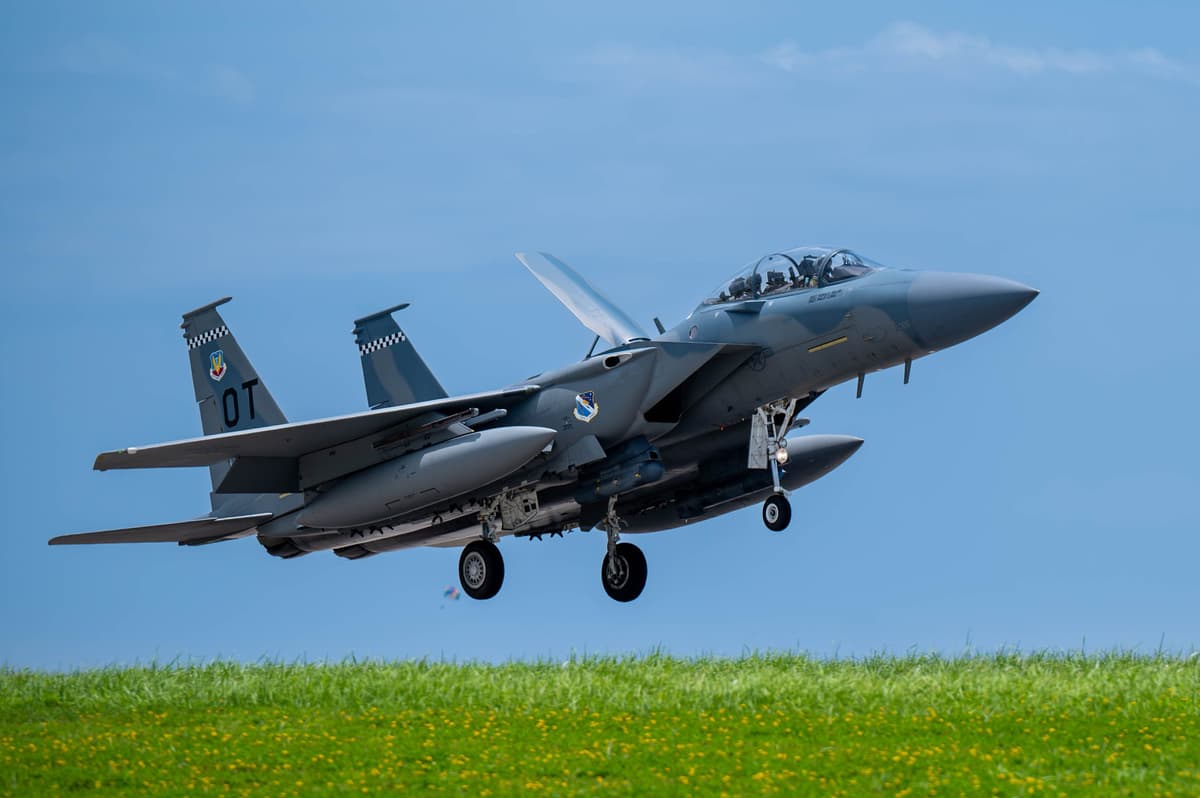
Senate Committee Backs Multi-Year Deals for F-35, F-15EX
Companies Mentioned
Why It Matters
Multiyear contracts curb cost volatility and reinforce the U.S. defense industrial base, while inventory mandates safeguard air superiority amid rising geopolitical tensions.
Key Takeaways
- •Senate panel backs multiyear F‑35/F‑15EX contracts, locking in prices
- •Boeing must certify delivery capability before F‑15EX multiyear deals
- •NDAA keeps Air Force fighter fleet at minimum 1,800 aircraft
- •Requirement preserves 16 AWACS, addressing recent loss to Iran
Pulse Analysis
The Senate’s endorsement of multiyear procurement marks a shift toward fiscal predictability in high‑cost fighter programs. By fixing unit prices for the F‑35 family and the F‑15EX Eagle II over several years, the Air Force can hedge against inflation and avoid the price spikes that have plagued past single‑year buys. Contractors benefit from a guaranteed production line, which can smooth out supply‑chain bottlenecks and encourage investment in advanced manufacturing capabilities, a key goal of the broader defense modernization agenda.
Boeing’s recent labor disruptions and delivery delays have prompted the NDAA to add a certification clause for the F‑15EX. The requirement that the Secretary of the Air Force verify Boeing’s ability to meet schedule commitments aims to prevent further slip‑streams like the postponed Kadena deliveries now pushed to 2027. This oversight reflects growing congressional scrutiny of defense contractors’ operational resilience, especially as the F‑15EX remains a cornerstone of the Air Force’s air‑dominance strategy against near‑peer competitors.
Beyond procurement, the legislation reinforces force‑structure thresholds that keep the fighter fleet at 1,800 aircraft and the AWACS fleet at 16 platforms, countering recent attrition such as the loss of an E‑3 over Iran. Additional mandates for a combat search‑and‑rescue study, a spare‑parts competition framework, and a 2047 mobility roadmap signal a holistic approach to sustainment and readiness. Together, these provisions aim to revitalize the U.S. defense industrial base, ensuring that the next generation of warfare is supported by a resilient, cost‑effective supply chain.
Senate Committee Backs Multi-Year Deals for F-35, F-15EX
Comments
Want to join the conversation?
Loading comments...