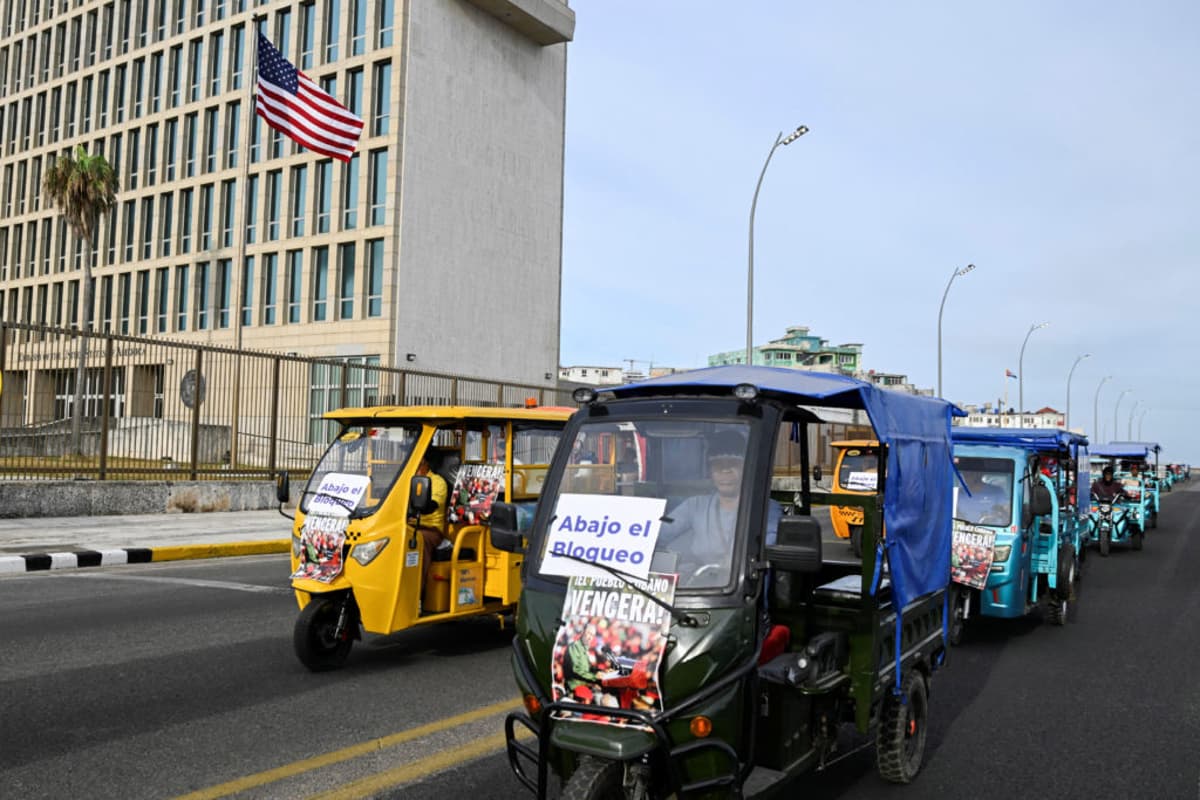
Senate Republicans Reject Attempt to End Trump's Blockade of Cuba
Why It Matters
The vote demonstrates the growing partisan gap over congressional checks on executive military power and deepens the humanitarian crisis in Cuba, affecting regional stability and U.S. diplomatic standing.
Key Takeaways
- •Senate rejected Democratic war‑powers resolution 51‑47.
- •Only two Republicans backed ending the Cuba blockade.
- •Blockade has caused water, power, and medical shortages in Cuba.
- •Resolution would have required congressional approval before any military action.
- •Vote underscores GOP alignment with Trump’s unilateral foreign policy.
Pulse Analysis
The Trump administration’s energy blockade on Cuba has evolved from a diplomatic lever into a de‑facto economic siege, cutting off fuel shipments and exacerbating the island’s chronic power and water shortages. By leveraging Coast Guard patrols and restricting Venezuelan oil transfers, the United States has intensified pressure on Havana’s government while sparking a humanitarian backlash that includes rising food prices and strained medical services. This strategy reflects a broader Trump‑era policy of using sanctions to compel political change across Latin America, positioning the U.S. as a coercive actor rather than a collaborative partner.
In response, Senate Democrats invoked the War Powers Act of 1973, seeking to reassert congressional authority over any potential military escalation against Cuba. The resolution would have mandated a congressional vote before the president could launch attacks, a safeguard designed to prevent unilateral executive action. However, the 51‑47 Republican vote—bolstered by only two GOP senators breaking ranks—illustrates the difficulty of rallying bipartisan support for oversight measures when the president frames foreign policy moves as essential to regional democracy and security. The defeat also signals that the Senate’s war‑powers oversight, a tool historically used to curb unchecked wars, is currently sidelined by partisan loyalty.
Looking ahead, the rejection has several implications. It reinforces Trump’s ability to act without legislative restraint, potentially encouraging further sanctions or even kinetic options against Cuba or other adversaries. For Cuba, the continued blockade deepens economic distress, risking greater instability that could spill over into the Caribbean. Meanwhile, U.S. allies and investors watch closely, weighing the risks of a foreign‑policy environment where congressional checks are weak. The episode underscores a pivotal moment for American democratic institutions, foreign‑policy credibility, and the humanitarian outlook for a nation already grappling with crisis.
Senate Republicans reject attempt to end Trump's blockade of Cuba
Comments
Want to join the conversation?
Loading comments...