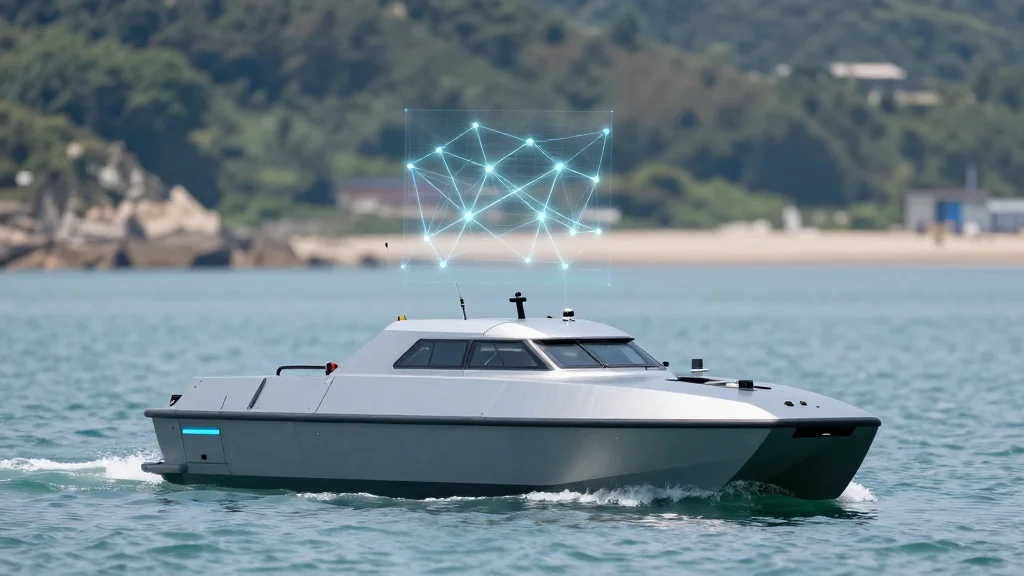
Shield AI Teams with Taiwan’s Thunder Tiger to Deploy Hivemind on USVs

Companies Mentioned
Why It Matters
Embedding advanced AI autonomy into Taiwan’s maritime assets directly addresses the island’s need for asymmetric deterrence against a numerically superior adversary. By allowing unmanned vessels to sense, decide, and act without human intervention, the technology reduces reaction times and expands the operational envelope of Taiwan’s coastal defense. Beyond the immediate tactical benefits, the Shield AI‑Thunder Tiger alliance illustrates a broader shift toward indigenous, AI‑centric defense ecosystems in the Indo‑Pacific. Successful deployment could accelerate similar collaborations, reshaping procurement strategies and prompting neighboring countries to prioritize AI‑enabled unmanned platforms as a core component of their security architectures.
Key Takeaways
- •Shield AI and Thunder Tiger sign an MOU to integrate Hivemind AI on unmanned surface vessels.
- •Live demonstration of Hivemind‑controlled USV scheduled for summer 2026.
- •Partnership includes phased testing: simulation, hardware‑in‑the‑loop, and live trials.
- •Quotes from Brandon Tseng (Shield AI co‑founder) and Gene Su (Thunder Tiger GM) emphasize strategic intent.
- •Goal: create cross‑domain, multi‑agent teaming capability to bolster Taiwan’s maritime defense.
Pulse Analysis
The Shield AI‑Thunder Tiger deal is more than a technology plug‑in; it represents a strategic hedge for Taiwan in a region where conventional force ratios heavily favor the People’s Republic of China. By leveraging AI to enable autonomous decision‑making, Taiwan can field a force that multiplies its existing assets, forcing any potential aggressor to account for unpredictable, networked behavior at sea. Historically, asymmetric solutions—such as anti‑ship missiles and fast attack craft—have been Taiwan’s go‑to for deterrence. Hivemind adds a digital layer to that doctrine, allowing swarms of unmanned platforms to operate cohesively without direct human control.
From a market perspective, the partnership signals a growing appetite among defense manufacturers for AI integration services rather than standalone hardware. Shield AI’s business model, which sells software licenses and integration expertise, aligns with a trend toward modular, upgradable systems. If the summer demo proves successful, it could unlock a pipeline of follow‑on contracts not only in Taiwan but also across allied navies seeking similar capabilities. Investors will likely monitor Shield AI’s revenue trajectory closely, as each new integration expands its addressable market.
Looking forward, the real test will be scalability. Integrating Hivemind across a mixed fleet of surface and aerial platforms requires robust data links, secure communications, and rigorous validation against electronic warfare threats. The partnership’s phased approach—starting with simulations and moving to live trials—offers a pragmatic path, but any setbacks could delay broader adoption. Nonetheless, the collaboration sets a benchmark for AI‑driven maritime autonomy and may become a template for future defense tech alliances in the region.
Shield AI Teams with Taiwan’s Thunder Tiger to Deploy Hivemind on USVs
Comments
Want to join the conversation?
Loading comments...