Companies Mentioned
Why It Matters
Embedding sovereign AI models in defence accelerates South Korea’s strategic autonomy and strengthens its deterrence posture against regional threats. The move also showcases how telecom operators can become critical AI infrastructure providers for national security.
Key Takeaways
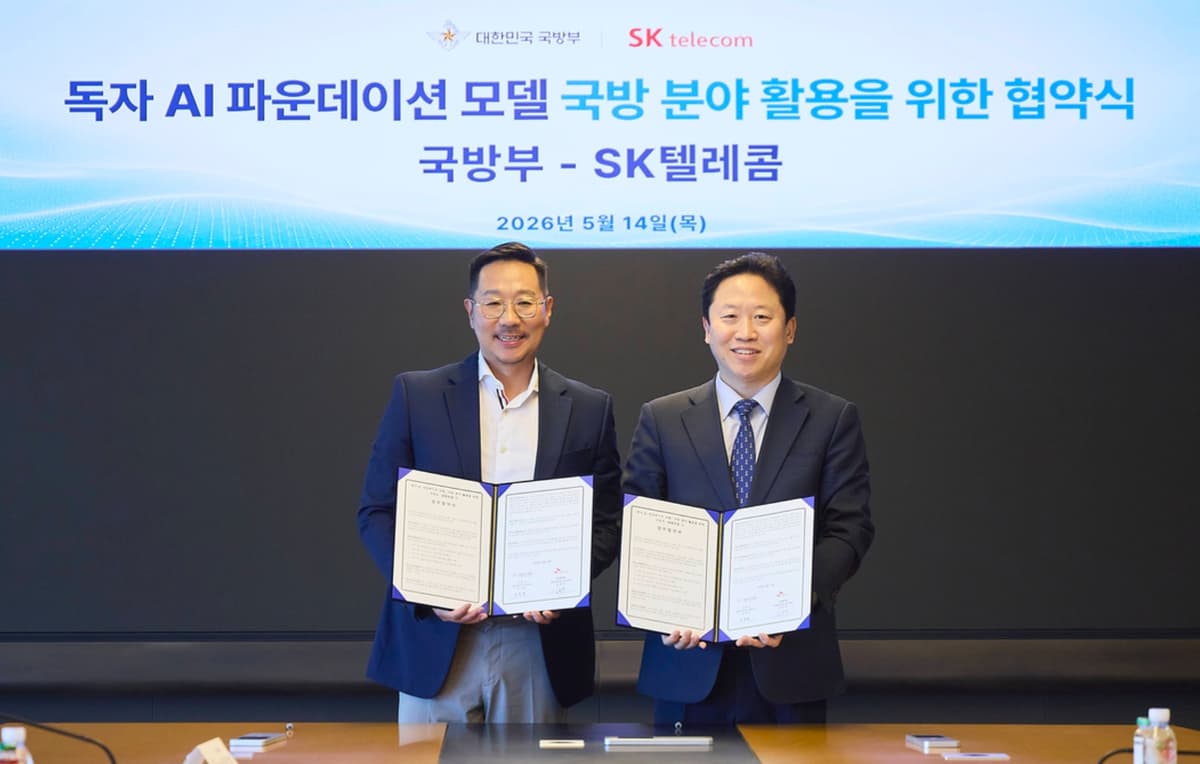
- •SK Telecom partners with Korean defense ministry to build AI models
- •Uses SKT's A.X K1 519‑billion‑parameter LLM and upcoming K2 model
- •GPU resources supplied via MSIT's National AI Project and future AI highway
- •Potential defense uses include planning, maintenance, signal analysis, autonomous resupply
- •South Korea aims to counter North Korean AI weapon ambitions
Pulse Analysis
South Korea is positioning itself at the forefront of military artificial intelligence by leveraging the expertise of its largest telecom operator, SK Telecom. The Defence AI Transformation (AX) programme blends the public sector’s massive GPU investments—driven by the Ministry of Science and ICT’s AI highway roadmap—with SKT’s proprietary large language models. By adapting the 519‑billion‑parameter A.X K1 and the under‑development A.X K2 for defence data, the partnership aims to create lightweight, mission‑critical AI tools that can operate within the strict security constraints of the armed forces. This public‑private synergy reflects a broader trend where telecoms evolve into AI infrastructure providers, offering GPU‑as‑a‑service platforms that accelerate model training and deployment.
Technically, the initiative taps into the Sovereign AI Foundation Model Project, ensuring that the resulting models remain domestically controlled and free from foreign licensing restrictions. The use of GPU resources from the National AI Project—and potentially the upcoming AI highway’s 15,000 GPUs—provides the computational horsepower needed for fine‑tuning massive LLMs on classified defence datasets. SK Telecom’s experience in scaling cloud services and delivering low‑latency connectivity further reduces the latency gap for real‑time battlefield analytics, a critical factor for applications such as predictive maintenance and RF signal analysis.
Geopolitically, the collaboration underscores Seoul’s urgency to counter North Korea’s own AI‑driven weapons ambitions, as reported by the Daily NK. By embedding AI into operational planning, autonomous resupply, and other non‑lethal functions, South Korea can enhance force readiness while navigating the ethical concerns surrounding lethal autonomous weapons systems. For the broader defense market, the programme signals a shift toward domestically sourced AI capabilities, potentially prompting other nations to adopt similar telecom‑defence partnerships to secure their AI supply chains.
SKT to develop military AI models
Comments
Want to join the conversation?
Loading comments...