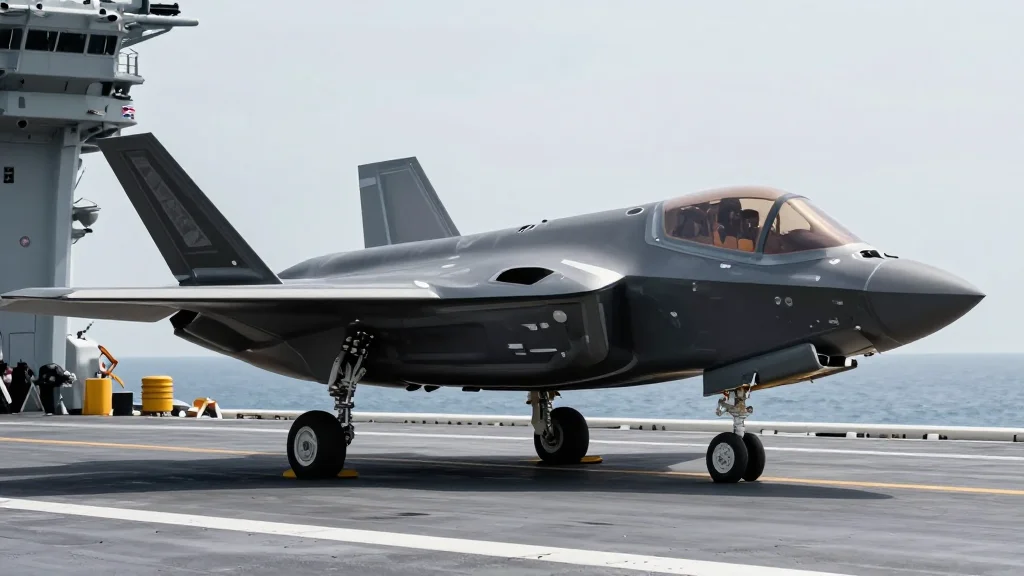
Snapshot: Fewer than 30% of UK F-35B Fleet Configured for Block 4
Why It Matters
With fewer than a quarter of the fleet combat‑ready, the UK’s carrier strike and air‑defence posture is constrained, delaying the full benefits of fifth‑generation technology. The lag in TR‑3 certification also pressures budget and acquisition timelines as the Ministry of Defence seeks to maintain credible deterrence.
Key Takeaways
- •Only 13 of 47 UK F‑35Bs upgraded to TR‑3.
- •About 10 F‑35Bs are flight‑ready at any time.
- •TR‑3 provides roughly 25× computational boost, unlocking Block 4.
- •Full combat certification of TR‑3 not expected until 2027.
Pulse Analysis
The United Kingdom’s F‑35B programme has reached a critical juncture. After receiving its final aircraft of the initial 48‑plane batch, the MoD now fields 47 jets, a number reduced by one loss during a 2021 carrier deployment. Operational hiccups, such as a month‑long grounding in India in 2025, have highlighted logistical and maintenance challenges. The original plan to field 75 aircraft remains distant, and the addition of 12 F‑35A fighters is intended to broaden air‑defence coverage and restore nuclear‑capable strike options.
A key differentiator for the fleet is the Technology Refresh 3 (TR‑3) upgrade, which transforms the aircraft’s software and hardware to the Block 4 standard. TR‑3 delivers an estimated 25‑fold increase in processing capability, enabling advanced sensor fusion, new cockpit displays, and sophisticated electronic‑warfare functions. However, only 13 jets have received this upgrade, primarily for training, while the remaining 34 operate under the older TR‑2 baseline that cannot fully exploit the platform’s data‑intensive features. With roughly 30 % availability, the operational fleet shrinks to about ten aircraft, limiting the Royal Navy’s ability to project power from its new carriers.
The constrained readiness of the F‑35B fleet carries strategic implications. A limited number of combat‑certified jets hampers the UK’s contribution to NATO’s integrated air defence and reduces the flexibility of its carrier strike group. Delays in TR‑3 certification until 2027 mean the full fifth‑generation promise of the F‑35 will not be realized for several more years, pressuring the MoD to allocate additional resources for interim capability gaps. The forthcoming F‑35A purchase may offset some shortfalls, but the broader challenge remains: aligning acquisition schedules, upgrade pathways, and operational tempo to sustain a credible, future‑proof air combat force.
Snapshot: fewer than 30% of UK F-35B fleet configured for Block 4
Comments
Want to join the conversation?
Loading comments...