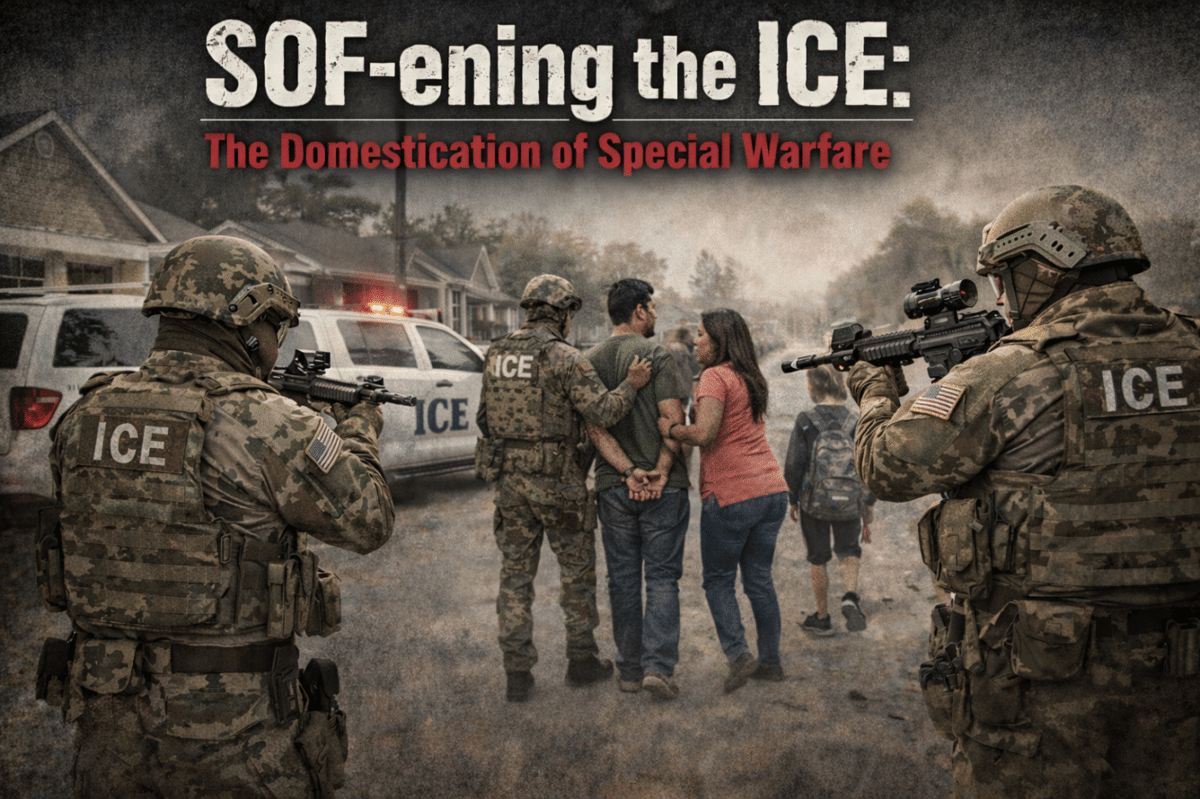
SOF-Ening the ICE: The Domestication of Special Warfare
•February 27, 2026
0
Why It Matters
The militarized posture inflates operational risk, erodes community confidence, and invites legal challenges that could constrain immigration enforcement effectiveness.
Key Takeaways
- •ICE agents increasingly wear camouflage and tactical gear.
- •Training duration cut from 13 weeks to 47 days.
- •Violent offender arrests under 6% despite militarized posture.
- •Two Minnesota shootings linked to aggressive ICE tactics.
- •Public opposition up 77% as demonstrations surge.
Pulse Analysis
The rise of police militarization is not new, but the recent adoption of Special Operations Forces imagery by immigration agents marks a distinct cultural escalation. Programs like the 1033 surplus transfer have long supplied local departments with military-grade equipment, yet the visual language of camouflage, night‑vision optics, and fast‑rope insertions now appears on federal immigration officers. This shift reshapes community expectations, turning routine enforcement encounters into perceived combat scenarios and undermining the collaborative ethos of community policing.
ICE’s recruitment surge compounds the problem. In the past year the agency added roughly 12,000 officers while slashing its basic training curriculum from thirteen weeks to just forty‑seven days. The rapid influx of under‑trained personnel, combined with a low proportion of violent‑offender arrests, creates a mismatch between capability and mission. Without the rigorous selection and sustained training that characterize true special‑operations units, agents are more likely to rely on intimidation tactics, as evidenced by the fatal shootings of Renee Good and Alex Pretti, which escalated quickly to lethal force.
Policy makers face a clear choice: reassert the civilian nature of law enforcement or permit an unchecked paramilitary evolution. Legislative oversight could reinstate stricter training standards, limit the transfer of combat‑grade gear to civilian agencies, and reinforce Posse Comitatus protections. Restoring transparent identification practices and emphasizing de‑escalation over combat posturing would help rebuild public trust and preserve the distinct boundary between military and police functions, ultimately safeguarding both national security and democratic legitimacy.
SOF-ening the ICE: The Domestication of Special Warfare
0
Comments
Want to join the conversation?
Loading comments...