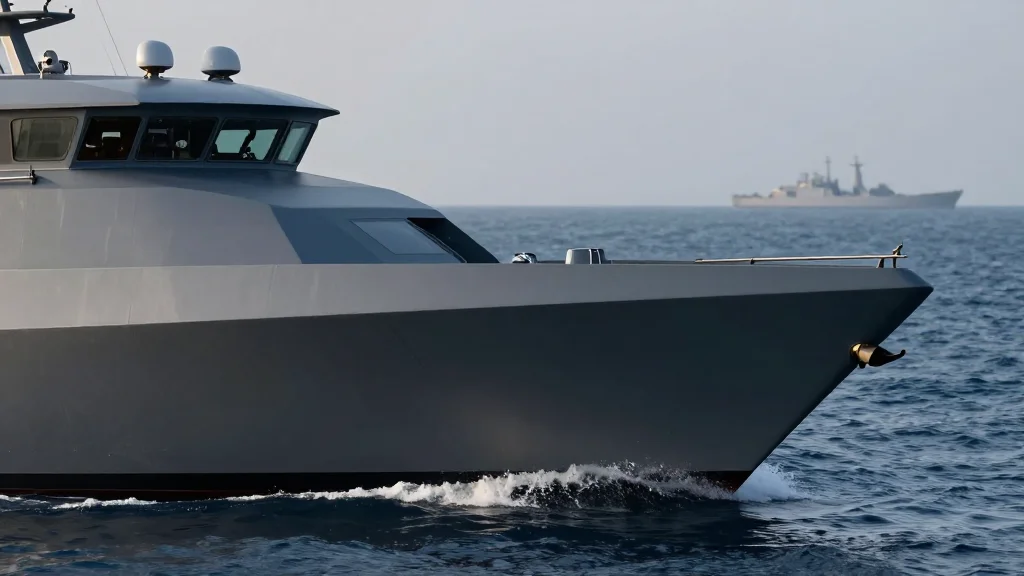
SOF Week 2026: US Navy USV Completes Record Eight-Day Autonomous Mission
Why It Matters
The mission proves that long‑duration, fully autonomous surface vessels can operate in contested maritime environments, accelerating the Navy’s shift toward persistent, low‑signature fleet assets. This capability expands ISR, logistics and strike options while reducing personnel risk and operational costs.
Key Takeaways
- •Eight‑day autonomous run covered 400 nm, 192 hours at sea
- •T38 operated on a single engine for two days to test endurance
- •Carbon‑fibre catamaran design reduces radar signature and improves stability
- •Payload capacity of 1.8 t supports radar, LiDAR, UAV and torpedo missions
- •Five T38 USVs were procured in FY 2025, first delivered fall 2025
Pulse Analysis
The eight‑day, 400‑nautical‑mile sortie of the MARTAC T38 Devil Ray marks a watershed moment for autonomous maritime warfare. By staying aloft for 192 continuous hours in mixed sea states, the USV showcases the Navy’s ambition to field persistent, unmanned platforms that can operate far from support vessels. This endurance benchmark not only validates the underlying autonomy software but also signals a strategic pivot toward distributed, low‑signature assets capable of sustaining operations in contested waters.
Technically, the T38 leverages an 11.5‑metre carbon‑fibre asymmetric catamaran hull that blends stability with reduced radar cross‑section. Twin Volvo Penta D6 diesel engines deliver speeds above 60 knots, yet the trial deliberately throttled to a single engine for two days to stretch loiter time and assess reliability. With a 1.8‑tonne payload bay, the vessel can host radar, LiDAR, electro‑optical sensors, and even launch UAVs or torpedoes. Its communications suite spans line‑of‑sight, 4G/5G LTE, SATCOM and Starlink, complemented by anti‑jamming safeguards, ensuring robust command‑and‑control in electronic‑dense environments.
The operational implications are profound. A fleet of T38s can augment traditional surface combatants by providing continuous ISR, mine‑countermeasure, and logistics support without exposing sailors to danger. Their modular payloads enable rapid role changes—from counter‑UAS to anti‑submarine surveillance—making them a versatile tool for the Navy’s distributed maritime operations concept. As the Pentagon scales procurement, commercial shipbuilders and sensor vendors stand to benefit, while adversaries must adapt to a new class of stealthy, autonomous threats reshaping the future of naval warfare.
SOF Week 2026: US Navy USV completes record eight-day autonomous mission
Comments
Want to join the conversation?
Loading comments...