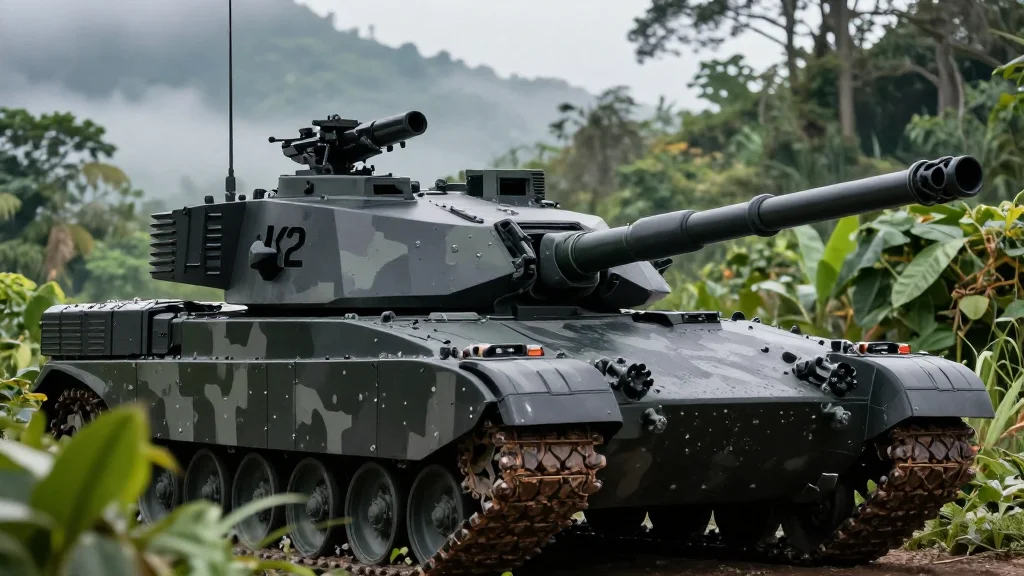
South American MBTs: Upgrades and Payload Modernisation Could Shape Procurement Paths
Why It Matters
The move highlights how defense budgets are reallocating toward flexible, technology‑driven solutions, influencing global tank manufacturers and regional security dynamics.
Key Takeaways
- •Peru to acquire 54 K2 Black Panther tanks
- •MBT demand low due to lack of interstate wars
- •Urban, jungle, and mountain terrain limit tank effectiveness
- •Modernization focuses on new payloads rather than new platforms
- •Regional manufacturers eye upgrades to stay competitive
Pulse Analysis
South America’s defence landscape is shaped by a unique blend of geography and political stability. While the continent boasts diverse terrains—from the Andes to the Amazon rainforest—its nations have not engaged in interstate warfare for decades. Traditional main battle tanks, designed for high‑intensity, open‑field combat, struggle to operate effectively in dense urban centers or rugged mountain passes. Consequently, defence planners prioritize air, naval, and asymmetric capabilities over heavy armor, relegating MBTs to a secondary role in most national strategies.
Against this backdrop, Peru’s announcement to purchase 54 K2 Black Panther tanks marks a notable exception. The Korean‑built platform offers advanced fire‑control systems, composite armor, and a proven track record, appealing to a country seeking to modernise its ground forces amid rising concerns over border security and illicit trafficking. While Peru moves forward with a new‑build program, neighboring states such as Brazil, Argentina and Chile are more likely to extend the service lives of existing fleets—like the Leopard 1, M60 and Type 59—through payload upgrades that add active protection systems, unmanned turrets, and enhanced communications. This modular approach reduces acquisition costs and aligns with the need for rapid adaptability in complex environments.
The broader implication for the global defence industry is a pivot toward flexible, upgrade‑centric solutions. Korean firms, already benefiting from the K2 contract, may find opportunities to supply retrofit kits to legacy platforms across the region. European and U.S. manufacturers are also positioning themselves to offer next‑generation active protection and sensor suites that can be integrated into older chassis. As South American militaries balance fiscal constraints with evolving threat profiles, the emphasis on payload modernization could reshape procurement pathways, ensuring that MBTs remain relevant not through sheer numbers but through technological agility.
South American MBTs: upgrades and payload modernisation could shape procurement paths
Comments
Want to join the conversation?
Loading comments...