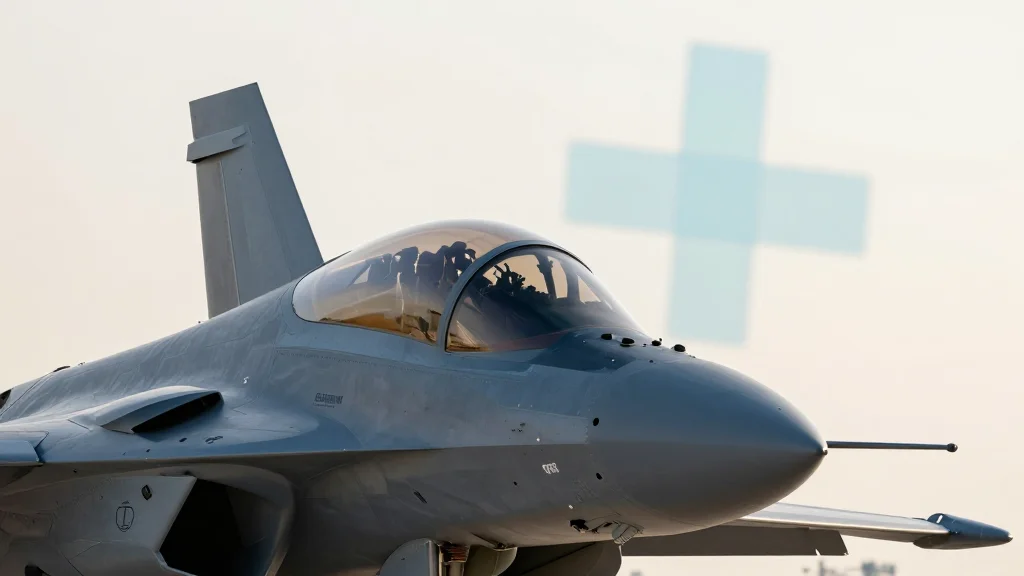
South Korea’s KF‑21 Fighter Gains Combat‑Suitability Certification, Opening Export Door

Companies Mentioned
Why It Matters
The KF‑21’s combat certification signals a turning point for South Korea’s defense industrial base, demonstrating that the nation can independently develop and field sophisticated combat aircraft. This reduces reliance on foreign platforms, enhances strategic autonomy, and strengthens the country’s negotiating position in regional security arrangements. Exporting the KF‑21 could also reshape global fighter markets by offering a lower‑cost, high‑performance alternative to the F‑35 and other fifth‑generation jets. For emerging air forces, the aircraft provides a pathway to modernize fleets without the steep price tags associated with Western or Russian platforms, potentially shifting procurement patterns in Asia‑Pacific and beyond.
Key Takeaways
- •KF‑21 Boramae receives combat‑suitability certification after 1,600 test flights and 13,000 test conditions.
- •Estimated unit price is about $60 million, roughly half the cost of an F‑35.
- •More than ten countries, including Indonesia and Poland, have shown interest in purchasing the fighter.
- •Certification places South Korea among a select group of nations capable of independent advanced fighter development.
- •The KF‑21 adds a 4.5‑generation jet to South Korea’s ‘K‑defense’ export portfolio, complementing tanks, artillery and naval vessels.
Pulse Analysis
South Korea’s KF‑21 certification arrives at a moment when the global fighter market is fragmenting. The United States is pushing the F‑35 as a universal solution, yet many air forces balk at the $110 million price tag and the political strings attached. The KF‑21’s $60 million price point, combined with a proven domestic supply chain, offers a pragmatic middle ground for nations that need modern capabilities but cannot afford fifth‑generation costs. This could accelerate a shift toward a tier of “affordable 4.5‑generation” fighters, a niche that the KF‑21 is uniquely positioned to fill.
Historically, South Korea’s defense exports have hinged on the FA‑50 light combat aircraft and the K9 howitzer. The KF‑21 expands the product mix into the high‑value fighter segment, potentially unlocking larger contracts and deeper integration with partner nations’ air forces. If South Korea can secure even a handful of export deals, the economies of scale could lower unit costs further, making the jet more competitive against the Gripen and Typhoon.
Looking ahead, the KF‑21’s success will depend on more than certification. Export viability will require sustained after‑sales support, a robust logistics network, and political alignment with buyer nations. Moreover, the aircraft must demonstrate operational reliability in real combat scenarios, something that will only become evident once it is fielded by the ROKAF and, eventually, foreign operators. Nonetheless, the certification is a decisive step that validates South Korea’s long‑term investment in indigenous aerospace capabilities and could reshape the balance of defense procurement in the Indo‑Pacific region.
South Korea’s KF‑21 Fighter Gains Combat‑Suitability Certification, Opening Export Door
Comments
Want to join the conversation?
Loading comments...