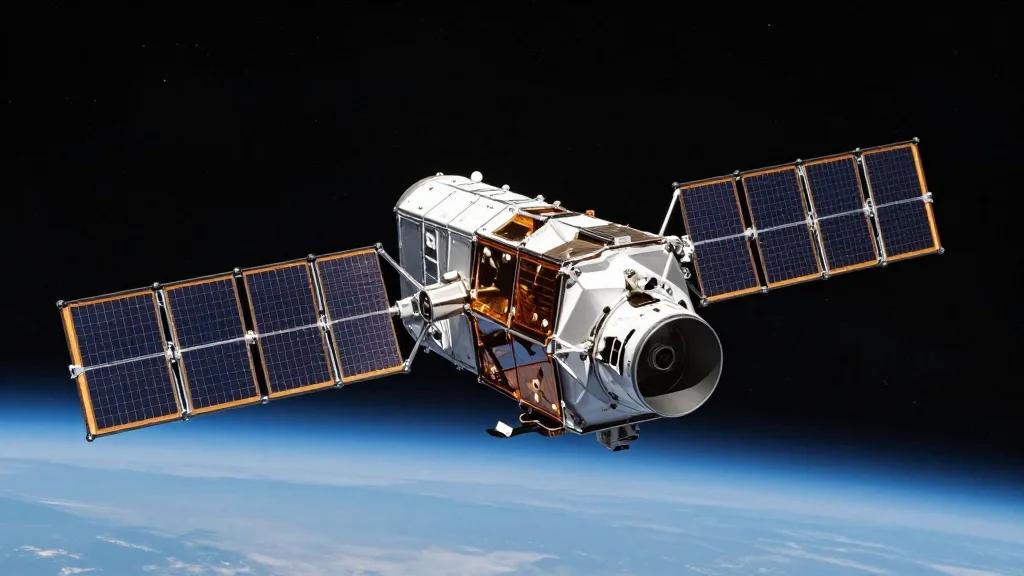
Space Force Lifts Andromeda Satellite Contract Ceiling to $6.2 Billion

Why It Matters
Elevating the Andromeda contract ceiling to $6.2 billion marks a decisive investment in the United States’ ability to monitor an increasingly congested and contested orbital environment. By funding both RG‑XX and SG‑XX, the Space Force aims to replace legacy GSSAP and SILENTBARKER assets with more agile, cost‑effective constellations that can adapt to evolving threats, including anti‑satellite weapons and hostile on‑orbit activities projected to intensify after 2030. The expanded funding pool also creates a lucrative market for commercial space firms, encouraging innovation in satellite refueling, modular design, and rapid‑deployment launch services. This public‑private synergy is expected to lower lifecycle costs, accelerate fielding timelines, and enhance interoperability with allied space forces, thereby strengthening collective security in the high‑ground of space.
Key Takeaways
- •Andromeda IDIQ ceiling raised from $1.8 B to $6.2 B, adding $4.4 B to the contract pool.
- •Funding supports RG‑XX (reconnaissance) and SG‑XX (surveillance) constellations to replace GSSAP and SILENTBARKER.
- •Space Force requested $355 M for RG‑XX FY27 and $370 M for SG‑XX FY27, with total program budgets of $2.8 B and $1.7 B respectively.
- •14 companies selected in April will compete for task orders across both programs, expanding commercial participation.
- •The increase addresses an “escalating threat environment projected for calendar year 2030+,” per Space Force notice.
Pulse Analysis
The Andromeda ceiling hike reflects a strategic pivot from legacy, high‑cost satellite platforms to proliferated, commercial‑based constellations—a trend that has been gaining momentum across the Department of Defense. By allocating $4.4 billion in a single contract vehicle, the Space Force not only accelerates its own capability roadmap but also signals confidence in the private sector’s ability to deliver rapid, affordable space assets. This approach reduces the risk of single‑point failures and spreads the cost burden across multiple vendors, fostering a competitive ecosystem that can drive down prices and spur technological breakthroughs such as on‑orbit refueling and autonomous maneuvering.
Historically, space‑domain‑awareness programs have been tightly controlled, with few contractors and long development cycles. The Andromeda expansion breaks that mold, inviting a broader set of players—including newer entrants with innovative bus designs and launch providers offering rideshare opportunities. This diversification could compress the time from contract award to on‑orbit deployment, a critical advantage as adversaries field anti‑satellite capabilities that can degrade or destroy traditional constellations.
Looking ahead, the success of RG‑XX and SG‑XX will hinge on how quickly the Space Force can transition from prototype to operational status. The FY28 YSG‑XX demonstrators will serve as a litmus test for the viability of low‑cost, refuelable satellites in a contested environment. If the program meets its performance and cost targets, it could become a template for future IDIQs, extending beyond space situational awareness to other domains such as missile warning and communications. Conversely, any delays or cost overruns could reignite debates over the balance between commercial agility and the need for assured, government‑controlled capabilities. The next procurement milestones will therefore be watched closely by both industry and policymakers.
Space Force lifts Andromeda satellite contract ceiling to $6.2 billion
Comments
Want to join the conversation?
Loading comments...