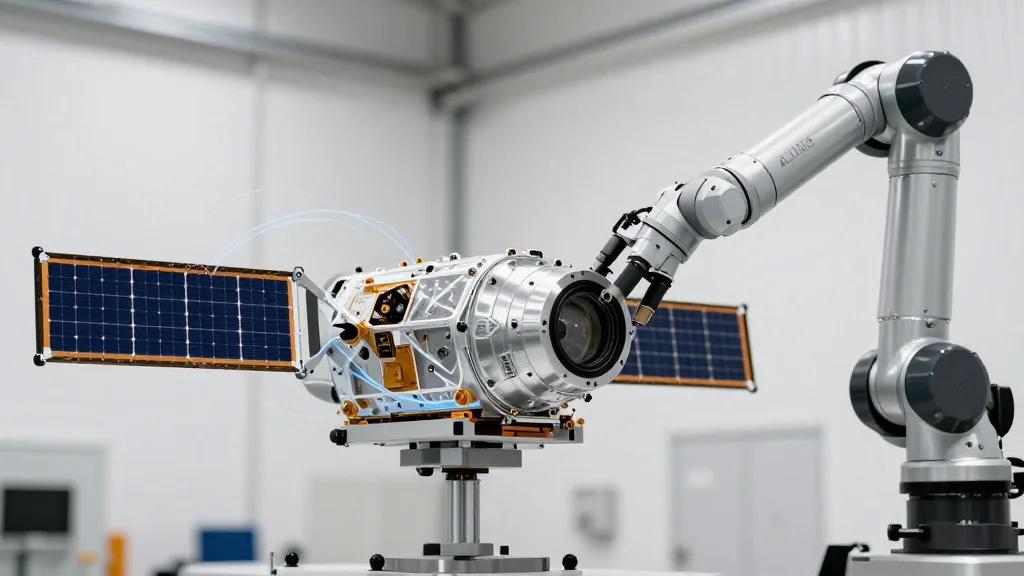
Space Force Looks to Personnel Growth to Boost Integrated Testing Approach
Why It Matters
A larger, test‑focused workforce enables faster fielding of space systems while balancing risk, positioning the Space Force as a more agile acquisition entity in a contested domain.
Key Takeaways
- •Space Force budget jumps to $70.1 billion for FY2027
- •Integrated test model blends development and operational phases
- •Personnel could double in the next 5‑10 years
- •Congress backs unified test pathway as an alternative
- •Operators will shift from line duties to acquisition roles
Pulse Analysis
The Space Force’s push for an integrated testing framework reflects a broader Pentagon effort to streamline acquisition cycles. By collapsing the traditional sequential phases—developmental testing followed by operational testing—into a single, collaborative process, the service hopes to reduce the time lag between prototype validation and field deployment. This approach mirrors trends in commercial aerospace, where rapid iteration and cross‑functional teams have become the norm. The FY2027 budget request, which more than doubles the service’s funding to $70.1 billion, explicitly allocates additional resources for personnel, signaling that human capital is viewed as the critical bottleneck in this transformation.
A cornerstone of the new model is the creation of program‑specific test teams that blend operators, acquirers, cyber specialists, and intelligence analysts. These integrated units are designed to embed testing expertise directly within acquisition streams, allowing real‑time feedback and quicker adjustments. The cultural shift required—moving operators from pure mission roles to dual testing responsibilities—demands significant training and a reallocation of manpower. Officials estimate the Space Force could double its personnel headcount within a decade, providing the depth needed to sustain continuous testing cycles without compromising operational readiness.
Legislative endorsement of the unified test and evaluation pathway further legitimizes the strategy, granting exemptions from some legacy testing requirements. While this flexibility accelerates capability delivery, leaders acknowledge the trade‑off: a higher tolerance for risk in exchange for speed. As the service seeks to field advanced satellites, hypersonic launch systems, and resilient command‑and‑control networks, the integrated testing model could become a benchmark for other services aiming to modernize their acquisition ecosystems. The success of this initiative will hinge on balancing rapid iteration with rigorous safety standards, ensuring the United States maintains a decisive edge in space operations.
Space Force looks to personnel growth to boost integrated testing approach
Comments
Want to join the conversation?
Loading comments...