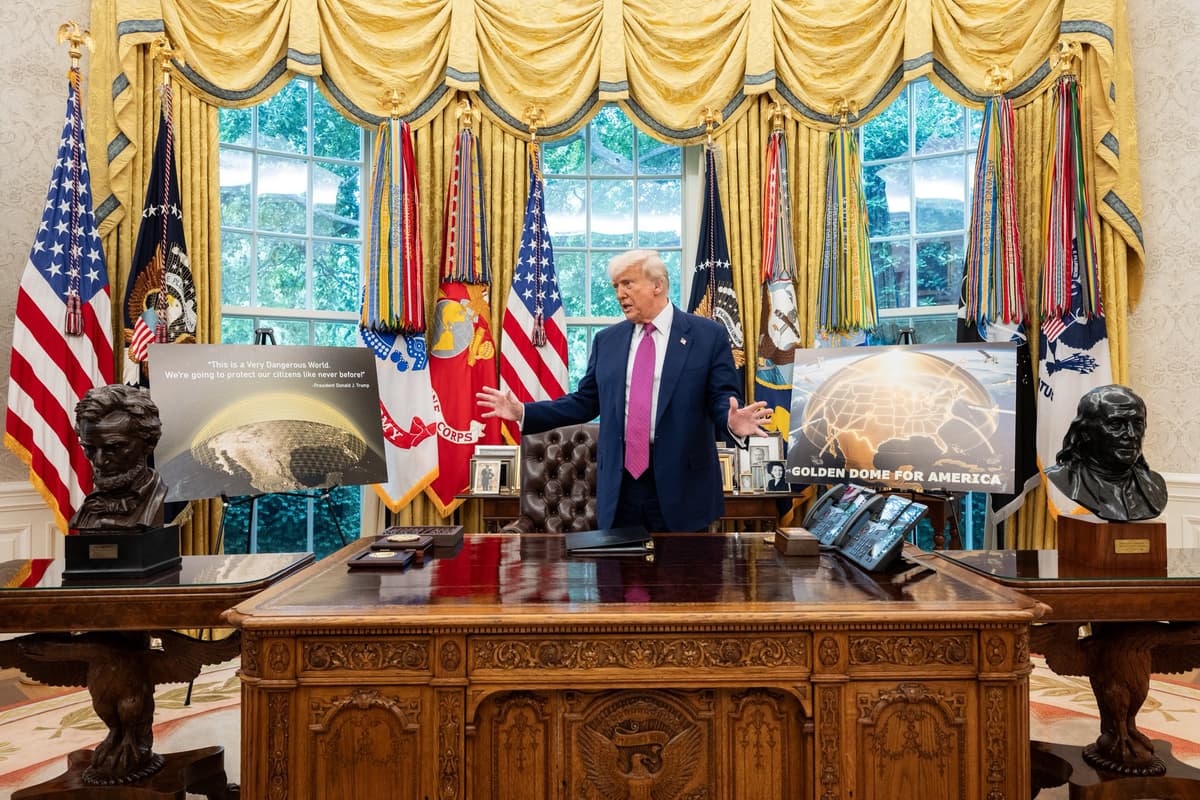
Space Force Reveals $3.2B in Space-Based Interceptor Awards for Golden Dome
Companies Mentioned
Why It Matters
The contracts accelerate deployment of a contested‑space missile‑defense layer, reshaping U.S. strategic deterrence while raising significant budget and affordability challenges for the Pentagon.
Key Takeaways
- •Space Force awarded $3.2 B across 20 contracts for space interceptors.
- •Twelve firms, including SpaceX and Lockheed Martin, will develop pLEO interceptors.
- •Interceptor prototypes target boost, midcourse, and glide-phase engagements.
- •Initial capability expected by 2028 as missile threats accelerate.
- •Golden Dome total cost could rise above $250 B, stressing affordability.
Pulse Analysis
Golden Dome represents the Pentagon’s most ambitious attempt to extend missile defense beyond Earth’s atmosphere. By weaving space‑based sensors and interceptors into a low‑Earth‑orbit constellation, the program seeks to engage hostile missiles during their boost, mid‑course and glide phases—windows traditionally out of reach for ground‑based systems. This approach reflects a broader shift toward multi‑domain operations, where space assets are no longer passive observers but active participants in kinetic defense, potentially altering the strategic calculus of adversaries that rely on high‑speed, maneuverable weapons.
The recent $3.2 billion award package underscores the urgency of fielding a prototype SBI capability by 2028. Using Other Transaction Authority agreements, the Space Force tapped a mix of legacy defense giants—Lockheed Martin, Northrop Grumman, Raytheon—and fast‑moving innovators like Anduril, GITAI USA, and SpaceX. These firms will develop proliferated low‑Earth‑orbit (pLEO) interceptors equipped with AI‑driven targeting, enabling rapid response to evolving threats. The contracts span boost‑phase kill vehicles, mid‑course kill assessment sensors, and glide‑phase engagement modules, creating a modular toolbox that can be scaled as technology matures.
Budgetary and political realities, however, loom large. While Golden Dome’s baseline estimate sits at $185 billion, independent think‑tank analyses suggest a full SBI fleet could inflate costs to $250 billion or more, sparking debates over affordability and prioritization within a constrained defense budget. Congressional scrutiny will intensify as the program seeks FY2027 funding and a $17 billion line item in the upcoming reconciliation bill. Success will hinge on demonstrating technical viability without runaway expenses, a balance that will determine whether space‑based missile defense becomes a cornerstone of U.S. security or a costly, contested ambition.
Space Force Reveals $3.2B in Space-Based Interceptor Awards for Golden Dome
Comments
Want to join the conversation?
Loading comments...