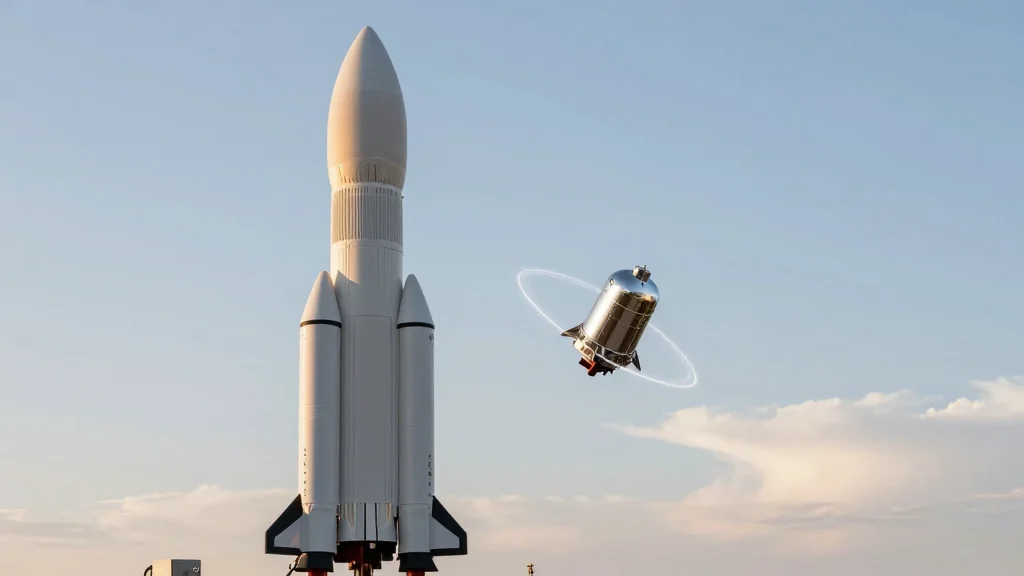
SpaceX Launches Final GPS III Satellite for the U.S. Space Force
Why It Matters
Completing the GPS III block strengthens the resilience of the U.S. navigation system while validating reusable launch technology and new satellite capabilities that will underpin future defense and commercial positioning services.
Key Takeaways
- •Final GPS III satellite launched, completing block
- •Falcon 9 booster B1095 landed after seventh flight
- •Reused fairings enabled cost savings and mission assurance
- •Optical cross‑link demo tested for future GPS IIIF
- •ULA swap ensures launch flexibility under NSSL Phase 2
Pulse Analysis
The GPS III program represents the most advanced generation of the Global Positioning System, delivering higher signal strength, improved anti‑jamming, and longer satellite lifespans. With SV10 now in orbit, the constellation reaches 38 spacecraft, 32 of which are active, cementing a robust backbone for military, aviation, and civilian navigation worldwide. Naming the satellite after Hedy Lamarr highlights the historic link between frequency‑hopping research and modern positioning technology, reinforcing the program’s legacy of innovation.
SpaceX’s involvement illustrates how commercial launch providers are reshaping national‑security space operations. The Falcon 9’s seventh‑time‑flown booster and the multiple‑reuse of payload fairings cut launch costs and improve schedule reliability, a critical factor after United Launch Alliance’s Vulcan delays. The flexible NSSL Phase 2 contract allowed the Space Force to swap missions between SpaceX and ULA, ensuring continuous access to orbit while balancing risk and capability.
Beyond delivering a new GPS satellite, the flight tested two key technologies: an optical cross‑link laser communication system and a next‑generation digital atomic clock. The laser link promises higher‑bandwidth data exchange between satellites, a feature slated for the upcoming GPS IIIF constellation, while the atomic clock enhances timing precision for both defense and commercial users. Together, these demonstrations signal a transition toward a more resilient, interoperable navigation architecture that will support emerging autonomous systems, precision agriculture, and next‑generation timing‑critical networks.
SpaceX launches final GPS III satellite for the U.S. Space Force
Comments
Want to join the conversation?
Loading comments...