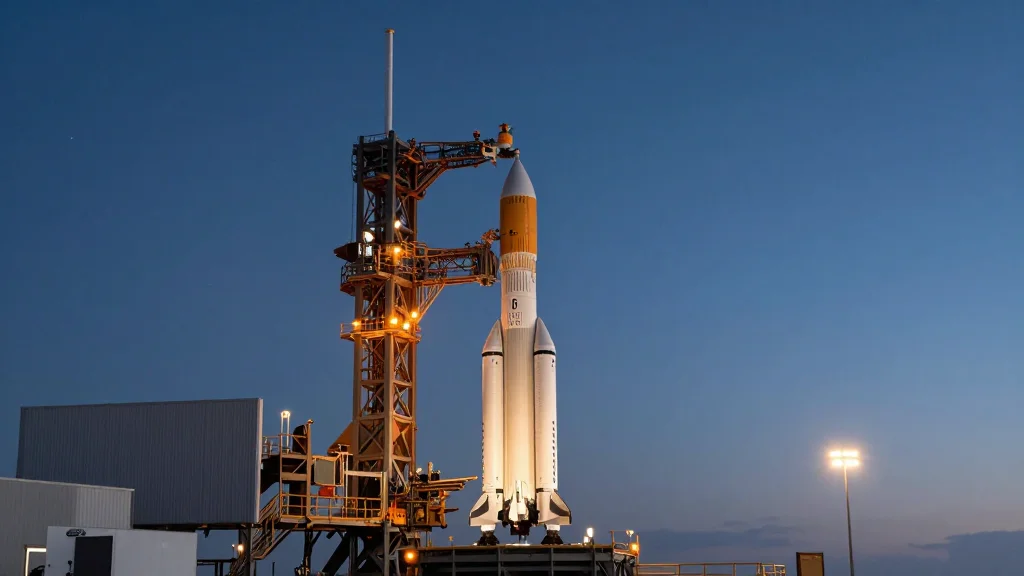
SpaceX Launches New Wave of NRO Reconnaissance Satellites
Companies Mentioned
Why It Matters
The mission expands the U.S. intelligence satellite fleet with cost‑effective, agile assets, bolstering real‑time surveillance capabilities. It also reinforces SpaceX’s role as the primary launch partner for national security payloads, shaping the future of government‑commercial space collaboration.
Key Takeaways
- •NROL-172 marks NRO’s 13th “proliferated architecture” launch
- •Falcon 9 lifted off from Vandenberg SLC‑4E at 10:13 p.m. EDT
- •Satellite count undisclosed, continuing trend of small, agile constellations
- •Launch supports U.S. intelligence with rapid‑revisit, low‑cost reconnaissance
Pulse Analysis
The National Reconnaissance Office’s latest "proliferated architecture" mission reflects a strategic pivot from monolithic spy satellites to a swarm of smaller, more resilient platforms. By fielding numerous low‑cost payloads, the NRO can replace aging assets quickly, mitigate single‑point failures, and increase imaging revisit rates. This approach aligns with broader defense trends favoring distributed systems that are harder to target and easier to upgrade, ensuring the United States maintains a technological edge in space‑based intelligence.
SpaceX’s Falcon 9 continues to dominate the national security launch market, offering a reliable, cost‑effective workhorse for the NRO’s frequent deployments. The launch from Vandenberg’s SLC‑4E leveraged a well‑established west‑coast trajectory, providing optimal polar orbits for reconnaissance coverage. Falcon 9’s high launch cadence, reusability, and proven track record reduce schedule risk for time‑sensitive missions, allowing the NRO to field new satellites on a near‑monthly basis. This partnership also frees the agency from the constraints of legacy government launch vehicles, accelerating innovation cycles.
Strategically, the expanded satellite constellation enhances the United States’ ability to monitor global hotspots, track missile launches, and collect high‑resolution imagery in near real‑time. As peer competitors invest heavily in anti‑satellite capabilities, a dispersed network of smaller satellites offers redundancy and survivability that larger, more expensive platforms cannot match. The continued reliance on commercial launch services like SpaceX signals a broader shift toward public‑private collaboration, driving down costs while fostering rapid technological advancement across the defense and intelligence sectors.
SpaceX Launches New Wave of NRO Reconnaissance Satellites
Comments
Want to join the conversation?
Loading comments...