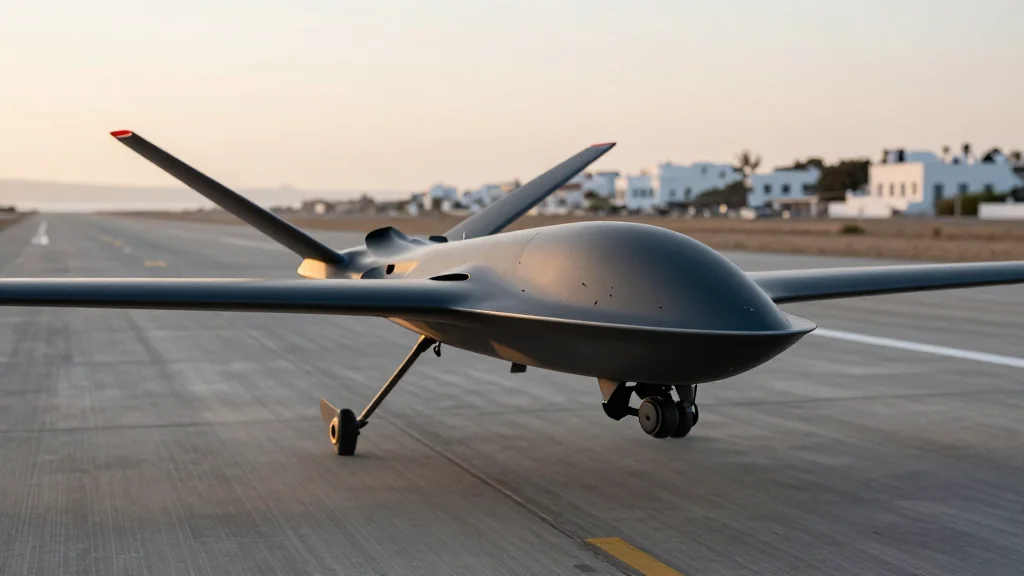
Stealth RQ-180 Drone Spotted Near Greece's Larisa Air Base, Confirming U.S. Recon Ops

Companies Mentioned
Why It Matters
The confirmed operation of the RQ‑180 from a NATO ally signals a deepening of U.S. intelligence capabilities in a theater where Iran and Russia are actively expanding their own surveillance and missile programmes. By fielding a stealth platform that can evade advanced air‑defence systems, Washington gains a decisive edge in gathering real‑time data on hostile missile tests, naval movements, and electronic emissions, thereby enhancing deterrence and decision‑making for both the United States and its allies. The visual proof also raises the stakes for diplomatic engagement, as adversaries may interpret the presence of such a covert asset as an escalation, potentially prompting counter‑measures or heightened rhetoric. Beyond immediate tactical benefits, the sighting illustrates a shift toward forward‑deployed, low‑observable platforms that operate from allied bases rather than remote, high‑risk launch sites. This model reduces response times, expands coverage, and integrates more closely with NATO’s collective defence posture. However, it also places host nations like Greece in a delicate position, balancing the security advantages of U.S. support against the risk of becoming a target for adversary retaliation. The episode therefore serves as a barometer for how secretive technology, alliance politics, and regional security dynamics intersect in the modern defense environment.
Key Takeaways
- •The Aviationist released clear footage of the RQ‑180 approaching Larisa Air Base in Greece.
- •The drone is confirmed to be neither a B‑2 Spirit nor a B‑21 Raider, confirming its unique stealth design.
- •Larisa Air Base, already used for MQ‑9 Reaper missions, is now a forward operating location for the RQ‑180.
- •The platform fills a capability gap left by larger, less stealthy drones vulnerable to systems like Iran’s Third Khordad.
- •The sighting may heighten U.S.-Iran and NATO‑Russia tensions as the drone gathers intelligence in contested airspace.
Pulse Analysis
The RQ‑180’s emergence at Larisa marks a watershed in how the United States leverages its most secretive aerial assets. Historically, U.S. reconnaissance relied on high‑altitude platforms such as the Global Hawk, which, while offering long endurance, are increasingly vulnerable to modern, mobile air‑defence batteries fielded by Iran and potentially by Russian forces in the Aegean. By basing a low‑observable, high‑speed flying wing at a forward NATO airfield, Washington sidesteps the need for deep‑strike launches from the continental United States, reducing transit time and exposure to hostile radars. This operational shift mirrors a broader doctrinal pivot toward distributed, survivable intelligence collection that can adapt to contested environments.
From a market perspective, the sighting could accelerate demand for next‑generation stealth UAV technologies among allied nations seeking similar capabilities. Companies that supply low‑observable materials, advanced sensor suites, and secure data links may see heightened interest, especially as NATO members reassess their own reconnaissance gaps. Conversely, adversaries are likely to double‑down on counter‑stealth measures, spurring a new wave of radar and infrared detection research. The RQ‑180’s deployment also underscores the strategic value of host‑nation basing agreements; Greece’s willingness to accommodate such a platform enhances its relevance within NATO while exposing it to potential retaliation, a calculus that will shape future alliance basing negotiations.
Looking ahead, the RQ‑180 could become a template for a family of stealth UAVs designed for rapid deployment across allied airfields, blurring the line between traditional manned reconnaissance and unmanned ISR. If the platform proves effective in gathering actionable intelligence on Iranian missile tests or Russian naval deployments, it may prompt a doctrinal shift toward more frequent, low‑observable ISR missions, reshaping the intelligence‑gathering landscape for the next decade.
Stealth RQ-180 Drone Spotted Near Greece's Larisa Air Base, Confirming U.S. Recon Ops
Comments
Want to join the conversation?
Loading comments...