Sub that Sank Iranian Warship Reflects Navy’s Drive to Adapt, CNO Says
Why It Matters
The operation proves the Navy can field mission‑specific assets on short notice, reshaping power projection and deterrence in contested regions. It also showcases how rapid technology integration could become a decisive advantage in future maritime conflicts.
Key Takeaways
- •Submarine Charlotte sank Iranian frigate Dena with torpedoes, first since WWII
- •Navy repurposed Indo‑Pacific sub for Indian Ocean mission in weeks
- •CNO promotes containerized payloads to reconfigure ships rapidly
- •Tailored forces used for blockades and mine‑clearing in Persian Gulf
- •Fleet Introduction Operating System aims to update ships like app downloads
Pulse Analysis
The sinking of Iran’s frigate Dena by the USS Charlotte marks a historic moment for the U.S. Navy, ending a 80‑year gap in torpedo‑based surface ship kills. Beyond the tactical success, the episode underscores a strategic pivot: the ability to reassign a submarine from the Indo‑Pacific to the Indian Ocean in a matter of weeks. This agility challenges the traditional, lengthy deployment cycles that have long defined naval force generation, offering policymakers a new lever for rapid response in volatile hotspots.
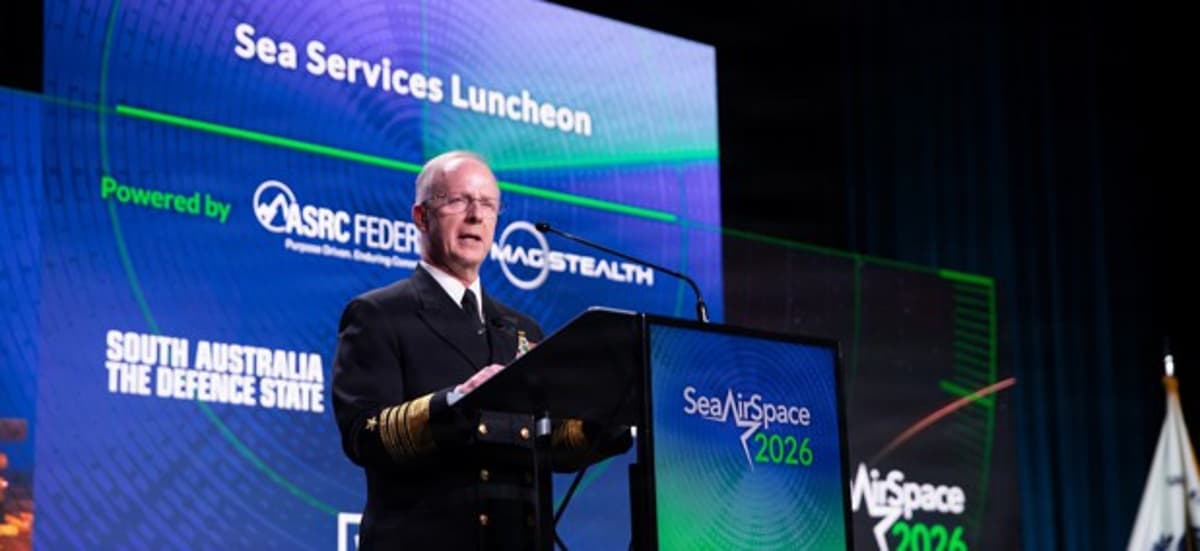
Admiral Caudle’s remarks at the Navy League conference highlighted two emerging doctrines: "tailored forces" and containerized payloads. By treating ship capabilities as modular, swappable units—much like a shipping container— the Navy can re‑equip vessels on demand, whether for blockades, mine‑clearing, or strike missions. This approach mirrors trends in commercial logistics and aligns with broader defense initiatives to digitize and accelerate the acquisition pipeline. The concept promises cost‑effective scalability, allowing a single platform to fulfill multiple roles without the need for a full‑scale new class of ships.
The longer‑term challenge lies in institutionalizing this speed of adaptation. Caudle’s Fleet Introduction Operating System seeks to make software and hardware updates as seamless as downloading an app, but it requires robust "digital rails"—secure data pipelines, high‑fidelity simulations, and rapid certification processes. Analysts warn that without sustained investment, the Navy risks a mismatch between cutting‑edge technology and legacy integration practices. If successfully implemented, however, this digital‑first, container‑centric model could give the United States a decisive edge in the next generation of maritime warfare.
Sub that sank Iranian warship reflects Navy’s drive to adapt, CNO says
Comments
Want to join the conversation?
Loading comments...