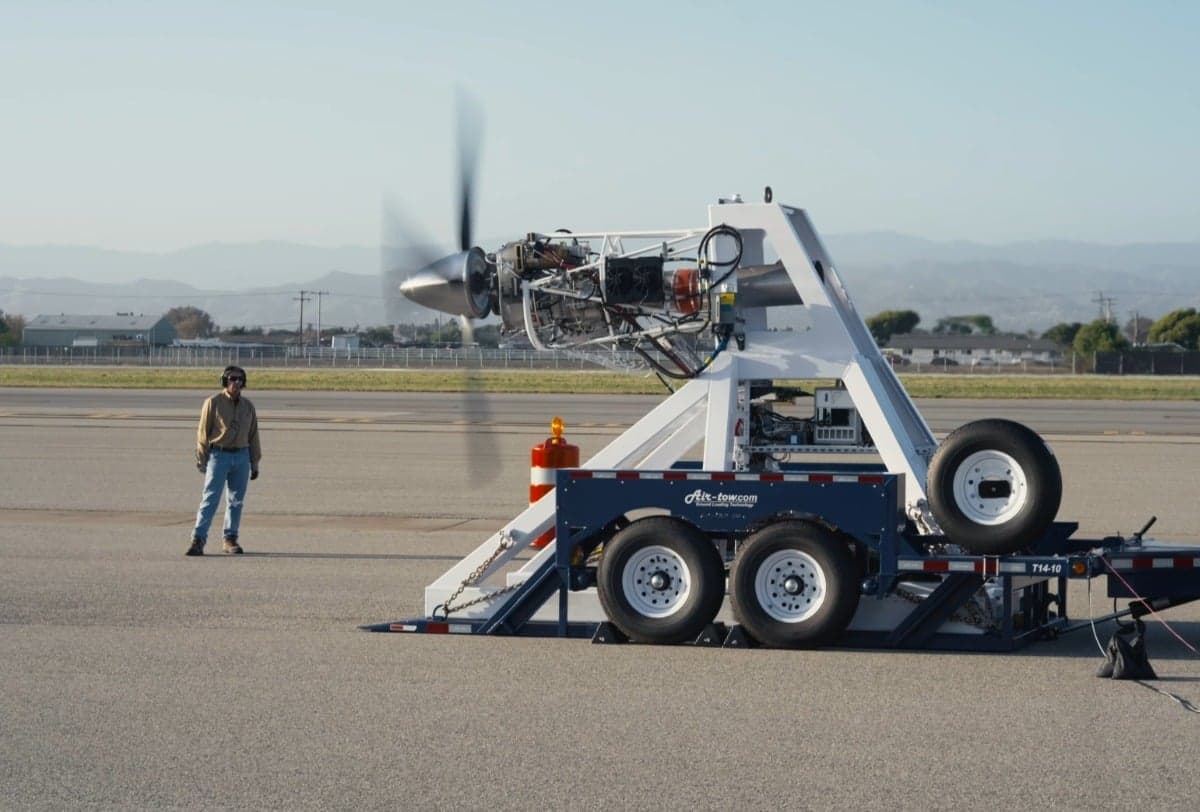
Swarm Aero Selects Honeywell Turboprop for Its New Unmanned Aircraft
Why It Matters
The engine choice gives Swarm Aero a credible, low‑cost propulsion solution that accelerates production and reduces risk, positioning the startup to compete in the high‑value Group 5 drone market.
Key Takeaways
- •Swarm Aero chose Honeywell TPE331 turboprop for Group 5 UAV
- •Initial engines delivered, moving program into hardware integration phase
- •$59 million funding backs large‑scale production of swarm drones
- •Proven engine offers 122 million flight hours, easing supply‑chain risk
Pulse Analysis
The U.S. Department of Defense classifies Group 5 unmanned aircraft as systems over 600 kg that operate above 18,000 ft, a segment currently dominated by platforms such as the MQ‑9 Reaper and Global Hawk. Swarm Aero’s upcoming Group 5 UAV aims to combine that size and altitude envelope with autonomous swarm capabilities, a combination that electric propulsion cannot yet sustain due to limited energy density. By selecting a proven turboprop, the company signals a pragmatic approach: prioritize endurance and payload capacity while the industry continues to develop high‑energy batteries.
Honeywell’s TPE331 has logged more than 122 million flight hours across 13,000 installations since its 1965 certification, making it one of the most mature turboprop engines in aviation. That legacy translates into predictable performance, extensive spare‑parts inventories, and a supply chain that can support serial production—critical factors for a startup planning to manufacture dozens, if not hundreds, of drones. The engine’s cost‑effectiveness and incremental upgrades over six decades also reduce development risk, allowing Swarm Aero to focus resources on swarm software and mission‑specific payloads.
The partnership illustrates a broader shift in defense procurement toward modular, rapidly fielded solutions that blend legacy hardware with cutting‑edge software. With $59 million in capital, Swarm Aero is positioned to scale its manufacturing footprint in Arkansas and demonstrate a credible, low‑cost alternative to traditional, single‑aircraft programs. If the platform meets its performance targets, it could accelerate the adoption of distributed aerial networks for intelligence, surveillance, and strike missions, prompting other aerospace firms to reconsider the balance between new‑technology propulsion and proven powerplants.
Swarm Aero selects Honeywell turboprop for its new unmanned aircraft
Comments
Want to join the conversation?
Loading comments...