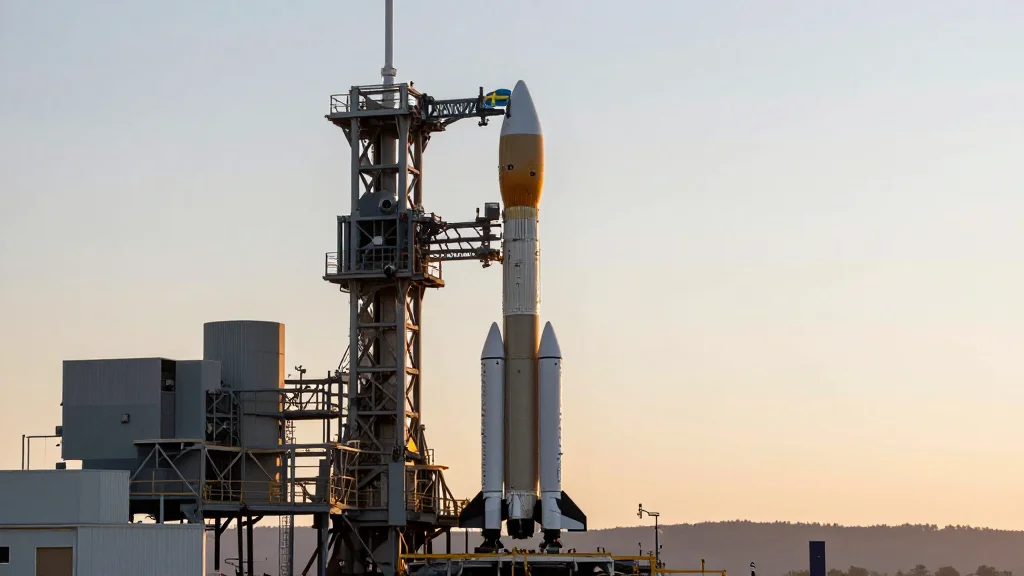
Sweden Launches Its First Military Spy Satellite
Companies Mentioned
Why It Matters
The new satellite gives Sweden and NATO independent, real‑time surveillance of hard‑to‑monitor regions, strengthening collective defense and deterrence in the High North.
Key Takeaways
- •Sweden achieved operational satellite capability two years before its 2030 goal
- •Planet Labs built the satellite, leveraging commercial Earth‑observation expertise
- •Sweden plans to deploy roughly ten reconnaissance satellites by late 2020s
- •Launch via SpaceX highlights reliance on proven commercial launch services
- •Arctic surveillance boost enhances NATO situational awareness in a strategic theater
Pulse Analysis
Sweden’s entry into the military space arena marks a decisive shift for a nation that only recently joined NATO. By partnering with Planet Labs for the satellite bus and SpaceX for launch services, Stockholm compressed a timeline that typically spans a decade into a matter of months. This commercial‑centric procurement model sidestepped the lengthy development cycles of a sovereign industry, allowing the Swedish Armed Forces to achieve initial operational capability well before the 2030 milestone originally set by the Defence Materiel Administration.
The strategic value of the new platform lies largely in its Arctic coverage. High‑latitude regions have long suffered from limited satellite revisit rates, creating blind spots for NATO’s northern flank. Sweden’s low‑Earth‑orbit sensor delivers frequent, high‑resolution imagery that can be fused with allied data streams, sharpening situational awareness of Russian activity, melting ice routes, and emerging threats. The presence of a dedicated Swedish space operations center further ensures that raw imagery is rapidly transformed into actionable intelligence, reinforcing the alliance’s collective defense posture.
Sweden’s approach reflects a broader trend among smaller NATO members: leveraging proven commercial space capabilities to fill capability gaps quickly and cost‑effectively. As Falcon 9 continues to dominate government launches and constellations like Planet’s expand globally, more nations are likely to adopt similar models, prioritizing speed and interoperability over domestic manufacturing. Looking ahead, Sweden’s planned constellation of ten satellites will deepen its intelligence reach and may spur additional joint ventures, cementing its role as a pivotal space‑enabled contributor within the alliance.
Sweden launches its first military spy satellite
Comments
Want to join the conversation?
Loading comments...