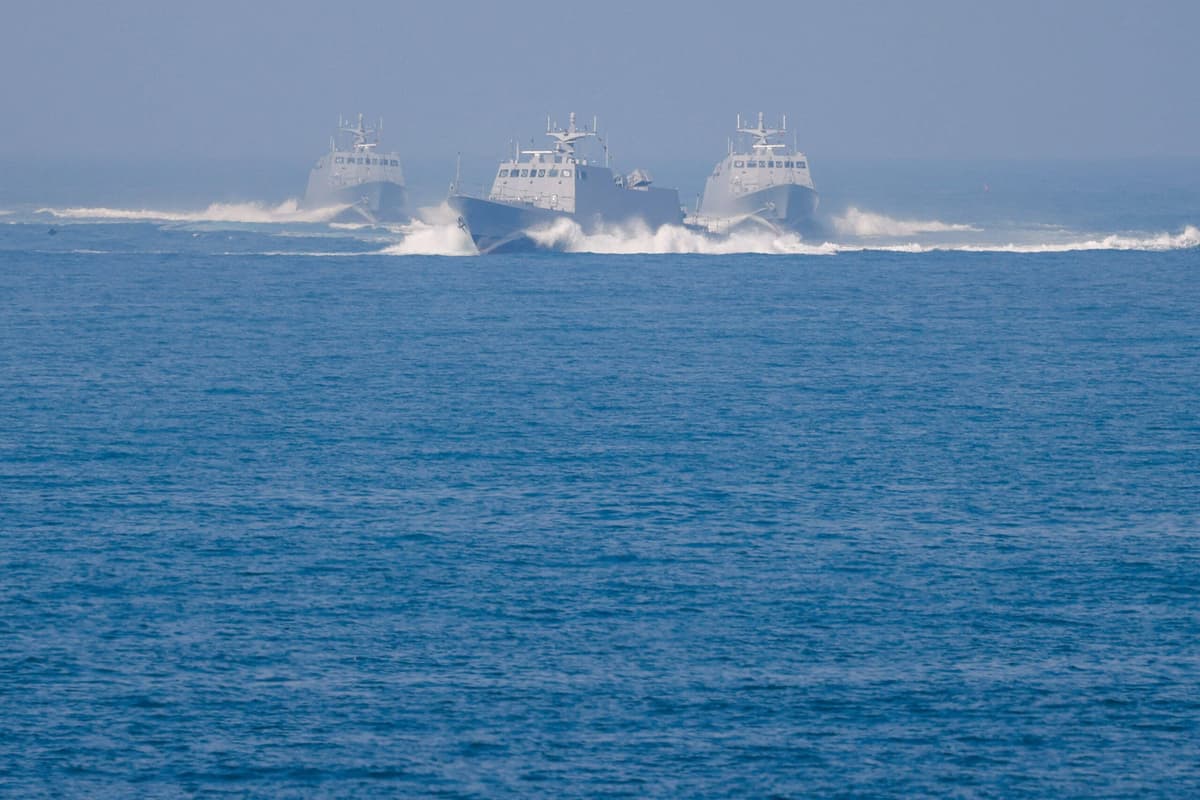
Taiwan Beefs up Anti-Ship Missile Arsenal to Counter Threat of Chinese Invasion
Companies Mentioned
Why It Matters
The enlarged missile force gives Taiwan a credible deterrent against a Chinese invasion and deepens U.S. security cooperation in the Indo‑Pacific, forcing Beijing to factor high‑cost attrition into any attack plan.
Key Takeaways
- •Taiwan targets >1,800 anti‑ship missiles by 2029
- •Harpoon deliveries will reach 850 units, plus 1,000 Hsiung Feng missiles
- •$25 billion defense boost funds U.S. munitions and missile production
- •Dispersed missile‑drone network aims to create a Taiwan Strait “kill zone.”
- •U.S. arms packages total up to $14 billion, pending approval
Pulse Analysis
Taiwan’s missile buildup reflects a broader shift toward asymmetric warfare in the face of China’s overwhelming naval superiority. By fielding a mix of sea‑skimming Harpoons and indigenous Hsiung Feng rockets, the island can threaten any surface fleet that attempts to cross the Taiwan Strait. Mobile launchers and swarms of drones further complicate Chinese targeting, turning the narrow waterway into a lethal “kill zone.” This approach mirrors how Ukraine leveraged cheap precision weapons to blunt Russian naval incursions and how Iran has sustained maritime pressure despite superior adversaries.
The procurement surge is underpinned by a $25 billion defense budget increase and a series of U.S. arms‑sale approvals that could total $14 billion. These funds secure not only additional missiles but also the integration of advanced radar, command‑and‑control systems, and unmanned platforms. For Washington, the sales reinforce a strategic partnership that signals a commitment to Taiwan’s self‑defense, while simultaneously raising the cost calculus for Beijing. Analysts argue that a dense, dispersed missile network forces the People’s Liberation Army to allocate more assets to suppression, diluting its offensive momentum.
Nevertheless, the plan faces logistical and operational hurdles. Production bottlenecks, potential U.S. export restrictions, and the need to retrofit legacy platforms could delay full fielding until 2030. Fixed launch sites remain vulnerable to pre‑emptive strikes, prompting the military to emphasize rapid conversion to mobile configurations. Successful integration of missiles with drones and coastal radars will hinge on joint training and real‑time data sharing, areas where Taiwan continues to seek U.S. expertise. If these challenges are managed, the missile arsenal could become a decisive factor in any future cross‑strait conflict, shaping regional security dynamics for years to come.
Taiwan Beefs up Anti-Ship Missile Arsenal to Counter Threat of Chinese Invasion
Comments
Want to join the conversation?
Loading comments...