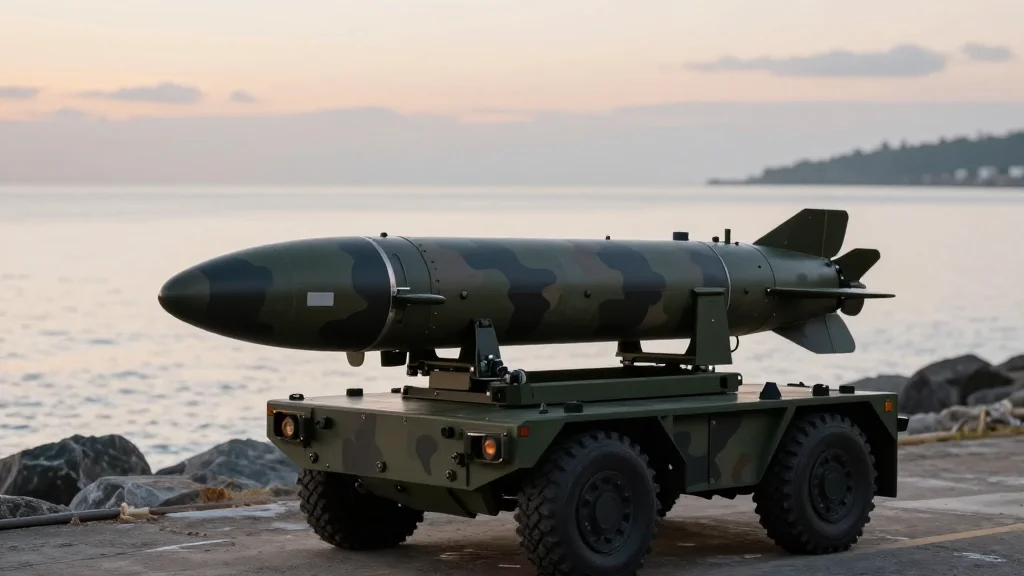
Taiwan Racing to Arm Itself as US Reliability Wanes
Why It Matters
Taiwan’s missile surge reduces dependence on uncertain U.S. support, strengthening its self‑defense and altering China’s calculus in the Taiwan Strait.
Key Takeaways
- •Taiwan aims for 1,800 anti‑ship missiles by early 2029
- •400 US‑made Harpoon missiles slated for delivery 2026‑2029
- •Domestic Hsiung Feng II/III production targets 1,000 missiles
- •Littoral Combat Command to coordinate missiles, drones, and coastal defense
- •US sales pause forces Taiwan to build an indigenous deterrent
Pulse Analysis
Taiwan’s defense posture is being reshaped as Washington’s attention drifts toward the protracted Iran conflict. A pause on a $14 billion arms package, announced by the Trump administration, has left the island uncertain about the timing and volume of future U.S. deliveries, including Patriot interceptors and other critical systems. Faced with a possible two‑ to three‑year gap in American interceptor replenishment, Taipei is accelerating a home‑grown deterrent that can operate independently of external supply chains. This strategic pivot reflects a broader trend among allies to hedge against fluctuating U.S. commitment.
The core of Taiwan’s new doctrine is an expanded anti‑ship missile inventory that will exceed 1,800 units by early 2029. The plan blends 400 advanced Harpoon cruise missiles from the United States with roughly 1,000 domestically produced Hsiung Feng II and III missiles, all mounted on mobile, ground‑based launchers. By dispersing these sea‑skimming weapons, the military creates a “kill zone” that can inflict crippling losses on any amphibious assault force before it reaches shore. A unified Littoral Combat Command, slated to launch in July, will synchronize missile fire with aerial drones, mirroring tactics that proved effective in Ukraine’s naval engagements.
Taiwan’s push for an indigenous, missile‑centric deterrent carries significant regional implications. A credible, self‑sustaining strike capability raises the cost of a Chinese blockade and may compel Beijing to reconsider rapid escalation, especially if U.S. support remains ambiguous. At the same time, the island’s reduced reliance on American hardware could reshape the security calculus for Washington, allowing it to maintain a strategic foothold without direct arms commitments. Observers see Taiwan’s approach as a template for other partners seeking resilience amid great‑power competition, signaling a shift toward localized defense ecosystems in the Indo‑Pacific.
Taiwan racing to arm itself as US reliability wanes
Comments
Want to join the conversation?
Loading comments...