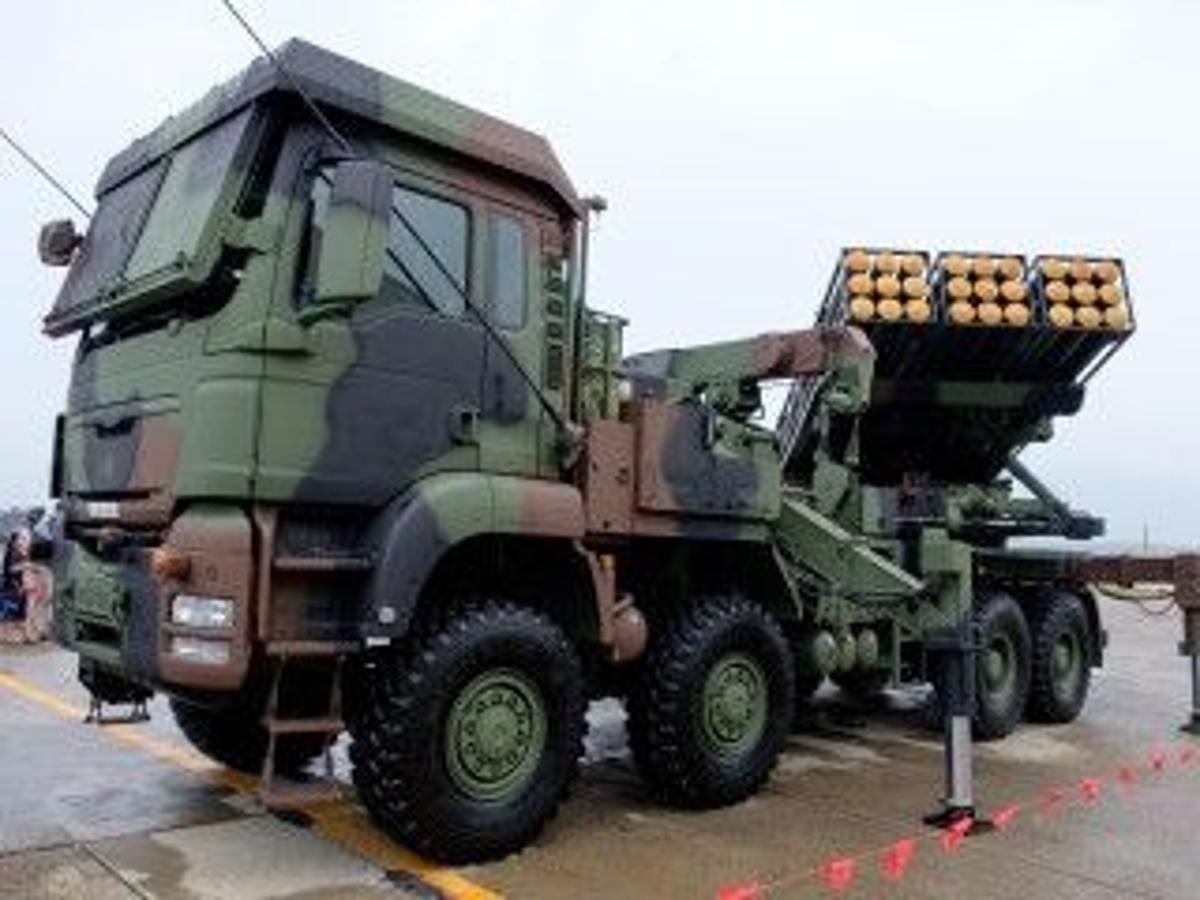
Taiwan Simulates Defence Against Chinese Naval Attack
Why It Matters
The simulation signals Taiwan’s heightened readiness against a possible Chinese amphibious invasion, reinforcing deterrence and underscoring the island’s reliance on advanced weaponry and Western support.
Key Takeaways
- •First use of missile systems in Taiwan drills in seven years
- •Exercises covered 20‑km stretch near Taichung, Taiwan’s third‑largest city
- •Thunderbolt‑2000 rockets and US M109A2 howitzers featured
- •Scenario based on Pentagon and CSIS analysis of Chinese invasion risk
- •Taiwan signals deterrence, urging China to respect status‑quo
Pulse Analysis
Taiwan’s recent amphibious‑assault simulation reflects a strategic shift toward more robust, realistic training amid escalating cross‑strait tensions. While the island has long maintained a defensive posture, the inclusion of missile fire—absent from drills for seven years—demonstrates a willingness to integrate high‑impact, precision weapons into its coastal defense doctrine. By staging the exercise on a 20‑kilometre segment of the Dajia River near Taichung, Taiwan highlighted vulnerable landing zones that could be targeted by a Chinese force, aligning the scenario with intelligence from the Pentagon and think‑tank CSIS.
The drill’s arsenal combined home‑grown Thunderbolt‑2000 mobile rocket launchers with U.S.‑supplied M109A2 Paladin and M110A2 self‑propelled howitzers, showcasing interoperability with American systems. Anti‑tank missiles, artillery, and mortars were employed to simulate a rapid, high‑intensity response to an amphibious landing, underscoring Taiwan’s capacity to deliver layered firepower within short preparation windows. This operational realism serves a dual purpose: it hones the troops’ coordination under pressure and sends a clear message to Beijing that Taiwan can contest any beachhead with credible kinetic force.
Beyond the tactical realm, the exercise carries significant geopolitical weight. By publicly emphasizing deterrence and referencing U.S. analytical inputs, Taiwan reinforces its informal security partnership with Washington, which has been pivotal in supplying advanced weaponry and strategic counsel. The display may prompt Beijing to recalibrate its risk calculations, while also reassuring regional allies of Taiwan’s resolve. In a broader East Asian security context, such high‑visibility drills contribute to a deterrence equilibrium, potentially curbing miscalculations that could otherwise spark a flashpoint in the Taiwan Strait.
Taiwan simulates defence against Chinese naval attack
Comments
Want to join the conversation?
Loading comments...