Tech Firms Partner up to Push Intelligence Processing Closer to the Battlefield
Companies Mentioned
Why It Matters
Edge‑processed intelligence reduces latency and dependence on fragile networks, giving warfighters timely situational awareness and a strategic edge over near‑peer adversaries.
Key Takeaways
- •Coalition Edge unites seven firms to deliver edge‑processed geospatial intel
- •Edge stack processes satellite data locally, bypassing unreliable networks
- •Nvidia GPUs and HPE hardware power on‑site AI analytics
- •Urban Sky balloons provide high‑altitude data links for frontline units
- •Industry self‑initiated partnerships aim to outpace peer competitors
Pulse Analysis
The surge of commercial satellite and drone imagery has flooded military planners with data, yet traditional cloud pipelines struggle to deliver that information quickly enough for tactical decision‑making. Coalition Edge addresses this bottleneck by relocating the compute layer to the field, where ruggedized hardware can ingest raw feeds and run AI models without waiting for back‑haul to distant data centers. This shift mirrors broader trends in defense procurement, where agility and resilience are prioritized over legacy infrastructure.
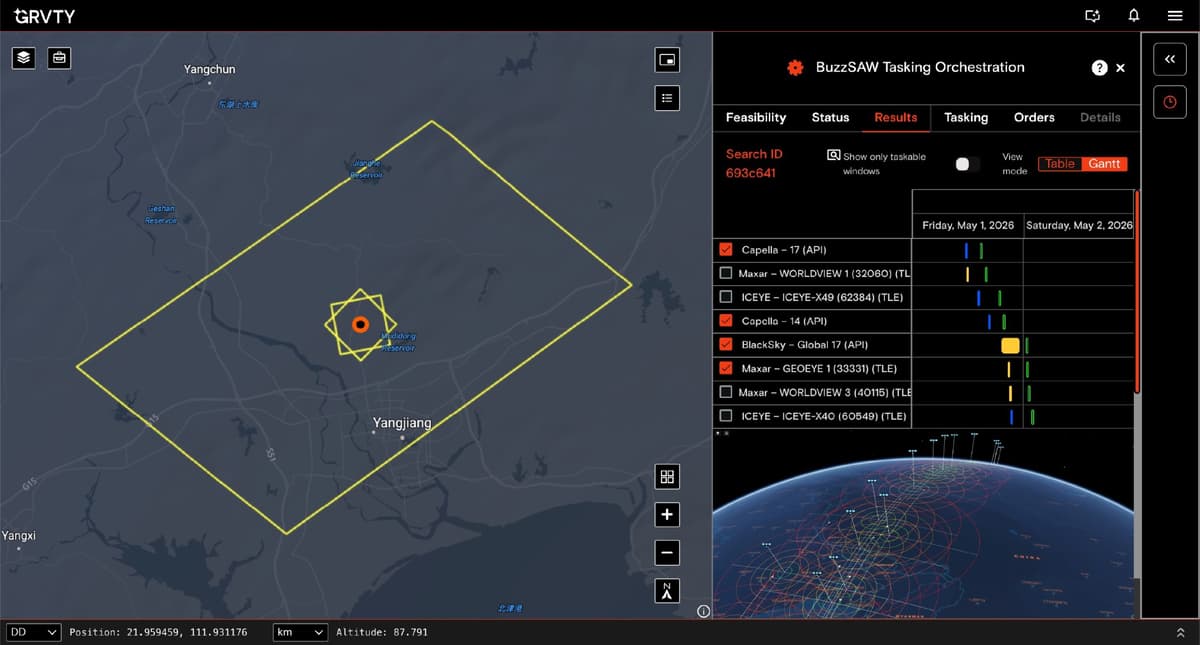
At the heart of the solution is an "edge intelligence stack" that blends Nvidia’s GPU acceleration, Hewlett Packard Enterprise’s edge servers, and pre‑loaded geospatial datasets from GRVTY. The stack runs automated target recognition and analytics locally, while T‑Mobile’s cellular links and Urban Sky’s high‑altitude balloon platforms provide redundant pathways for data ingress and egress. By embedding AI reasoning directly on the edge, the system can flag threats, generate overlays, and transmit concise intelligence packets even when conventional communications are jammed or degraded.
Strategically, the self‑initiated consortium signals a move away from the traditional RFP‑driven defense acquisition model toward collaborative, IRAD‑funded innovation. As near‑peer competitors accelerate their own edge capabilities, the ability to field integrated, low‑latency intelligence becomes a decisive factor in future conflicts. For vendors, the partnership opens new revenue streams in hardware, software, and managed services, while the Pentagon gains a modular, scalable architecture that can evolve with emerging sensor technologies.
Tech firms partner up to push intelligence processing closer to the battlefield
Comments
Want to join the conversation?
Loading comments...