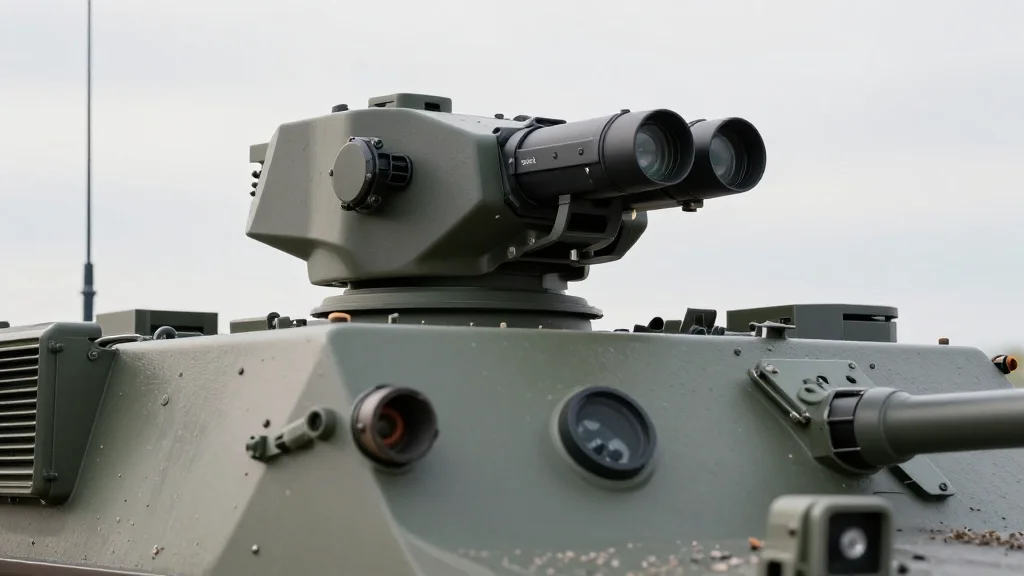
Teledyne FLIR Secures $35 Million TacFLIR Deal with Poland’s WB Group

Companies Mentioned
Why It Matters
The contract strengthens Poland’s ability to conduct rapid, high‑resolution ISR, a capability that is increasingly vital on NATO’s eastern border where Russian aggression remains a strategic threat. By embedding U.S. sensor technology into domestically produced vehicles, Warsaw reduces reliance on foreign parts while ensuring interoperability with NATO command networks. For the U.S. defense industry, the deal illustrates a growing export pipeline that supports both revenue growth and geopolitical influence, especially as European allies seek to modernize legacy platforms. Beyond the immediate tactical advantage, the agreement showcases a model of co‑development that could become a template for future NATO procurement—leveraging American technology while fostering local industrial participation. This approach may accelerate the alliance’s overall readiness and deter adversarial calculations in a region where every second of situational awareness can shape the outcome of a crisis.
Key Takeaways
- •$35 million contract awarded to Teledyne FLIR for TacFLIR 280‑HDEP sensors
- •Third TacFLIR deal for Teledyne FLIR in 2026, indicating rapid sales momentum
- •Integration reduces target hand‑off time by ~40 % versus legacy systems
- •Poland’s defense spending exceeds 4 % of GDP, the highest NATO share
- •Teledyne FLIR opened a service hub in Kraków to support Central European customers
Pulse Analysis
Teledyne FLIR’s Polish contract arrives at a moment when NATO is rebalancing its force posture on the alliance’s vulnerable eastern flank. The TacFLIR 280‑HDEP, while not a breakthrough technology, offers a proven sensor package that can be fielded quickly and integrated into existing vehicle fleets. The real value lies in the speed of deployment and the ability to mesh with Poland’s Topaz battle‑management system, a move that reduces latency in the sensor‑to‑shooter loop. In an environment where Russia’s hybrid tactics blend conventional force with electronic warfare, that latency reduction could be decisive.
From a market perspective, the deal underscores a shift from pure acquisition to co‑development. By embedding U.S. hardware into Polish platforms, Teledyne FLIR gains a foothold in a region that is increasingly looking to diversify its supply chain away from sole reliance on American or Russian sources. The Kraków service hub not only provides after‑sales support but also signals a long‑term commitment to the region, potentially opening doors to future contracts with the Baltic states, which are conducting similar upgrades to their armored reconnaissance assets.
Looking ahead, the success of the TacFLIR integration will be judged during Exercise Steadfast Defender 2026. If the sensors perform as advertised, they could become a baseline requirement for NATO’s next generation of armored ISR vehicles, driving a cascade of follow‑on orders. Conversely, any shortfall could embolden critics who argue that technology alone cannot offset the strategic challenges posed by a resurgent Russia. The outcome will therefore shape not only Teledyne FLIR’s revenue trajectory but also the broader calculus of deterrence on Europe’s front line.
Teledyne FLIR Secures $35 Million TacFLIR Deal with Poland’s WB Group
Comments
Want to join the conversation?
Loading comments...