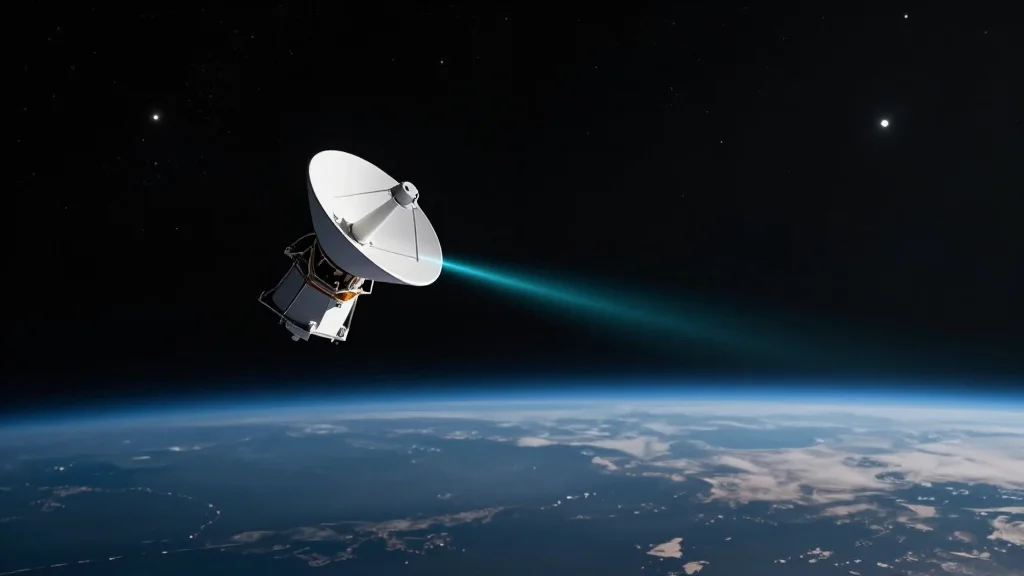
Tests Suggest Russian Satellites Can Jam GPS On a Continental Scale

Companies Mentioned
Why It Matters
Space‑based GPS jamming threatens critical infrastructure, logistics and military operations that rely on precise positioning. Demonstrating such capability signals a new escalation in electronic warfare, forcing governments to reassess resilience strategies.
Key Takeaways
- •75 days of multi‑region GPS interference recorded 2019‑2026
- •Signals match Russian EKS satellites, at least 1,200 km altitude
- •Bursts under 10 seconds, timed during European business hours
- •Interference also hit China’s BeiDou band, indicating broader targeting
- •Potential to weaponize GPS could cripple navigation‑dependent sectors
Pulse Analysis
The discovery of coordinated GPS interference from Russian EKS satellites marks a watershed moment in electronic warfare. By exploiting the L1 frequency—central to civilian and military navigation—the bursts demonstrate that space assets can project disruptive signals far beyond traditional line‑of‑sight limits. Analysts compare this to early radar jamming experiments, but the altitude and global reach of the satellites make mitigation far more complex, requiring both terrestrial and space‑based countermeasures.
For industries that depend on uninterrupted positioning—shipping, aviation, autonomous vehicles, and financial markets—the prospect of a sudden, continent‑wide GPS blackout raises urgent resilience questions. Redundant navigation systems such as Europe’s Galileo, Russia’s GLONASS, and China’s BeiDou can provide fallback, yet many critical applications are tightly coupled to the U.S. GPS signal due to its ubiquity and accuracy. Companies are likely to accelerate investment in multi‑constellation receivers, hardened antennas, and alternative timing sources like terrestrial cellular networks to safeguard operations.
Geopolitically, the ability to jam GPS from orbit adds a strategic lever for Russia, potentially reshaping conflict dynamics. NATO and the U.S. Department of Defense are expected to prioritize research into detection, attribution, and rapid response to space‑based jamming. International norms governing the weaponization of navigation signals may also evolve, as policymakers grapple with the dual‑use nature of satellite technology and the need to preserve the global commons of positioning services.
Tests Suggest Russian Satellites Can Jam GPS On a Continental Scale
Comments
Want to join the conversation?
Loading comments...