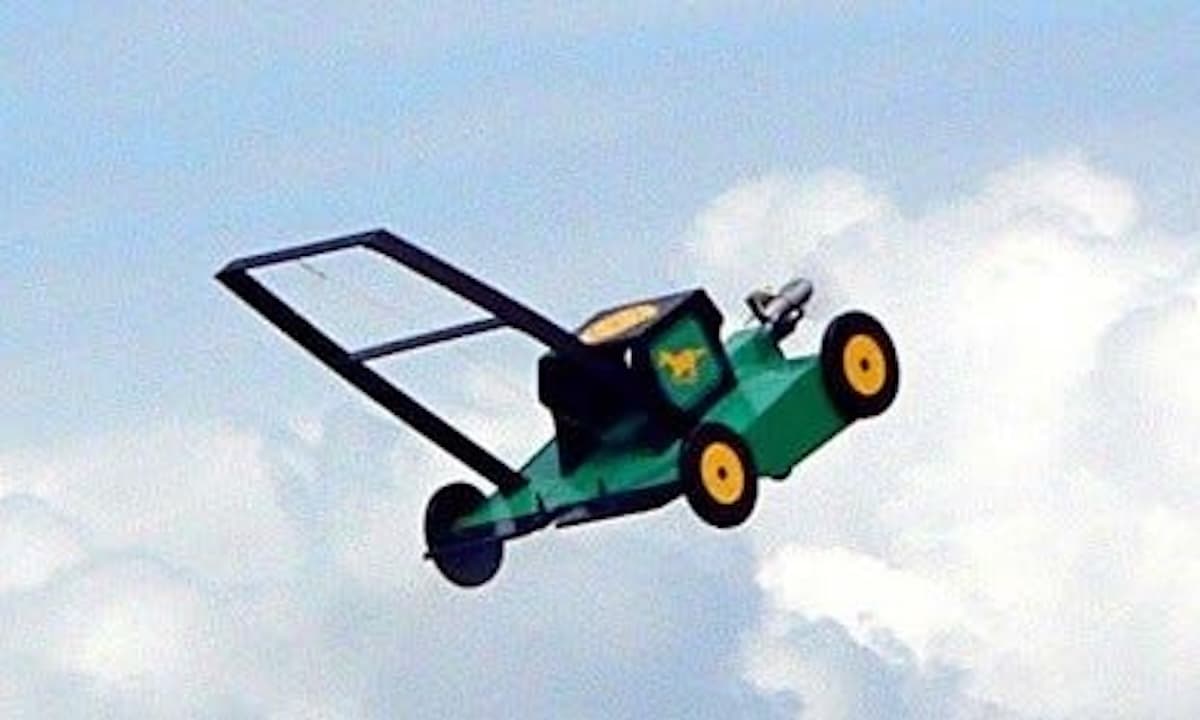
The $20,000 Question: Can a Lawnmower Engine Defeat a Superpower?
Why It Matters
The cost imbalance forces defense budgets to divert billions toward counter‑drone measures, challenging traditional procurement models and altering strategic calculus for the United States and its allies.
Key Takeaways
- •Shahed drones cost under $20,000 each, versus $2 million interceptors.
- •Ukraine’s 2025 drone strikes damaged $7 billion of Russian aircraft.
- •U.S. 2026 C‑UAS budget targets $7.5 billion to counter drones.
- •China aims to field one million tactical drones by 2026.
- •Attritable weapon philosophy urges cheaper, expendable systems over pricey platforms.
Pulse Analysis
The drone revolution is less about technological novelty than about economics. Cheap, off‑the‑shelf components enable actors ranging from state militaries to insurgent groups to field aerial platforms that cost a fraction of traditional missiles. When a $2 million interceptor is expended to destroy a $20,000 drone, the cumulative fiscal drain can become a strategic lever, especially in protracted conflicts where budgets are already stretched. This cost asymmetry echoes historic patterns—colonial powers, Vietnam, Iraq—where cheaper adversary tools forced the great powers to reassess the sustainability of their engagements.
Defense establishments are responding by reshaping procurement priorities. The United States’ 2026 budget earmarks roughly $7.5 billion for counter‑unmanned aerial systems, reflecting a recognition that attritable, low‑cost weapons will dominate future battlefields. Meanwhile, China’s aggressive target of one million tactical drones by 2026 signals a parallel commitment to volume over precision. Both nations are investing in sensor networks, directed‑energy weapons, and electronic warfare to neutralize swarms, but the underlying challenge remains: how to protect high‑value assets without inflating acquisition costs beyond political tolerance.
Strategically, the proliferation of cheap drones transforms the calculus of intervention. Policymakers must weigh not only the immediate tactical threat but also the long‑term financial and political repercussions of repeatedly deploying expensive platforms against inexpensive adversaries. As the cost of attrition rises, the threshold for military action may shift toward diplomatic or hybrid approaches. In this environment, the true power of drones lies in their ability to make wars financially unattractive, compelling superpowers to reconsider the price of maintaining global influence.
The $20,000 question: Can a lawnmower engine defeat a superpower?
Comments
Want to join the conversation?
Loading comments...