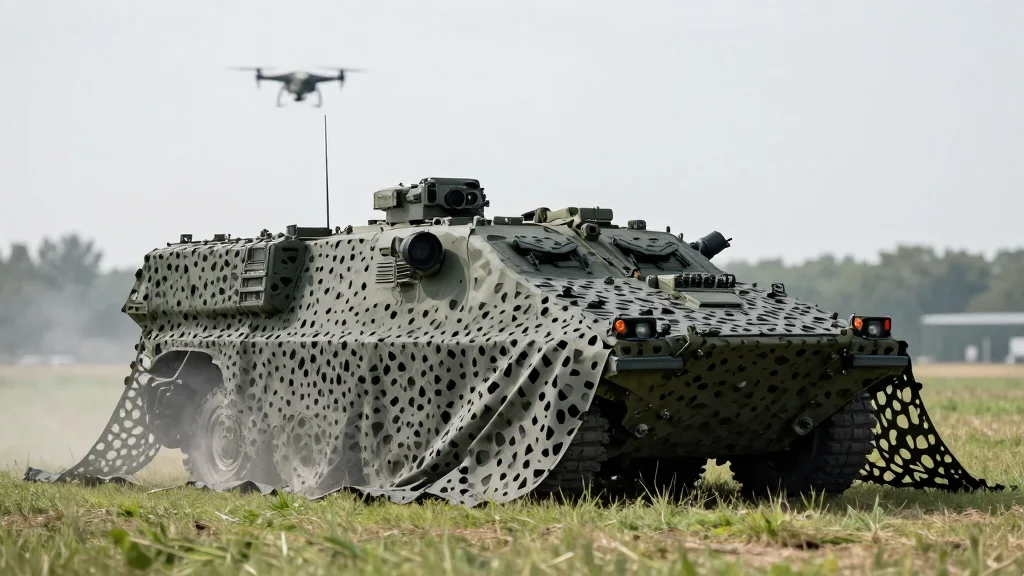
The Air Force Is Signaling Interest in Camouflage Nets that Can Hide Troops and Vehicles From Thermal Sensors
Why It Matters
Thermal‑camouflage nets could blunt the effectiveness of increasingly prevalent drone surveillance, improving survivability for troops and equipment. Their adoption signals a broader shift toward advanced material solutions in U.S. military force protection.
Key Takeaways
- •Air Force seeks 30 large thermal‑protective nets for JLTVs
- •Nets must mask mid‑wave and long‑wave infrared signatures
- •Nanotech composites aim to reduce heat emission while blending visually
- •Initiative driven by drone‑surveillance threats seen in Ukraine and Middle East
Pulse Analysis
The rise of drone‑borne sensors has forced militaries to rethink traditional concealment methods. Infrared imaging can pinpoint the heat of engines, exhaust, and even resting soldiers, making conventional camouflage insufficient. By soliciting nets that absorb, disperse, and emit heat at the nanoscale, the Air Force aims to create a passive shield that defeats mid‑wave and long‑wave infrared detectors, while still matching the surrounding terrain with reversible green‑woodland patterns.
This initiative aligns with a broader, cross‑service push for thermal defense. The Marine Corps’ MADIS program, already mounting air‑defense systems on JLTVs, is exploring similar cloaking technologies, and the Army has been testing heat‑masking fabrics for years. Integrating nanotechnology or advanced composites into a simple netting solution reflects a cost‑effective way to upgrade force protection without overhauling vehicle design, and it underscores the inter‑service recognition that drone surveillance is a shared threat.
If awarded, the contract will likely stimulate a niche market for specialized defense manufacturers capable of producing high‑performance, lightweight fabrics. Successful deployment could set a new standard for forward operating bases, reducing the vulnerability of assets to precision strikes and reconnaissance drones. In the long term, the technology may evolve into modular kits for a variety of platforms, extending thermal stealth beyond ground vehicles to static installations and even personnel shelters, thereby reshaping how the U.S. military mitigates sensor‑based threats.
The Air Force is signaling interest in camouflage nets that can hide troops and vehicles from thermal sensors
Comments
Want to join the conversation?
Loading comments...