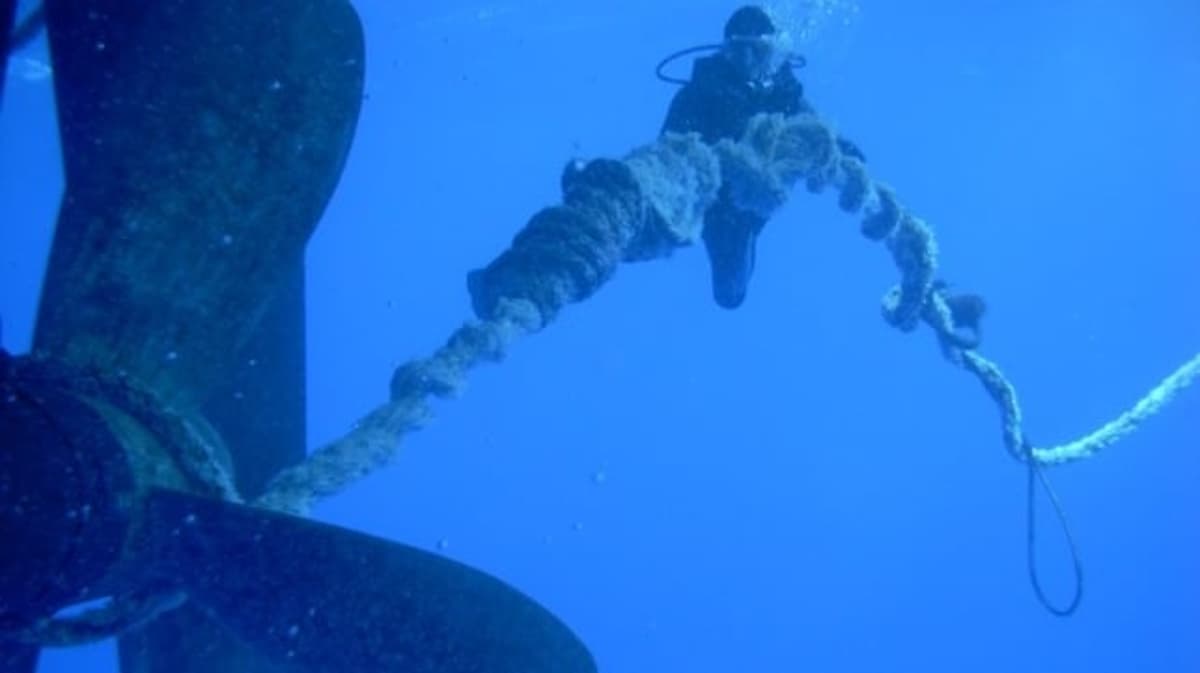
The Aramid Shield: Snare Drones for Active Subsea Defense
Why It Matters
Active, non‑lethal undersea defence prevents costly blackouts and creates enforceable legal evidence against state‑sponsored sabotage, safeguarding critical digital economies.
Key Takeaways
- •Chinese maritime militia used anchor dragging to cut Taiwan cables
- •Traditional warships are too costly for gray‑zone cable protection
- •Aramid‑fiber snares enable non‑lethal drone immobilisation of sabotaging vessels
- •Autonomous snare drones provide scalable, low‑cost undersea defence
- •Legal framework required to legitimize active cable‑guardian interventions
Pulse Analysis
The surge in covert cable‑cutting operations by Chinese and Russian shadow fleets exposes a glaring gap in maritime security. Conventional naval assets—expensive frigates and destroyers—are designed for high‑intensity conflict, not for the nuanced, low‑level provocations that threaten the data arteries linking economies. Coast‑guard vessels, already stretched thin by SAR and fisheries duties, cannot patrol the extensive undersea corridors required to deter sabotage. This strategic paralysis forces states to seek a middle ground: a capability that is neither passive observation nor full‑scale kinetic response.
Enter the Aramid Shield, a hybrid of robotics and material science. Aramid fibres, known commercially as Kevlar, combine exceptional tensile strength with low weight, making them ideal for drone‑deployed snares. When a drone detects an offending vessel—through acoustic signatures or SAWS alerts—it can release a tightly woven aramid loop that wraps around the propeller shaft, halting propulsion without damaging the hull. The result is a reversible, non‑lethal immobilisation that buys time for white‑hull authorities to board, document, and prosecute the offender. Compared to the cost of a single frigate, a swarm of fifty mass‑produced AUVs represents a fraction of the investment while delivering persistent, weather‑independent coverage.
Beyond the tactical edge, the Aramid Shield reshapes the legal and economic calculus of undersea defence. By creating verifiable, real‑time evidence of sabotage, autonomous snare drones fulfill Article 113 of UNCLOS, moving states from passive penalisation to active prevention. Economically, a single cable‑cut can trigger multi‑billion‑dollar GDP losses; a modest investment in drone swarms mitigates those risks and reduces reliance on a scarce fleet of cable‑repair ships. For regions like Taiwan, the Baltic states, and other chokepoints, adopting a standardized, coalition‑wide framework for these systems could establish a new norm of proactive maritime order, turning the tide against gray‑zone aggression before it escalates into open conflict.
The Aramid Shield: Snare Drones for Active Subsea Defense
Comments
Want to join the conversation?
Loading comments...