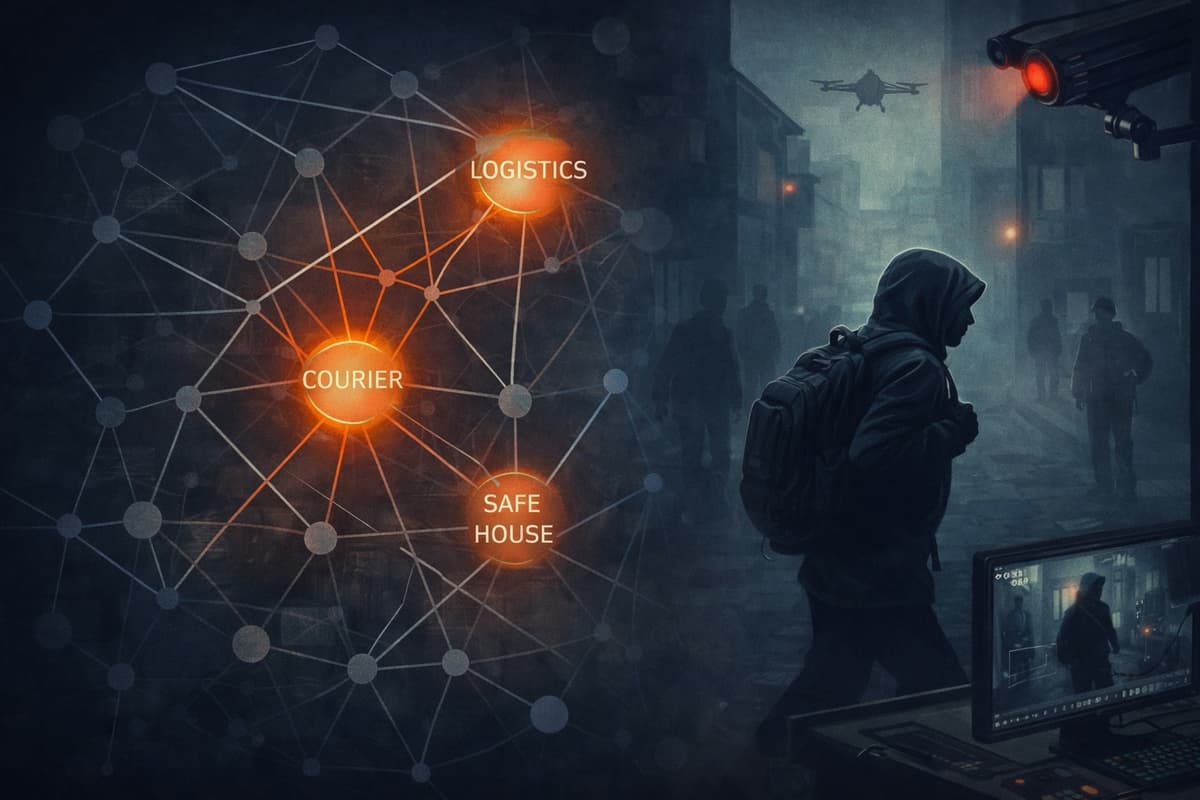
The Connector Problem in Resistance Networks: Why Decentralization Fails in Practice
•February 27, 2026
0
Why It Matters
Understanding the connector problem forces resistance planners and partner forces to rethink organizational design, balancing operational effectiveness against inherent vulnerability to targeted counter‑network operations.
Key Takeaways
- •Connectors act as high‑centrality single points of failure
- •F3EAD compresses exploitation cycle, outpacing network adaptation
- •Visibility, saturation, bottlenecks, cascade drive network collapse
- •Redundancy adds surface area, not full resilience
- •Design must assume connector loss from the start
Pulse Analysis
Decentralized resistance movements have long relied on a cellular structure to limit the damage caused by a captured combat cell. While this approach protects tactical operators, it inevitably creates a layer of connector roles—couriers, logistics coordinators, safe‑house managers, communications technicians, and external liaisons—whose function requires broad network knowledge. These individuals become structural bridges; their removal partitions the operational graph, exposing multiple cells simultaneously. Historical examples from the French Resistance to modern insurgencies illustrate how the very mechanisms that enable coordination also generate high‑visibility signatures that adversaries can trace.
Modern counter‑network operations, epitomized by the F3EAD cycle, exploit the connector problem with unprecedented speed. Pattern‑of‑life analysis pinpoints recurring routes, supply chains, and communication hubs, allowing forces to strike a connector and immediately leverage the extracted intelligence for follow‑on actions. The article identifies four overlapping failure modes: accumulated visibility from routine activity, task saturation as operational tempo expands, authority bottlenecks where critical knowledge resides in a single individual, and cascading compromise that accelerates once a connector is captured. Each mode compounds the others, creating a rapid, self‑reinforcing collapse that outpaces traditional cellular resilience.
For planners and partner forces, the implication is clear: survivability must be built into the network architecture, not retrofitted through better tradecraft alone. Redundancy, role rotation, and functional segmentation can mitigate risk but also increase the network’s detectable footprint and reduce operational efficiency. The optimal approach balances these trade‑offs by designing for degraded operations from the outset—accepting that connectors will be targeted and ensuring that their loss does not cripple the entire structure. This strategic shift demands a re‑evaluation of training curricula, support logistics, and external liaison models to embed resilience at the organizational level.
The Connector Problem in Resistance Networks: Why Decentralization Fails in Practice
0
Comments
Want to join the conversation?
Loading comments...