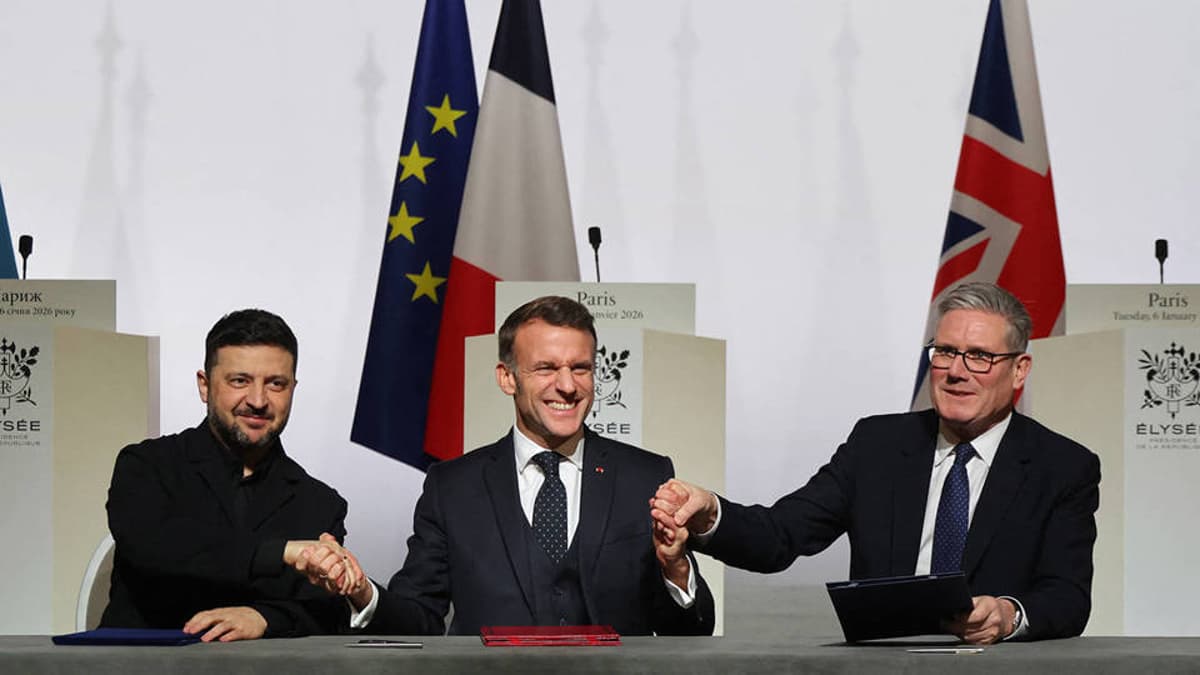
Why It Matters
The shift signals a fundamental re‑ordering of Europe’s defense landscape, affecting risk calculations for governments and defense firms alike. Understanding the emerging partnerships is essential for investors and strategists monitoring geopolitical stability.
Key Takeaways
- •NATO cohesion strained by divergent threat perceptions
- •EU defense initiatives lag behind rapid security realignments
- •Bilateral coalitions fill gaps left by traditional alliances
- •Emerging partners could reshape European arms procurement
Pulse Analysis
Europe’s post‑Cold War security model, anchored by NATO and the EU, is being tested by simultaneous crises in Ukraine and the Middle East. The protracted conflict in Ukraine has highlighted NATO’s dependence on consensus, while divergent national interests over energy security and strategic autonomy have eroded unified responses. Meanwhile, the Middle East’s volatility has forced European capitals to reconsider reliance on distant, multilateral mechanisms, prompting a surge in bilateral defense agreements and regional security pacts that operate outside established frameworks.
These emergent coalitions—ranging from Nordic‑Baltic joint exercises to Franco‑German‑Polish rapid response units—create a tangled “cat’s‑cradle” of commitments. While they offer immediate deterrence benefits, they also risk duplicating capabilities and complicating command structures. Defense industries are responding by diversifying supply chains and tailoring products for a broader set of partners, from smaller NATO members to non‑aligned states seeking security guarantees. The shift also pressures the EU to accelerate its own strategic autonomy agenda, including the development of a European Defence Fund that can finance joint projects without defaulting to NATO channels.
Looking ahead, European policymakers must balance the flexibility of ad‑hoc partnerships with the need for strategic coherence. Integrating these new actors into a unified doctrine could mitigate the risk of fragmented responses and ensure that Europe retains a credible deterrent posture. For investors, the evolving security architecture signals opportunities in niche defense technologies, cross‑border procurement platforms, and consultancy services that help navigate the increasingly complex alliance landscape. Ultimately, the success of Europe’s security reconstitution will hinge on its ability to harmonize disparate initiatives into a resilient, adaptable defense ecosystem.
The EU Needs New Security Partners
Comments
Want to join the conversation?
Loading comments...