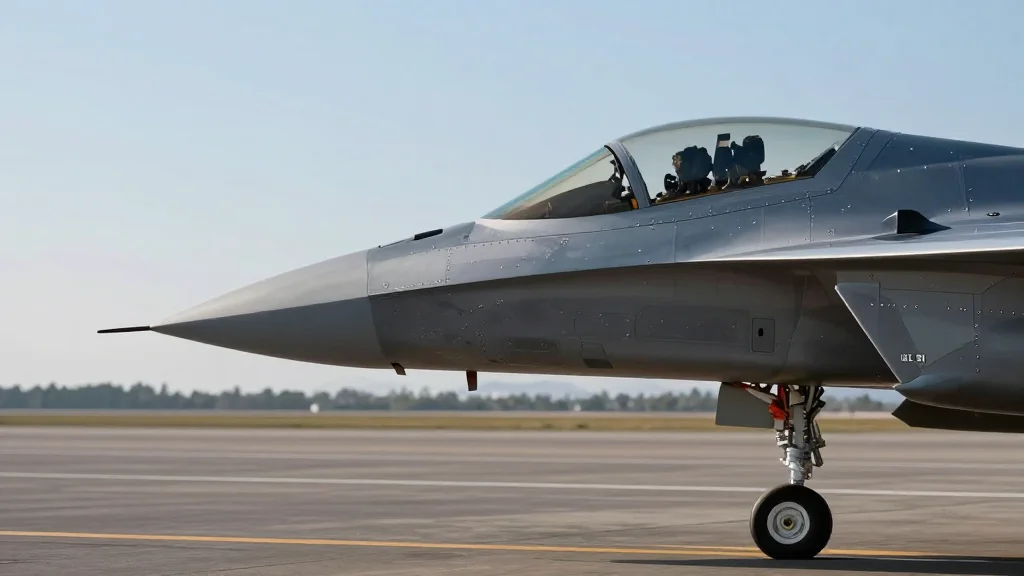
The FCAS Fighter Jet Looks Like It’s Dead. Could that Be a Good Thing?
Why It Matters
Without a unified European fighter, defense budgets will be stretched and delivery timelines lengthened, increasing reliance on the U.S. F‑35 amid growing security pressures.
Key Takeaways
- •Germany plans to exit FCAS fighter joint development, focusing on combat cloud.
- •France still seeks carrier‑capable, nuclear‑ready aircraft, diverging from German needs.
- •GCAP, Sweden’s Gripen and Turkey’s stealth jet fragment European effort.
- •Multiple next‑gen fighter programmes risk spreading resources thin and delaying deliveries.
Pulse Analysis
The Future Combat Air System, conceived in the early 2000s as Europe’s answer to the U.S. F‑35, has been hamstrung by industrial rivalry between Airbus and Dassault and by mismatched national specifications. Germany’s recent decision to abandon the fighter portion while preserving the cloud‑based command and control architecture underscores how strategic priorities have diverged: Paris insists on carrier‑compatible, nuclear‑capable capability, whereas Berlin prioritises a conventional, land‑based platform. This fracture not only stalls the FCAS timeline but also threatens the cost‑sharing model that originally justified the multi‑nation investment.
Across the continent, a crowded field of next‑generation fighter initiatives is emerging. The UK, Italy and Japan’s Global Combat Air Programme (GCAP) has made measurable progress on airframe and engine work, yet its multinational governance raises cost‑control concerns. Sweden’s Gripen evolution and Turkey’s indigenous stealth jet each target niche export markets, while the United Kingdom and Germany continue to procure additional F‑35s to fill capability gaps. The simultaneous pursuit of these programmes fragments Europe’s industrial base, inflates research‑and‑development spend, and creates competing export bids that dilute market share.
Strategically, the stakes extend beyond economics. With the United States signaling a gradual disengagement from European security and Russia’s aggression persisting, NATO interoperability and rapid fielding of advanced air power become paramount. Consolidating resources into a single, interoperable European fighter—potentially by merging the FCAS cloud component with a streamlined airframe effort—could accelerate delivery, preserve sovereign industrial capabilities, and reduce dependence on American platforms well into the 2040s. Policymakers must weigh prestige against practicality to ensure Europe’s air defence remains credible and cohesive.
The FCAS fighter jet looks like it’s dead. Could that be a good thing?
Comments
Want to join the conversation?
Loading comments...